

NEW:  FUKAMUSHI SENCHA YAMAKAI  AND  TSUYUHIKARI  -20% &  ALL SENCHA  -10% | YOUR CODE:

Oriental Beauty Oolong
Super Premium P.Free

Super Premium 97 P.

SKU
5428
Rare Oriental Beauty Oolong of exceptional quality. Distinctive, unmistakable sweet notes of honey and peach. Sourced directly from the original and finest terroir in Hsinchu, Taiwan, from an award-winning tea farm. Hand-picked leaves from the flavour-rich second harvest in high summer. Carefully produced using traditional methods without chemical pesticides. 20g
  • Rare, top-grade Oriental Beauty from Taiwan
  • Leaves nibbled by local leafhoppers, creating the tea’s distinctive honey sweetness
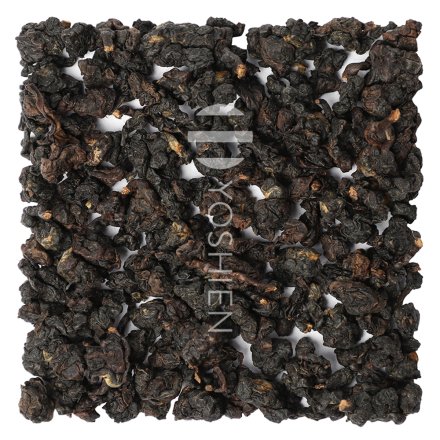
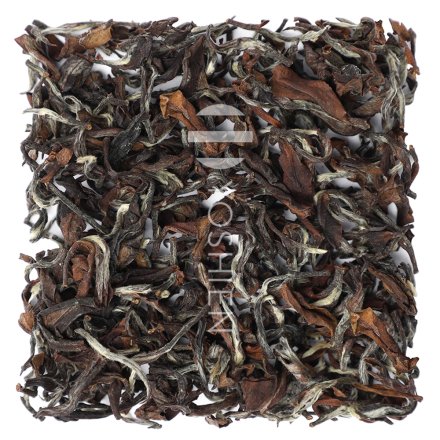
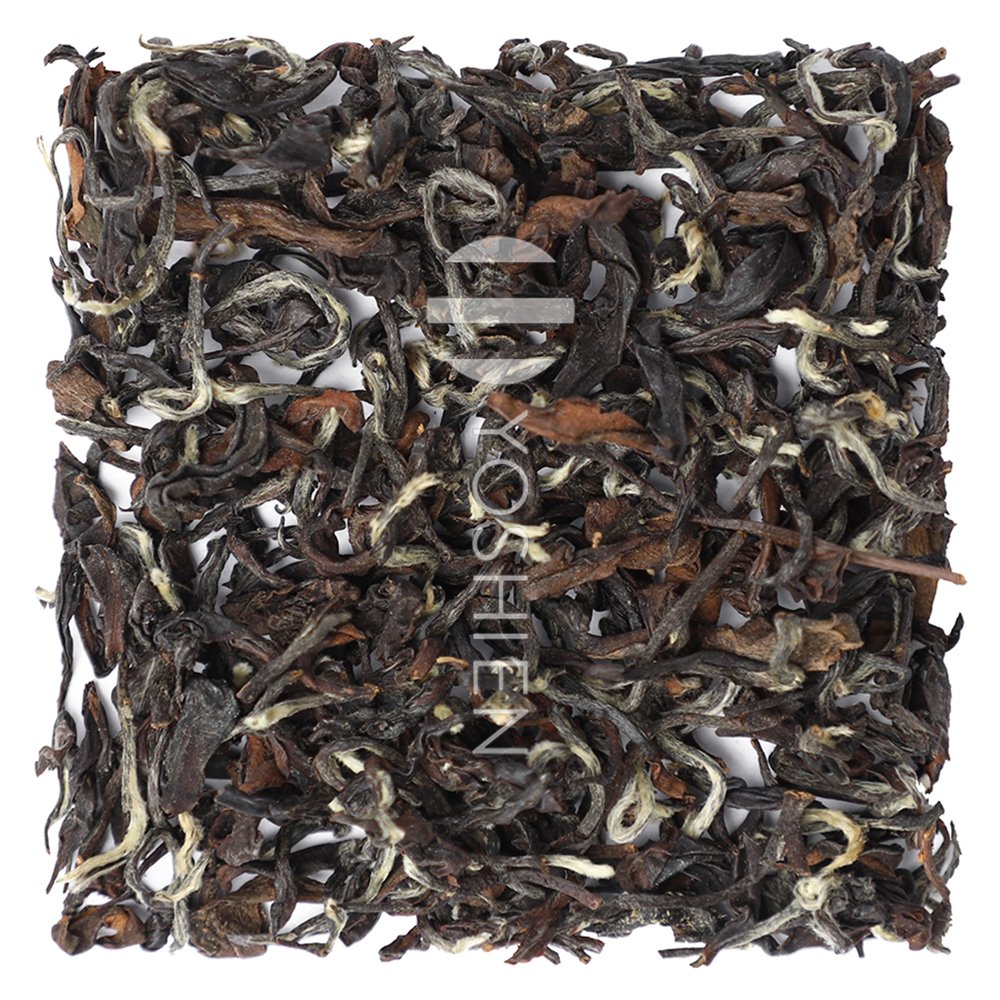
  • High ratio of white buds and brown leaves – hallmark of top-grade Oriental Beauty
  • Second harvest, offering rich honey and peach notes
  • From an award-winning farm and regular winner of the Taiwanese Oriental Beauty competition
  • Directly sourced from Hsinchu, the tea’s place of origin
Character Honey-sweet, peachy, fruity, aromatic, mineral
Tea Farm Prize-winning tea farm specialised in Oriental Beauty
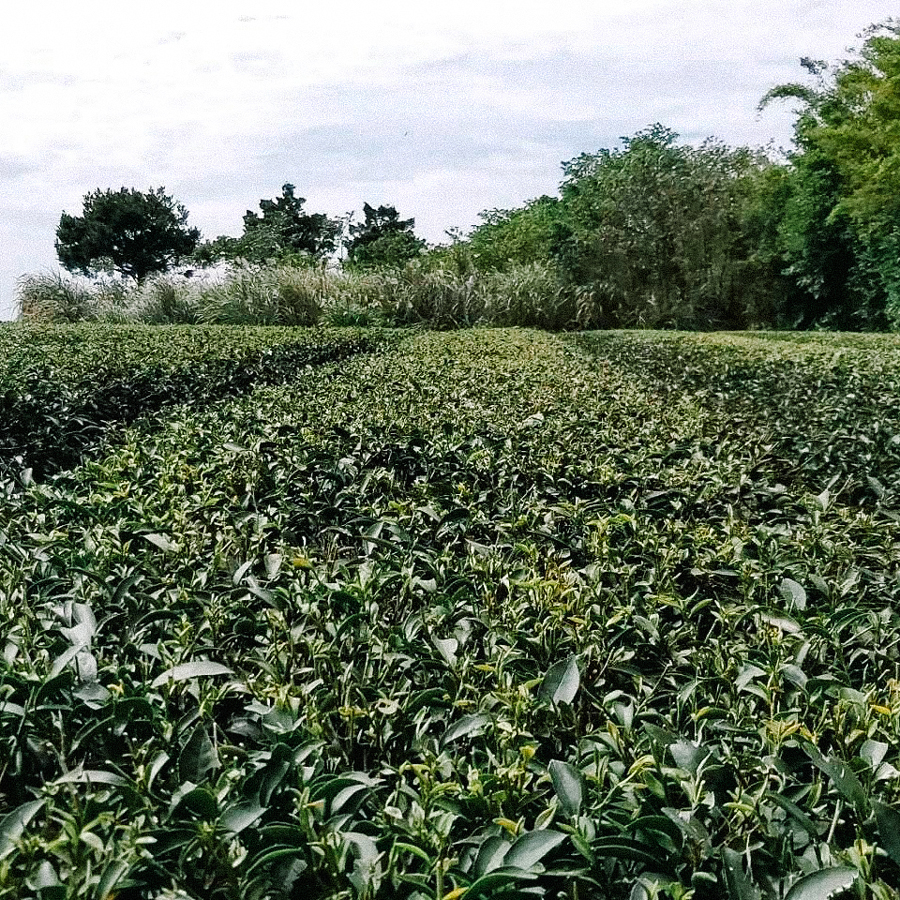
Terroir Hsinchu, Taiwan
Harvest 2nd harvest 2024, mid-June, hand-harvested
Cultivar 青心大冇 Chin-Shin-Dapan
Elevation 160–200m above sea level
Oxidation Level Medium to strong
Roasting No roasting
Withering/Oxidation Process Gentle withering in the shade on bamboo mats, followed by multi-stage, systematic shaking of the leaves to enhance oxidation, traditional rolling / pressing of the leaves in a cloth, and careful oven-drying at 80°C for 3 hours
Cultivation Cultivated without the use of chemical pesticides
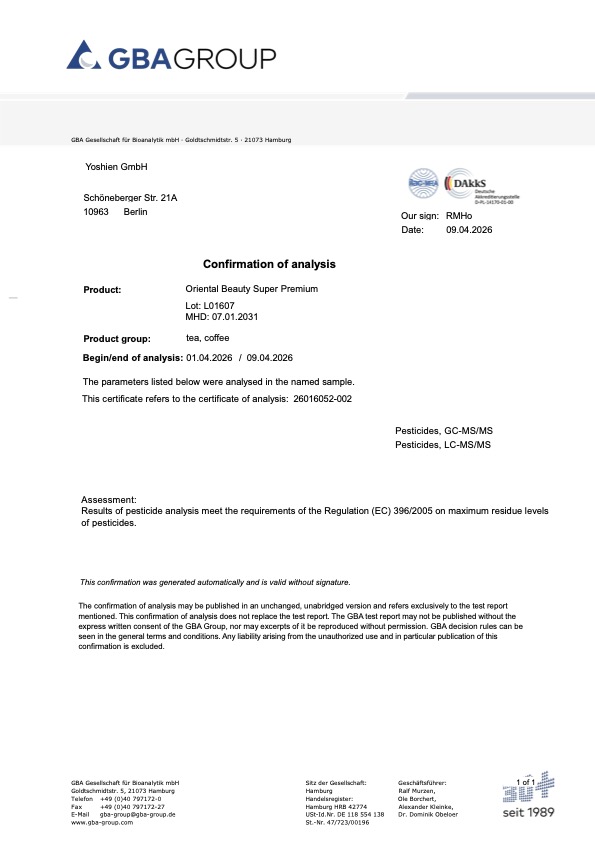
Laboratory Tests Pesticides
Awards Regular prize winner at the Taiwan Oriental Beauty Competition since 2006
Grade 97/100 P. (Oolong category); Super Premium

Explore our entire range of oolong tea here.

€24.90
20g

Delivery : up to 5 business days

Incl. VAT, excl. shipping

SKU
5428
€1,245.00 / 1kg
In stock
Oriental Beauty Super Premium

Tea Farm

We proudly source our Oriental Beauty Oolong from one of the finest tea farms in Hsinchu, Taiwan – the birthplace of this remarkable tea. For three generations, the farm has specialised in the production of traditional Oriental Beauty Oolong. In addition to the exceptional location of the tea gardens, it is above all the meticulous handcrafting methods that account for the outstanding quality of their tea. Their Oriental Beauty regularly receives top scores at national oolong competitions. An overview of these honours can be found in the "Awards" tab.

Oriental Beauty Super Premium

Character

Tasting Notes

The quality of Oriental Beauty Oolong is determined in particular by the proportion of tea leaves nibbled by the leafhoppers (Jacobiasca formosana). These leaves can be recognised by their beautiful warm brown colouring, while the untouched buds are white. A balanced combination of both creates the highly sought-after peachy, honey-sweet flavour characteristic of Oriental Beauty.

Our Super Premium Oriental Beauty represents some of the very best this tea has to offer. Wonderful, highly expressive peach notes and an overall intensely fruity-sweet flavour profile define this tea. Its pleasant, juice-like viscosity coats the tongue and palate, leaving behind a delicious and lingering finish.

Leaf

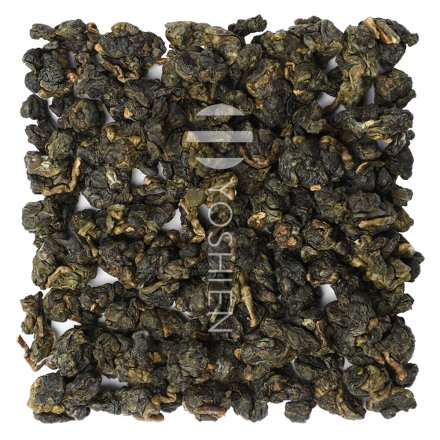
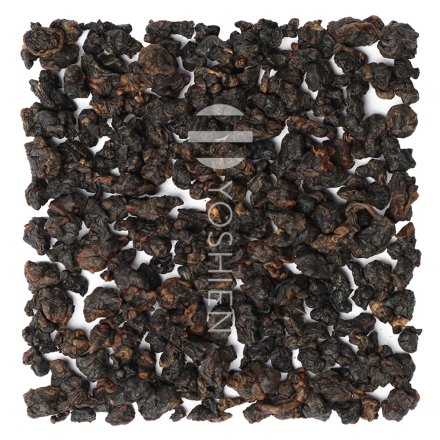
Many white tips and numerous warm brown leaves, responsible for the sweetness

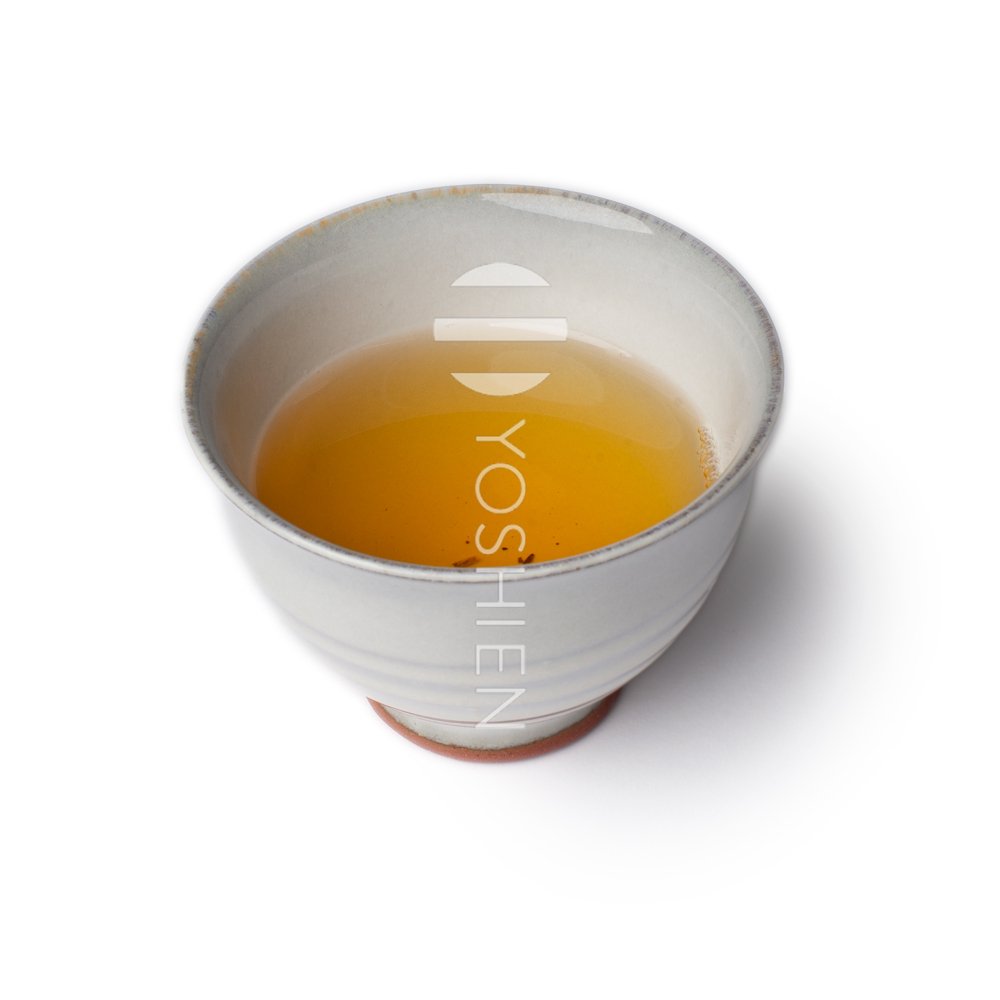
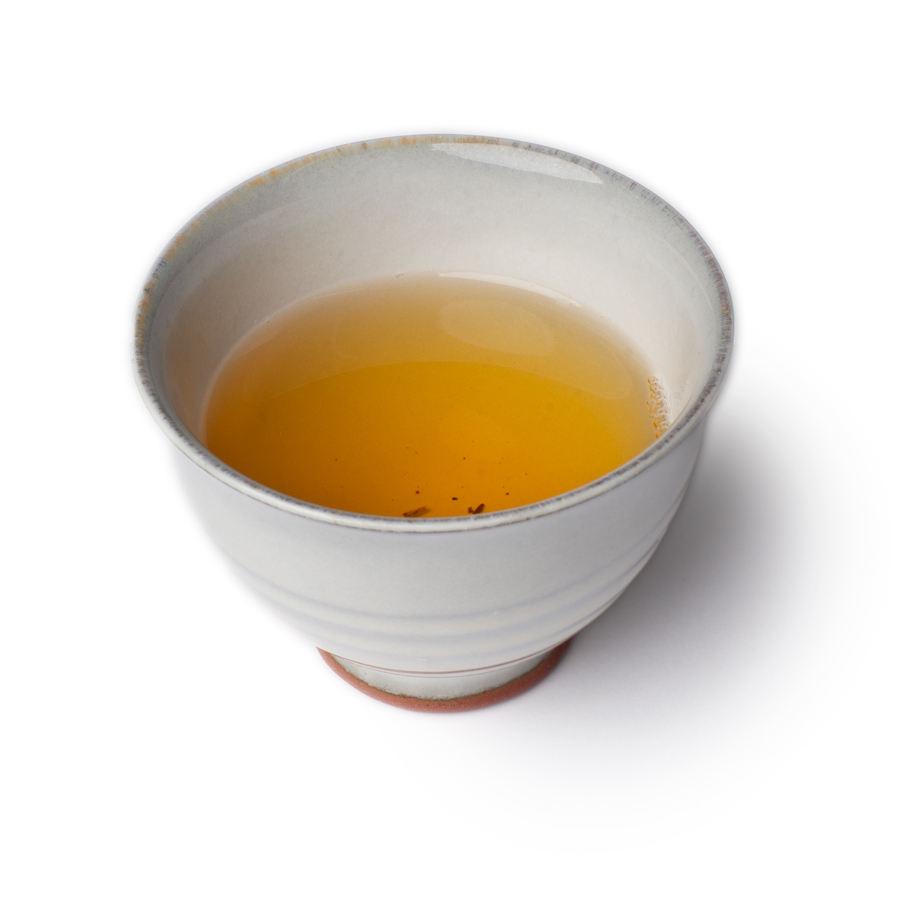
Cup

Warm orange-yellow

Oriental Beauty Super Premium

Awards

Regular winner of the prestigious Oriental Beauty First Class Award (頭等獎) since 2006

2018 award winner – Hsinchu County Oriental Beauty Tea Review

2017 award winner – Hsinchu County Oriental Beauty Tea Evaluation

2017 award winner – Winter Oriental Beauty Tea Review, Hsinchu County

2016 award winner – Hsinchu County Oriental Beauty Tea Evaluation

Oriental Beauty Super Premium

Oolong Tea

Oolong (Chinese for "black dragon") has a degree of oxidation between that of green and black teas, which is why it is often known as a semi-oxidised tea. Oolong can roughly be categorised into lightly (10-29%), medium (30-60%), and heavily (up to 70%) oxidised varieties. Following oxidation, the leaves are gently roasted, adding a distinctive depth and character to the tea. The wide range of production possibilities means that oolong teas are incredibly diverse in flavour. The best terroirs for oolong are generally considered to be in Taiwan and southern regions of China in and around the province of Fujian.

Yoshien Labortests

Laboratory Tests

We go to great lengths to identify the finest organic tea farms across the world’s most celebrated terroirs. All our teas are sourced directly from the farmer and, with a few exceptions, are certified organic or come from pesticide-free farms. Each batch of tea for every harvest is tested for pesticides and other pollutants in an independent German lab to ensure they meet our strict quality standards as well as HACCP food safety requirements.

Yoshien

Yoshi En

Premium Organic Teas

Our comprehensive portfolio focuses on organic, single-origin teas sourced directly from renowned farms. We believe in creating partnerships with farmers who share our values and are committed to sustainable, responsible tea cultivation. Thanks to these strong relationships our exciting range is constantly growing and evolving. As an international team of dedicated and passionate tea experts, we are committed to preserving centuries-old tea culture while ensuring it remains relevant and continues to bring joy in the present. About Yoshi En.

Cultivation & Processing

Traditional Production Method

What distinguishes our producer is their commitment to the original, traditional production methods. These are considerably more labour-intensive and time-consuming than the modern methods used by most Oriental Beauty farms, which tend to prioritise quantity over quality. Particular attention is given to the precise timing of the harvest, rigorous leaf selection, and especially swift, carefully controlled processing. These methods yield a tea of superior quality and flavour.

Hand-Picked Harvest

The harvest usually begins around the time of the Chinese Dragon Boat Festival in late May or early June. It requires the utmost concentration from the pickers to select only the nibbled buds and leaf pairs, which in the case of the Oriental Beauty cultivar are also particularly small. There is also considerable time pressure, as the bitten leaves should be picked within seven days of the bite; otherwise they would lose a significant amount of their aroma and flavour. Bitten leaves can be recognised by their light yellow colour and slightly twisted shape, and they emit a highly aromatic, sweet fragrance. The higher the proportion of these leaves in the finished tea, the higher the final quality grade. Our Oriental Beauty is made exclusively from leaves of the very highest category. Due to the strict leaf selection, our tea farmer produces only about 1–1.5 kg of tea per day.

Natural Withering

After harvesting, the tea leaves undergo the withering stage. Unlike common Taiwanese oolongs such as High Mountain or Bao Zhong, the delicate Oriental Beauty leaves are not exposed to direct sunlight, as this would affect the tea’s natural sweetness. Instead, the leaves are spread out on bamboo mats in the shade and gently dried.

Controlled Oxidation

Once the leaves have lost sufficient moisture and firmness, the oxidation stage begins. During this process, the plant cells are broken open through vigorous movement, allowing the tea’s natural enzymes to be released. These react with the surrounding oxygen, causing the leaves to take on a slight reddish hue. At the same time, the flavour develops further, becoming noticeably sweeter.

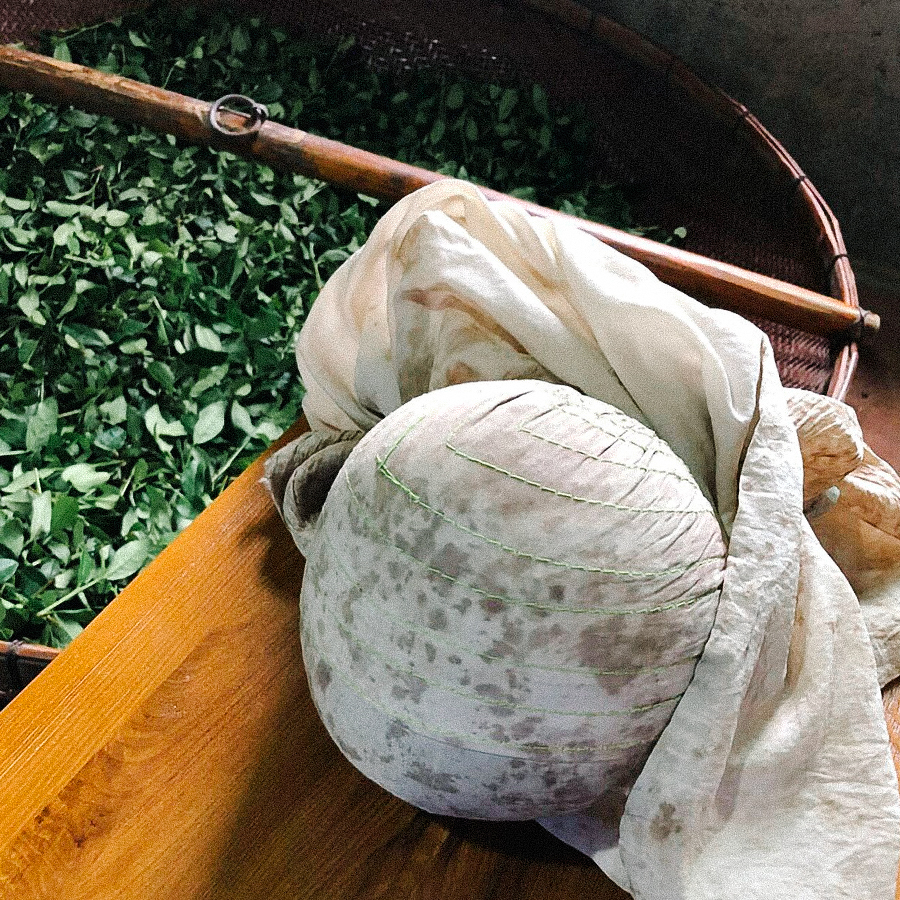
Oxidation takes place in three stages: first, the leaves are skilfully shaken by hand on bamboo mats twice for three minutes each. A final “shaking” step is then carried out mechanically for around 20 minutes. As is typical for Taiwanese oolong, the leaves are then wrapped in a cloth and tightly compressed. This causes the leaf juices to be released and mingle with the surface of the other leaves. The leaves remain wrapped in the cloth for up to an hour.

Gentle Drying

Finally, the leaves are gently dried in an oven at 80 °C for three hours. At this stage, the white tips can clearly be seen among the leaf-coloured brown leaves. These white tips are the aromatic buds of the tea plant, and their abundance in the finished tea is another important indicator of quality.

100% pure

Preparation

Brewing Guide

Steep 2 rounded teaspoons in 200–300ml water at 80–85°C for 2 minutes. Suitable for multiple infusions.

Oriental Beauty is a highly nuanced and sensitive tea in terms of flavour. For maximum sweetness and aroma, we recommend a water temperature of 80°C or lower. For a stronger, more pronounced taste, a temperature of 90–100°C is the best choice.

Packaging

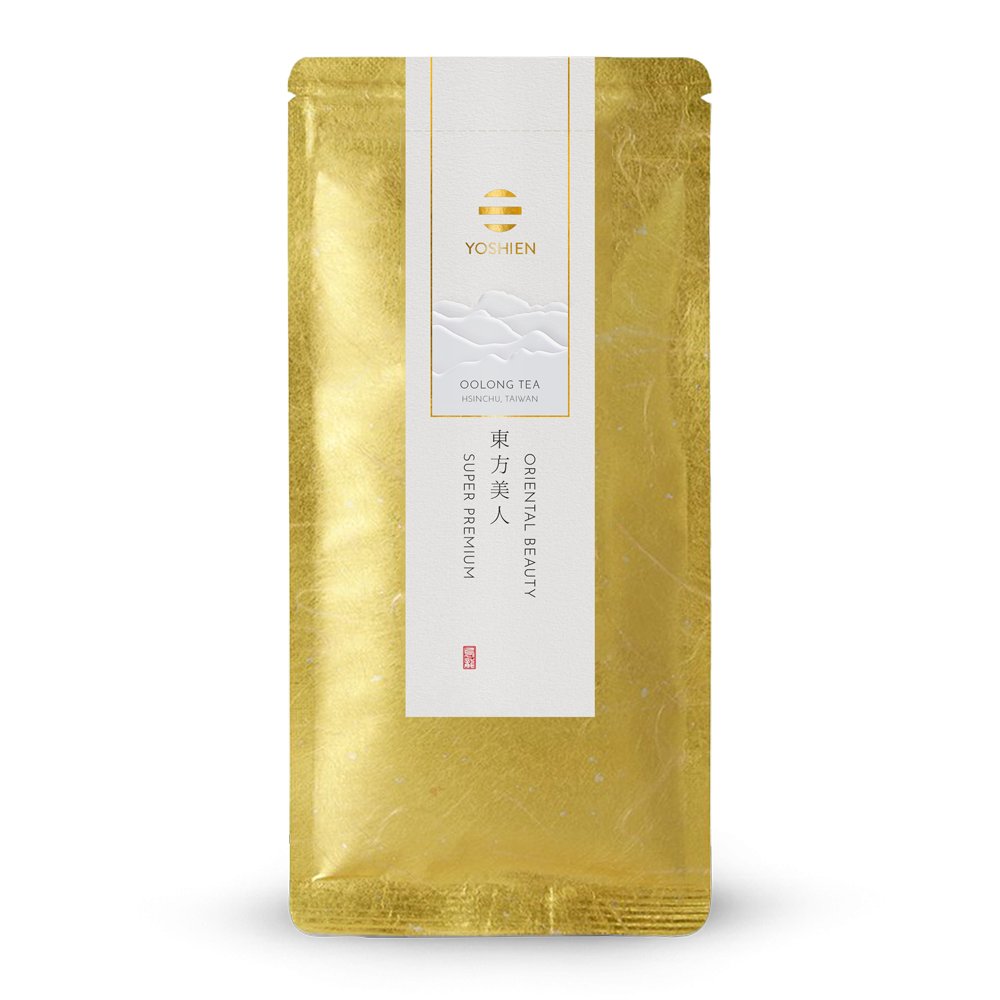
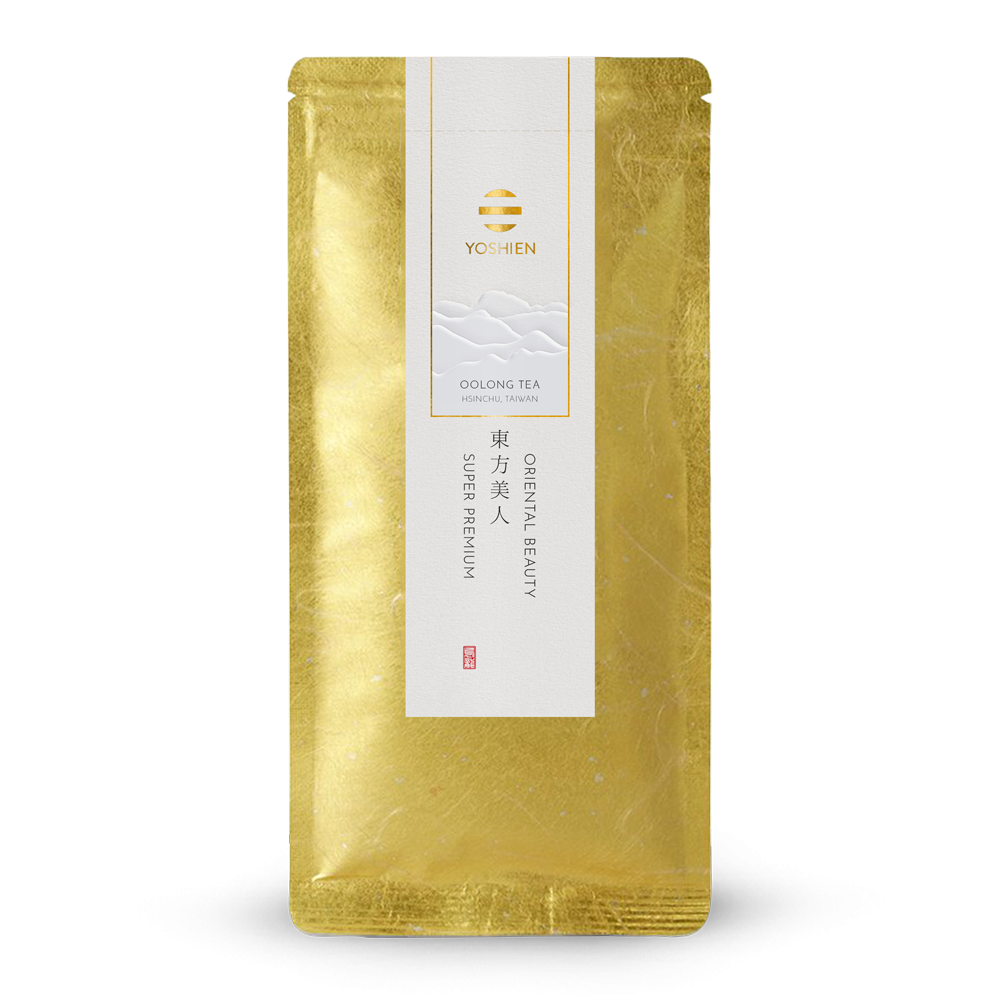
Packaged in a high quality, airtight, resealable standing zipper pouch with 9 protective layers to preserve flavour and protect against oxidation and contamination.

Recommended Teapot

Oolong is traditionally prepared in a Gaiwan (smaller quantities) or a glass teapot with an integrated strainer, with ample room for the leaves to unfurl. For an especially aromatic preparation, we recommend a Yixing teapot made of natural clay.

Recommended Storage

Ideal is a high quality tea caddy made of cherry bark (Kabazaiku Chazutsu). As a more affordable alternative, our airtight, internally-coated tea caddies are also an excellent option.

Product Details

Oriental Beauty 東方美人

Oriental Beauty (also known as White Tip Oolong) is among the rarest and most prized oolongs in the world. Its unmistakable hallmark is its exceptionally fruity, honey-sweet flavour and its relatively high level of oxidation. Both are the result of a natural symbiosis with a leafhopper species particularly common in Taiwan (Jacobiasca formosana). Each summer, these insects feed on the leaves and buds of the tea plant, triggering a natural defensive response. During this process, aromatic compounds are formed that attract the insect’s natural predator, a native species of spider. These protective substances are also responsible for the tea’s unique aroma and wonderfully sweet flavour.

The birthplace of Oriental Beauty is the Hsinchu region in northwestern Taiwan. The elevations there are relatively low and the temperatures very warm. Because the insect activity on the tea leaves is intentionally encouraged, no pesticides are used on Oriental Beauty farms. Due to the natural insect activity and the generally very hot local climate, only about 40–50% of the harvested leaves can actually be used. Oriental Beauty is harvested only twice a year, which means that only limited quantities of this exceptional tea reach the market. As global demand far exceeds supply, Oriental Beauty of the quality we offer here is particularly difficult to find.

Our recommendations

Loading...
The image could not be loaded.