


Traditional Production Method
What distinguishes our producer is their commitment to the original, traditional production methods. These are considerably more labour-intensive and time-consuming than the modern methods used by most Oriental Beauty farms, which tend to prioritise quantity over quality. Particular attention is given to the precise timing of the harvest, rigorous leaf selection, and especially swift, carefully controlled processing. These methods yield a tea of superior quality and flavour.
Hand-Picked Harvest
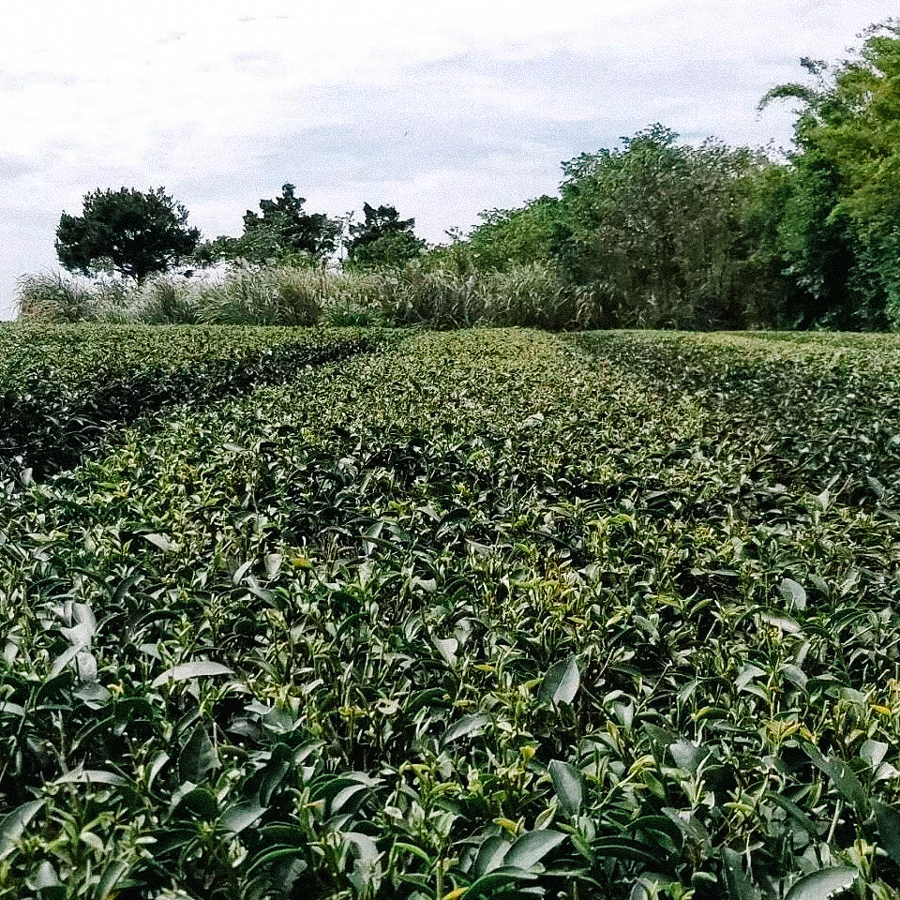
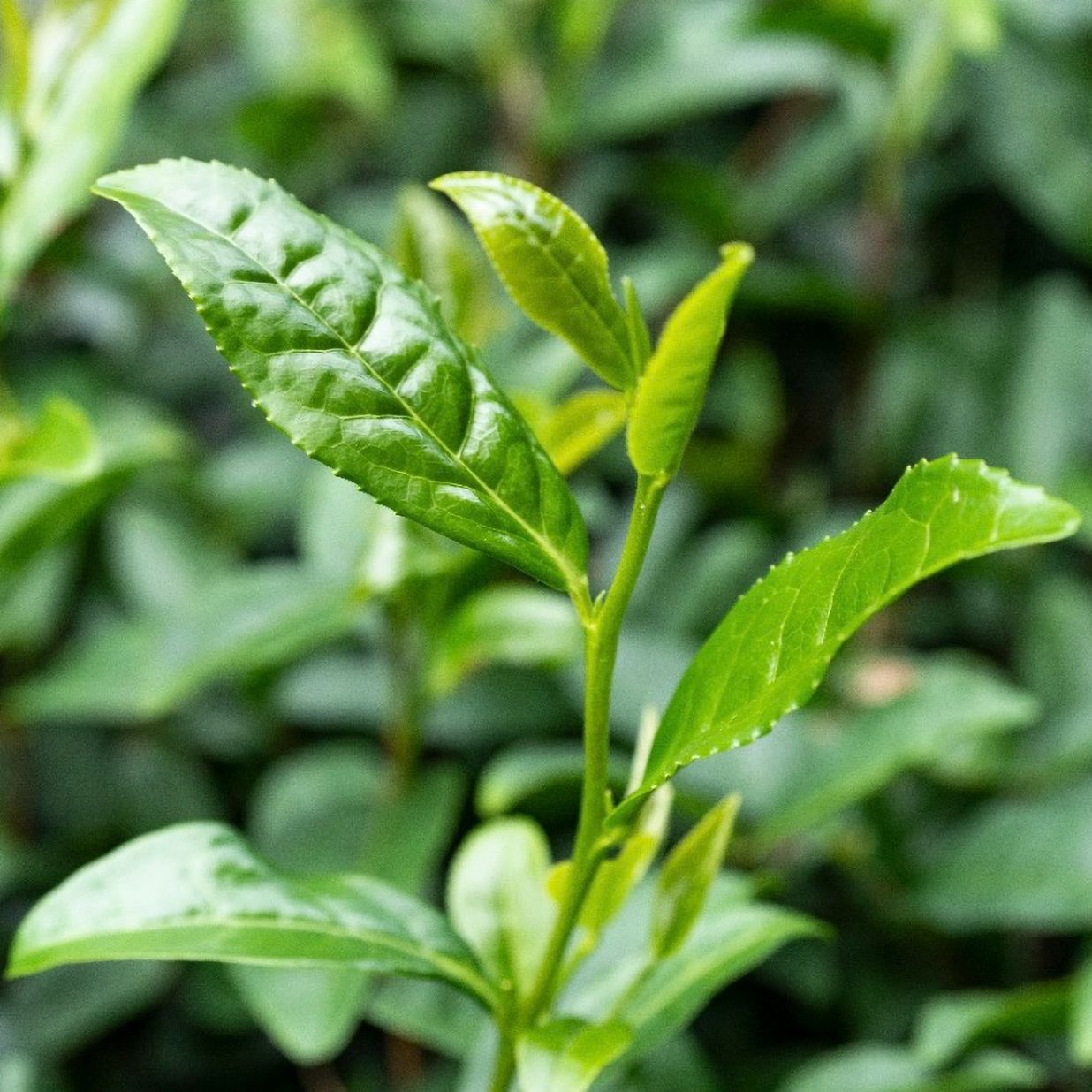
The harvest usually begins around the time of the Chinese Dragon Boat Festival in late May or early June. It requires the utmost concentration from the pickers to select only the nibbled buds and leaf pairs, which in the case of the Oriental Beauty cultivar are also particularly small. There is also considerable time pressure, as the bitten leaves should be picked within seven days of the bite; otherwise they would lose a significant amount of their aroma and flavour. Bitten leaves can be recognised by their light yellow colour and slightly twisted shape, and they emit a highly aromatic, sweet fragrance. The higher the proportion of these leaves in the finished tea, the higher the final quality grade. Our Oriental Beauty is made exclusively from leaves of the very highest category. Due to the strict leaf selection, our tea farmer produces only about 1–1.5 kg of tea per day.
Natural Withering
After harvesting, the tea leaves undergo the withering stage. Unlike common Taiwanese oolongs such as High Mountain or Bao Zhong, the delicate Oriental Beauty leaves are not exposed to direct sunlight, as this would affect the tea’s natural sweetness. Instead, the leaves are spread out on bamboo mats in the shade and gently dried.
Controlled Oxidation
Once the leaves have lost sufficient moisture and firmness, the oxidation stage begins. During this process, the plant cells are broken open through vigorous movement, allowing the tea’s natural enzymes to be released. These react with the surrounding oxygen, causing the leaves to take on a slight reddish hue. At the same time, the flavour develops further, becoming noticeably sweeter.
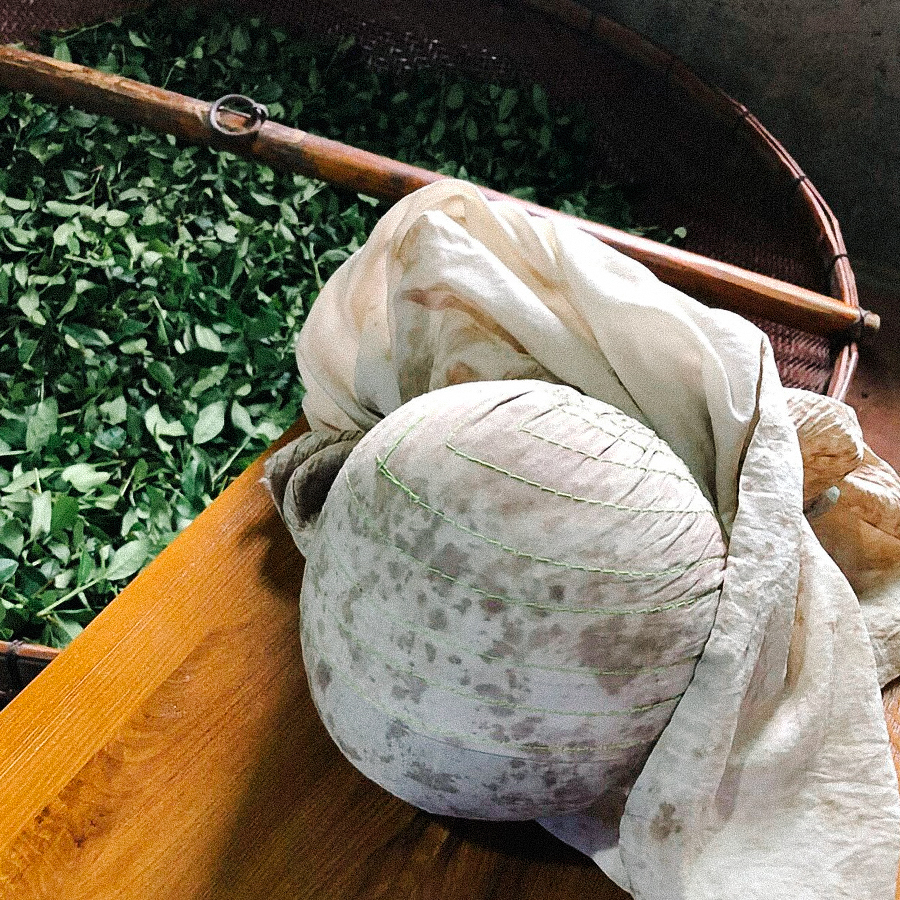
Oxidation takes place in three stages: first, the leaves are skilfully shaken by hand on bamboo mats twice for three minutes each. A final “shaking” step is then carried out mechanically for around 20 minutes. As is typical for Taiwanese oolong, the leaves are then wrapped in a cloth and tightly compressed. This causes the leaf juices to be released and mingle with the surface of the other leaves. The leaves remain wrapped in the cloth for up to an hour.
Gentle Drying
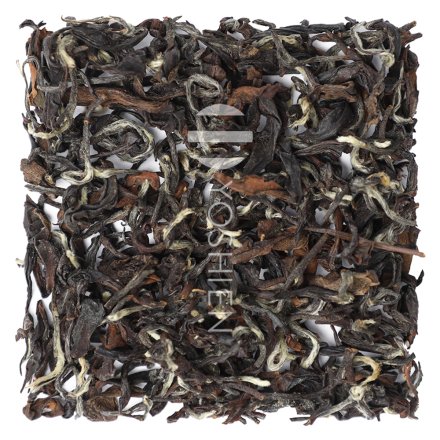
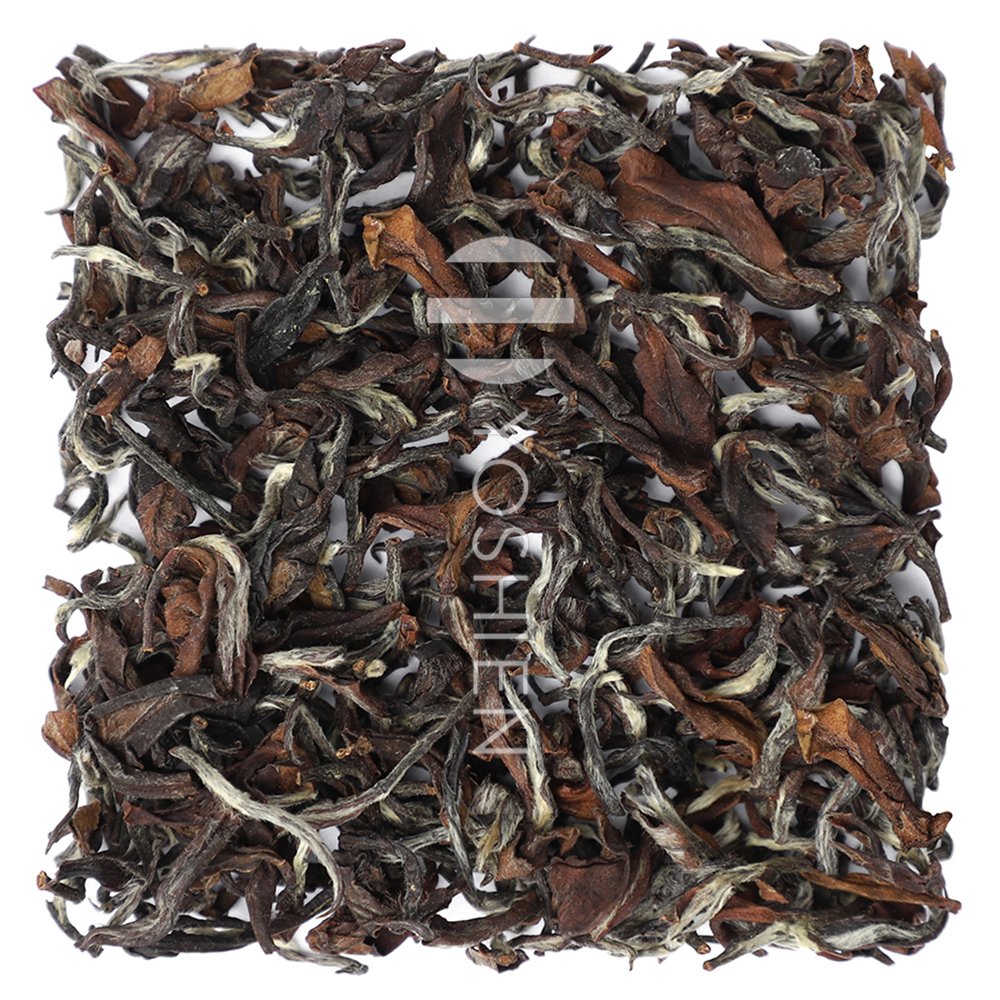
Finally, the leaves are gently dried in an oven at 80 °C for three hours. At this stage, the white tips can clearly be seen among the leaf-coloured brown leaves. These white tips are the aromatic buds of the tea plant, and their abundance in the finished tea is another important indicator of quality.