




Yarrow
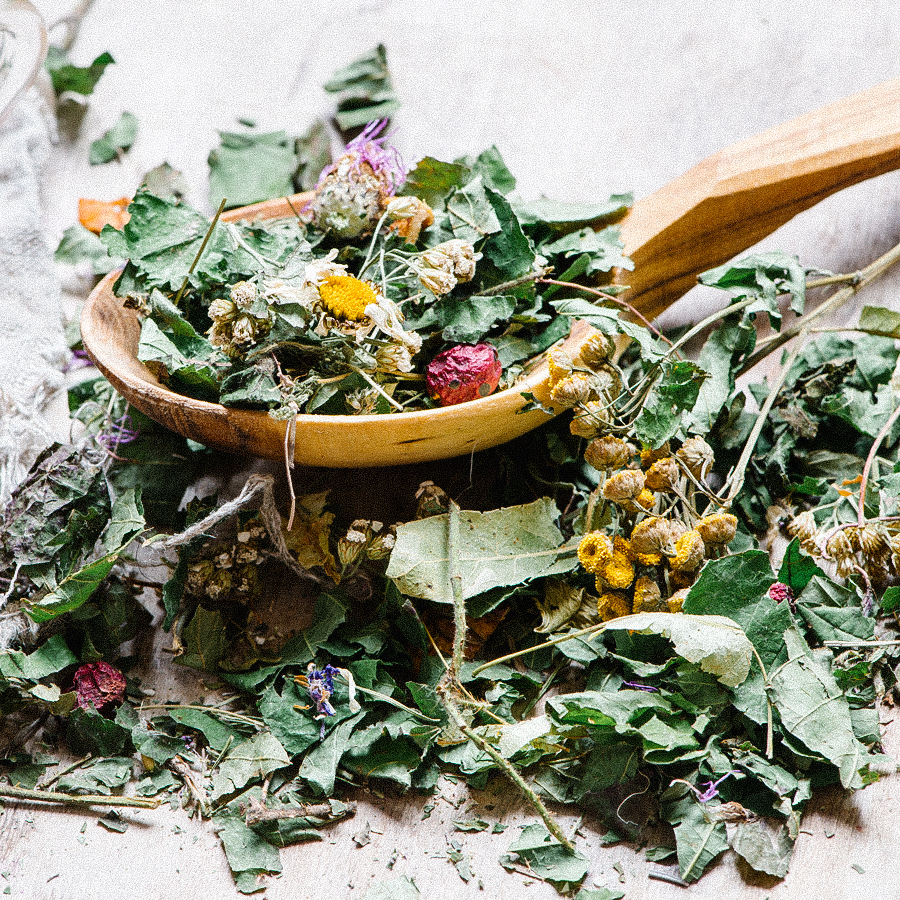
Yarrow grows across Europe and northern Asia, extending as far north as the Arctic Circle. The resilient perennial endures throughout the year, remaining above the earth's surface even during winter. Its rich heritage in herbalism stretches back to Greek mythology, where yarrow is mentioned as a plant used by Achilles. It is from this legend that it derives its Latin name, Achillea millefolium.
Marjoram
Marjoram (Origanum majorana) is associated in Greek mythology with Aphrodite, the goddess of love and beauty, and in Egyptian mythology with Osiris, the god of rebirth and fertility. According to traditional lore, Aphrodite regarded the sweetly aromatic marjoram blossoms as a symbol of bliss, intended to bring cheerfulness and inner balance to humans. It is primarily the herb of the plant that is used. Today, it is mainly employed as a culinary spice, though traditionally it was used both internally as a tea and externally.
Fennel Seed
Fennel (Foeniculum vulgare) is one of the oldest herbs in continuous use worldwide. Its origins can be traced back to around 3000 BC in Mesopotamia, where it was cherished for its numerous health benefits. The ancient civilisations of Egypt, Greece and Rome also recognised and appreciated the remarkable value of fennel.
Calamus
Calamus (Acorus calamus), also known as sweet flag, is an aromatic plant with a long history of use in traditional herbal practices. Native to parts of Asia, it has been valued for thousands of years in Ayurvedic and traditional Chinese medicine. In ancient Egypt, calamus was used in fragrant preparations, while in medieval Europe, its aromatic roots were prized in herbal traditions and perfumery. It is known for its complex, warm, earthy, and slightly spicy aroma, with pleasantly bitter notes.
Lavender
Lavender (Lavandula angustifolia) is a fragrant flowering plant with a rich history dating back thousands of years. Native to the Mediterranean region, it was cherished by the ancient Greeks and Romans, who used it in aromatic baths, perfumes, and herbal preparations. Its name is believed to derive from the Latin word lavare, meaning “to wash.” It has a delicate floral aroma, with fresh, herbal, and slightly sweet notes.