



Wash with warm water only. Do not use washing-up liquid or put in the dishwasher. After washing, allow to naturally dry in the air with the lid off. Keep the handle dry, and wipe off any liquid to minimise staining. If tea leaves get trapped in the filter, brush away with a soft brush, such as a toothbrush.
Dobin Banko
Donguri Rattan
Nankei
SKU
0558
Minimalist and contemporary Japanese Dobin teapot made from dark, unglazed clay, shaped like an acorn, or <i>Donguri</i>, and topped off with a natural rattan handle. Crafted at the Nankei workshop in Yokkaichi – the home of Banko ware – this larger teapot is perfect for brewing and sharing all kinds of green tea.
| Item | Dobin teapot |
|---|---|
| Studio | Nankei |
| Style | Banko-yaki |
| Origin | Yokkaichi, Mie, Japan |
| Colour | Dark grey |
| Volume | 460ml |
| Dimensions | Ø9.5 x H11cm, with handle H21cm |
| Materials | Unglazed clay, rattan |
| Strainer | Ceramic ball filter |
| Packaging | Cardboard box |
Each item is handmade and unique, therefore colour and size may vary slightly.
In stock
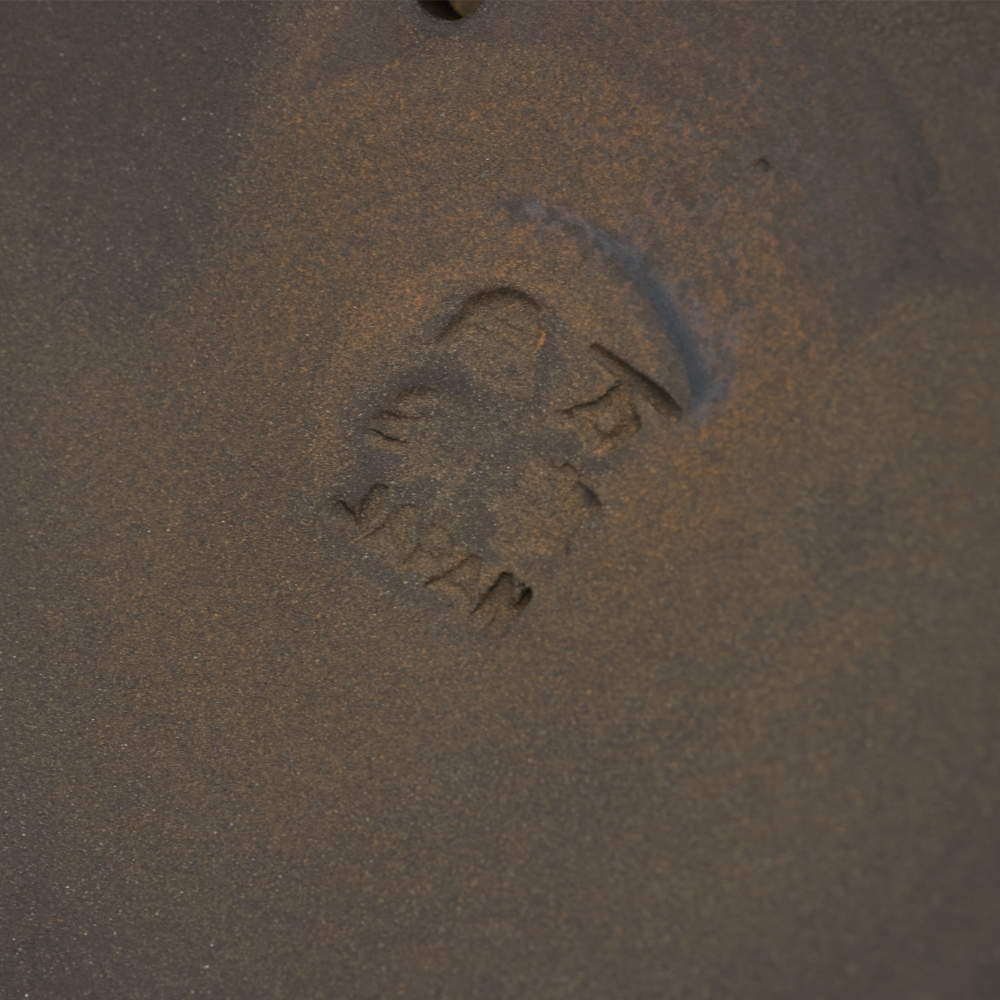
Nankei Pottery 南景製陶園
Founded in 1913 as a clay manufacturer in Yokkaichi – the home of Banko-yaki – Nankei Pottery started producing their own teapots and tableware in 1972. The family-run business manages every stage of production in-house, from blending their own clays to designing and crafting each piece. Led by a dedicated team of master artisans, Nankei Pottery combines their deep knowledge of raw materials with functional, contemporary aesthetics for effortless tea enjoyment.
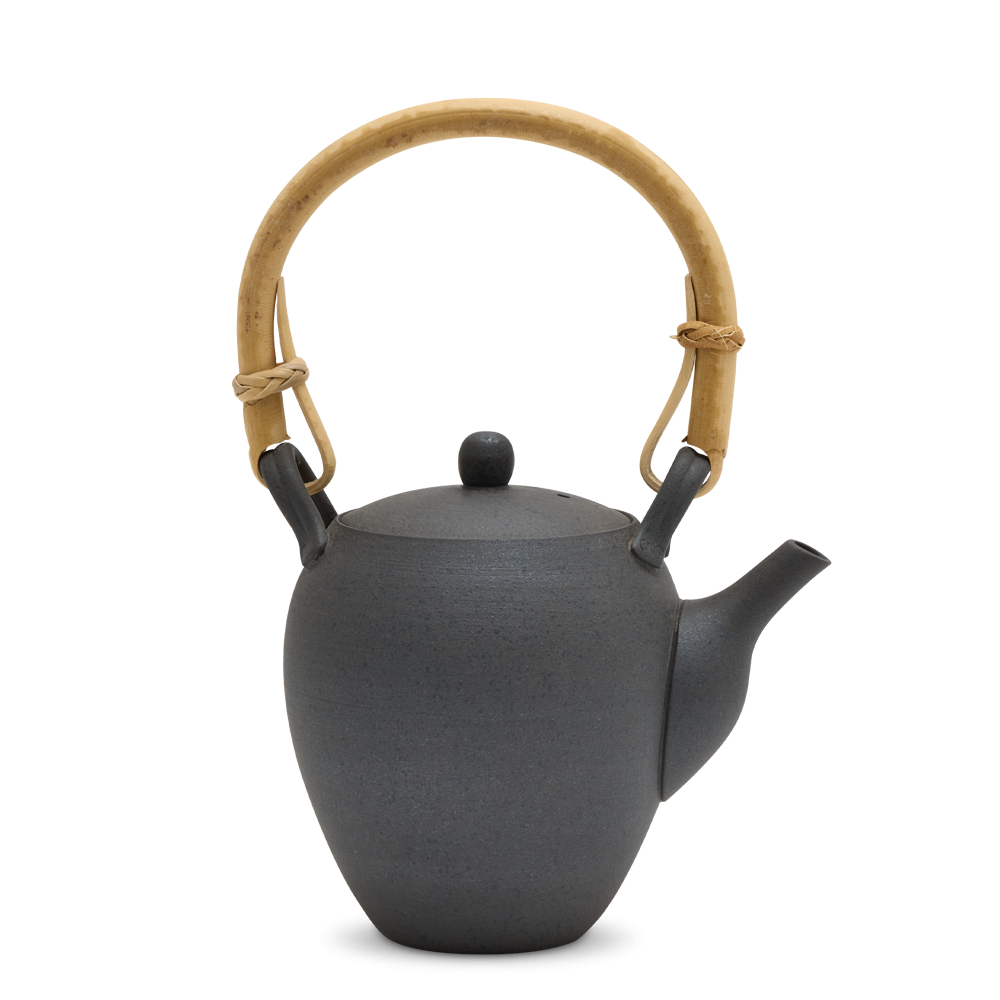
Dobin 土瓶
Literally "clay jug", the Dobin is a large teapot with a top handle, often made from bamboo, rattan, wood or metal. Historically used as kettles to boil water or infuse medicinal herbs, these days they are primarily used to brew larger quantities of tea – particularly Genmaicha, Hojicha and Bancha – making them ideal for serving several guests.
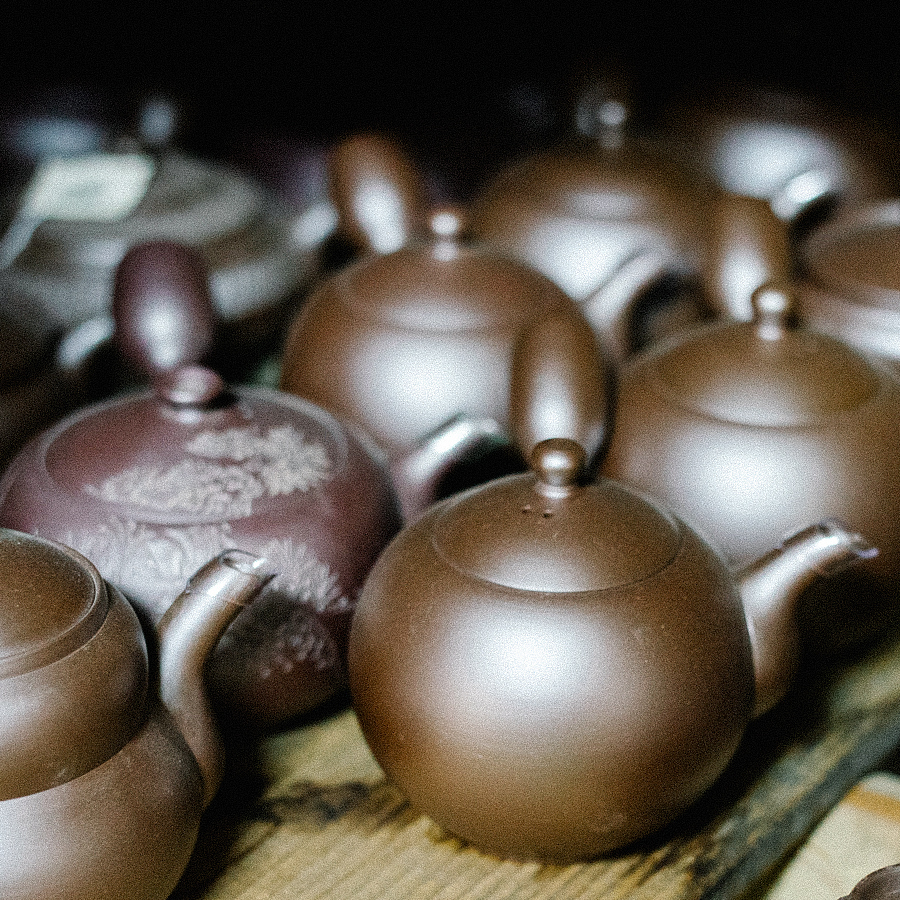
Banko Yaki 萬古焼
Merchant and passionate Chajin (“tea person”) Nunami Rozan is credited as the founding father of Banko-yaki. Back in the 18th century he opened a kiln in what is now Asahi-machi, Mie prefecture, stamping his wares with 萬古不易 – banko-fueki: “eternally unchanging” – in the hope that his ceramics would be passed down across generations forever. Today Banko-yaki is still produced in the Mie prefecture, primarily in the city of Yokkaichi, and is a protected traditional craft of Japan. Synonymous with Banko is the local, iron-rich Shidei "purple clay", which when baked in a high-temperature reduction furnace becomes very heat resistant and turns the characteristic deep violet-brown of Banko-yaki, with an almost metallic sheen. It is said that the tannins in green tea react with the iron in unglazed Shidei teaware to soften the astringency of the tea, highlighting its sweetness.
Our recommendations

Premium 92 P.
Kagoshima, Japan
From €22.90 €22.9040/100g
€572.50 / 1kg
-
-
-
Gyokuro/ Karigane 90/98 P.
Kirishima, Kagoshima
€15.90100g
€159.00 / 1kg