

NEW "Yin & Yang" teaware collection – find inner balance with every sip

Jozan Yamada III #2

Jozan Yamada III

SKU
0069
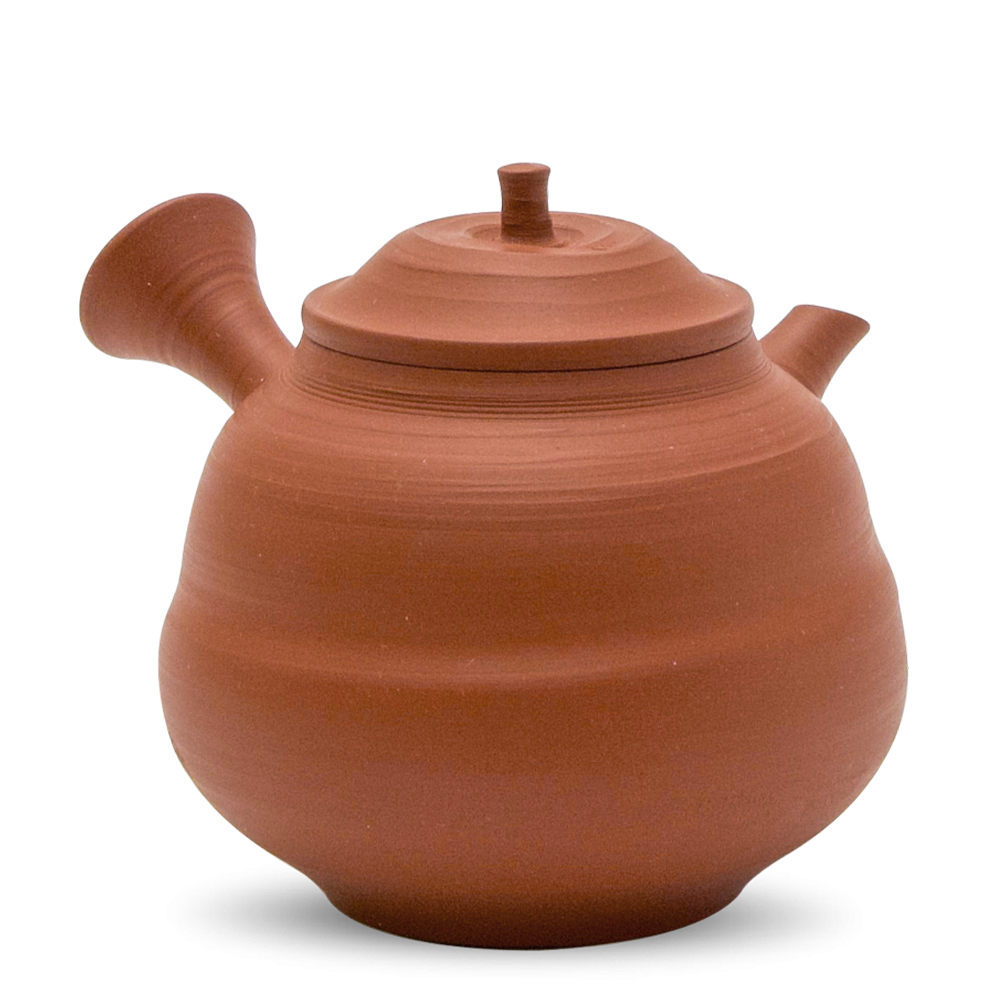
A rare, authentic Japanese Tokoname-yaki teapot by the late Jozan Yamada III (1924-2005): one of Japan’s most famous kyusu artists, who was designated a Living National Treasure. This unglazed, pear-shaped kyusu with side handle is made from red Tokoname clay and includes an integrated ceramic strainer.
Artist Jozan Yamada III
Style Tokoname Yaki
Item Side-handle Kyusu teapot (Yokode Kyūsu 横手急須)
Herkunft Tokoname, Aichi, Japan
Material Red clay (Shudei 朱泥)
Dimensions Ø8 x 7.9 x 10.8 cm
Weight 102g
Volume 190ml
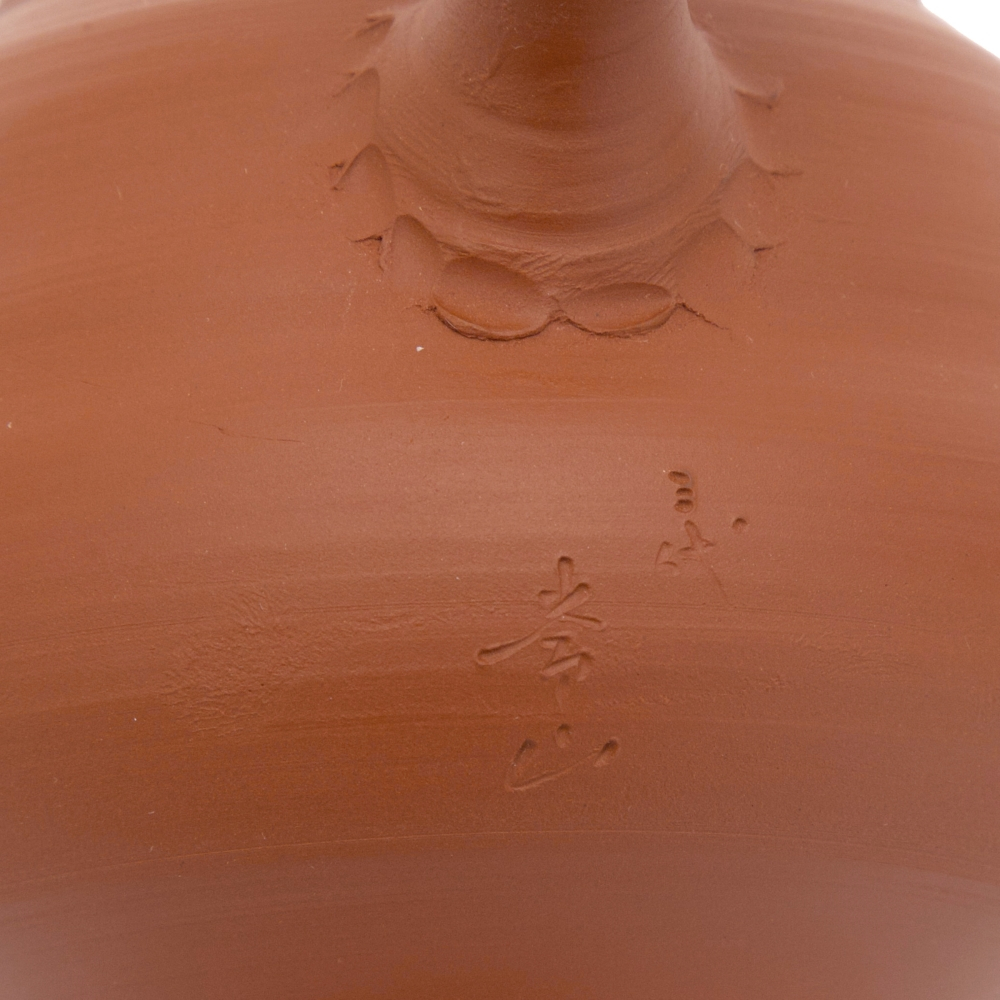
Artist's mark Signature below handle
Packaging Signed wooden box (Tomobako 共箱)


This masterpiece is part of the Yoshi en Private Collection, shown here for display only and is not for sale.

In stock
Vintage Kyusu Tokoname Jozan Yamada III #2

Jozan Yamada III 山田常山

Yamada Jōzan III is considered one of the most distinguished tea ceramic artists in Japanese history. Renowned for mastering over 100 distinct kyusu forms, he was the first (and so far only) Tokoname potter to be designated a Living National Treasure in 1998. This brought him much acclaim while elevating Tokoname teaware to the status of fine art. As president of the Society for Handmade Kyusu (Tezukuri Kyūsu no Kai, 手作り急須の会) and a mentor to many disciples – including his son Jōzan IV (b.1954), grandson Sou Yamada (b.1979) and Murakoshi Fugetsu (b.1950) – his profound influence on ceramic art endures today.

Born Minoru Yamada in 1924 to a renowned ceramic family in Tokoname, he learned his craft under his father, Jōzan II (1897–1961), and grandfather, Jōzan I (1868–1942). Upon his father’s death in 1961, he officially assumed the title Jōzan III, a hereditary title now held by his son following his own passing in 2005.

Vintage Kyusu Tokoname Jozan Yamada III #2

Kyusu 急須

The traditional Japanese teapot, Kyusu are typically made of ceramics with a side handle placed at a 90° angle to the spout for ease of pouring – however the handle can also be found over the top or in the back. Kyusu are perfect for preparing green teas and tend to be on the small side to prevent overbrewing. Depending on the size, shape and type of clay a Kyusu is made from will determine what type of tea is best prepared in it. There are many different regional styles as well as Kyusu made by certified Traditional Craftsmen, which are prized amongst collectors.

Vintage Kyusu Tokoname Jozan Yamada III #2

Tokoname-Yaki 常滑焼

Pottery has been produced in the city of Tokoname, Aichi prefecture, as far back as the 12th century, and since 1976 has been protected as a Traditional Craft of Japan. Tokoname was the site of the largest and oldest of the legendary Rokkoyō (六古窯): the “Six Ancient Kilns” of Japan, and is celebrated for its iron-rich Shudei clay that turns a bright red after firing. When fired a second time in a reduction oven, the red Shudei turns black – another characteristic colour of Tokoname-yaki.

Production

Rokuro 轆轤

Shaped by hand on a potter's wheel, making each piece unique.

Sujihiki 筋引

Fine lines on the surface of the clay, naturally created by the potter's fingers while turning on the wheel.

Sanka Shosei 酸化焼成

Oxidation fired: there is enough oxygen in the kiln for complete combustion, allowing iron compounds in the clay to oxidise and turn red.

Yakishime 焼き締め

Baked unglazed so that when green tea is prepared in the finished Kyusu, the tannins are able to interact with the iron in the clay body to soften bitterness and highlight the sweetness of the tea.

Suriawase すり合わせ

After firing, the lid is ground into the body so that it fits perfectly.
Awards

  • 1993 Japan Ceramic Society Prize
  • 1994 Aichi Prefectural Intangible Cultural Property
  • 1998 Living National Treasure for Tokoname-yaki

Our recommendations

Loading...
The image could not be loaded.