

Chawan Arakawa Setoguro

Arakawa Toyozo

SKU
0278
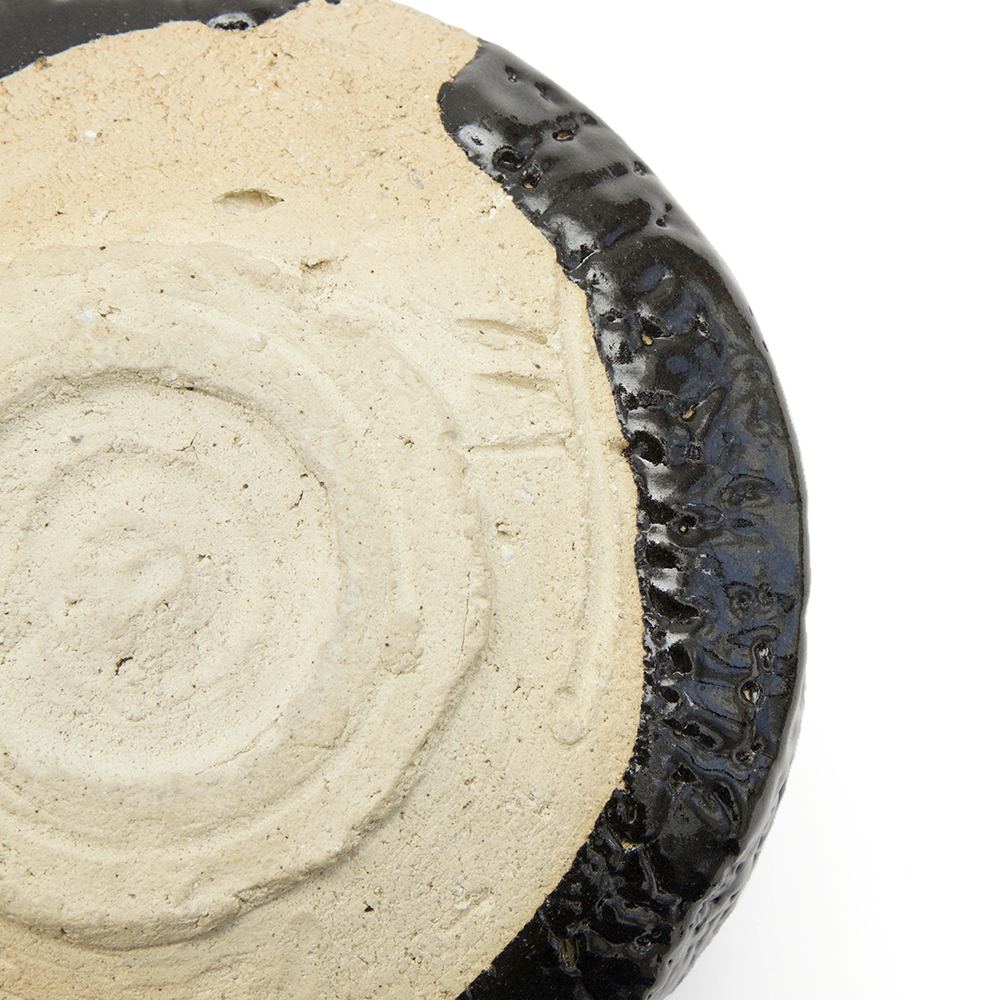
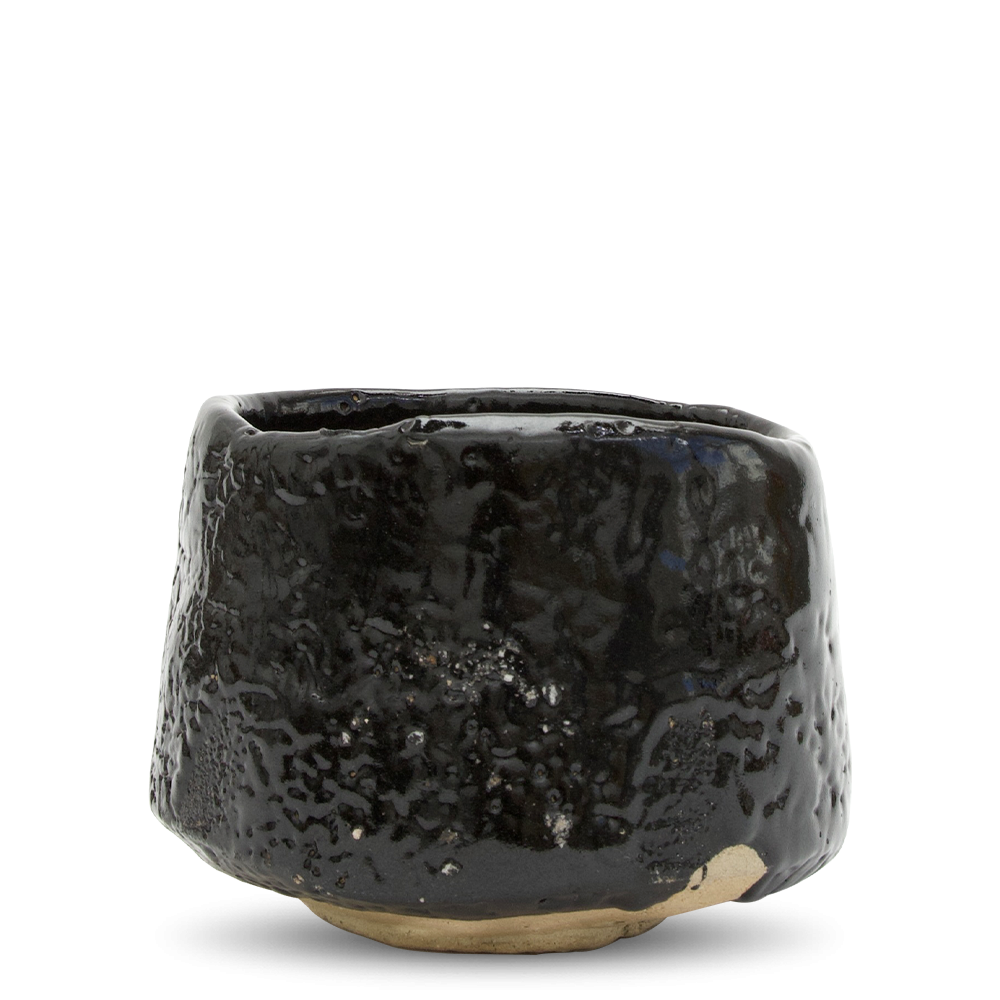
A Mino-yaki Chawan with a Setoguro glaze by the Japanese potter and Living National Treasure, Arakawa Toyozō (1894–1985). This bowl has an irregular, cylindrical shape that tapers slightly towards the top, finished with a glossy, textured black glaze that leaves the foot ring unglazed.
Artist Arakawa Toyozō
Object Chawan tea bowl
Period Showa, 20th century
Origin Mino, Gifu, Japan
Style Mino-yaki
Material Ceramic, Setoguro glaze
Dimensions Ø12.5 x 9.6cm
Weight 565g
Artist's mark 斗 inscribed side of foot ring
Packaging Signed Tomobako


This masterpiece is part of the Yoshi en Private Collection, shown here for display only and is not for sale.

In stock
Arakawa Toyozo Chawan Setoguro

Arakawa Toyozō 荒川 豊蔵

One of the most celebrated potters in 20th-century Japanese ceramics, Arakawa Toyozō (1894–1985) was born in Tajimi, Gifu prefecture – historically Mino province: the home of Mino-yaki, and the style he is famed for reviving.

Beginning his training under Miyanaga Tozan (1868–1941) in Kyoto, he would then become an apprentice to the inimitable Kitaōji Rosanjin (1883–1959) at the renowned Hoshigaoka Kiln in Kamakura. During this time, Arakawa discovered true Shino ware shards at the ancient Mutabora kiln site in Mino, where he later established his own kiln in 1933.

This discovery not only shaped his personal practice, but also rewrote the history of Japanese ceramics, as Shino wares were long believed to be from Seto. Along with his contemporary Katō Tokurō (1897–1985), Arakawa successfully reproduced various long lost Mino-yaki glazes of the Momoyama period (1573–1603), including Shino and Oribe.

In 1955, Arakawa was recognised as the first Living National Treasure for Shino and Setoguro wares. Decades later in 2010, his pupil, Katō Kōzō (1935–2023), would earn the same accolade for his Setoguro.

Arakawa Toyozo Chawan Setoguro

Chawan 茶碗

The tea bowl, known as a Chawan (茶碗: "tea bowl") or Matchawan (抹茶椀: "matcha tea bowl") in Japanese, originated in China and began to be imported to Japan in the 13th century. To this day, Chawan are used in the Japanese tea ceremony to prepare and serve Koicha (濃茶): a thick, dark tea made with the finest matcha, as well as Usucha (薄茶): a thinner, frothier version – or how matcha is typically prepared for everyday drinking. Chawan come in a variety of shapes and regional styles, sometimes with the addition of seasonal motifs, making them popular items to collect.

Mino-Yaki 美濃焼

Produced in the historic Mino province, present-day Gifu prefecture, Mino-yaki has a long ceramic history dating back to the 11th century. Mino ceramic production developed in correlation with that of Seto, in neighbouring Aichi prefecture, where one of the legendary Six Ancient Kilns of Japan was located. A variety of styles and glazing techniques were produced in Mino following the Japanese tea ceremony, or Chanoyu, boom in the Momoyama period, including yellow Kiseto, black Setoguro and Tenmoku glazes, as well as Shino and Oribe wares.

Seto-guro 瀬戸黒

Seto-guro, also known as Hikidashi-guro, Tensho-guro or Rikyu-guro, is a traditional type of Mino-yaki with a hard, glossy jet-black glaze. This is achieved using the hikidashi ("pull out") firing technique, where an iron-rich glaze is applied to the bowl, then pulled out the kiln while red hot and then rapidly cooled (much like Kuro-raku).
Awards

  • 1955 Living National Treasure (Ningen Kokuhō 人間国宝) for Shino & Seto-guro
  • 1965 Medals of Honour (Hōshō 褒章), Purple Ribbon
  • 1971 Person of Cultural Merit (Bunka Kōrōsha 文化功労者) / Order of Culture (Bunka-kunshō 文化勲章)

Our recommendations

Loading...
The image could not be loaded.