



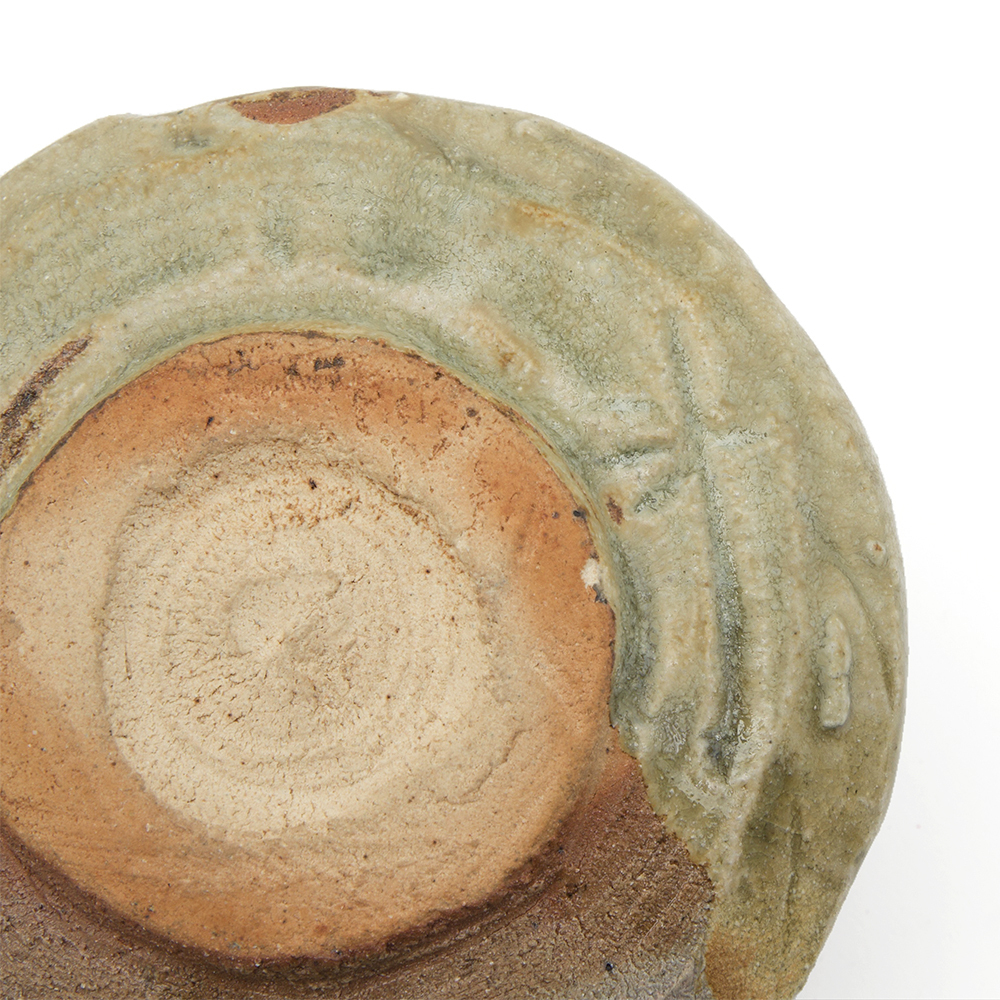
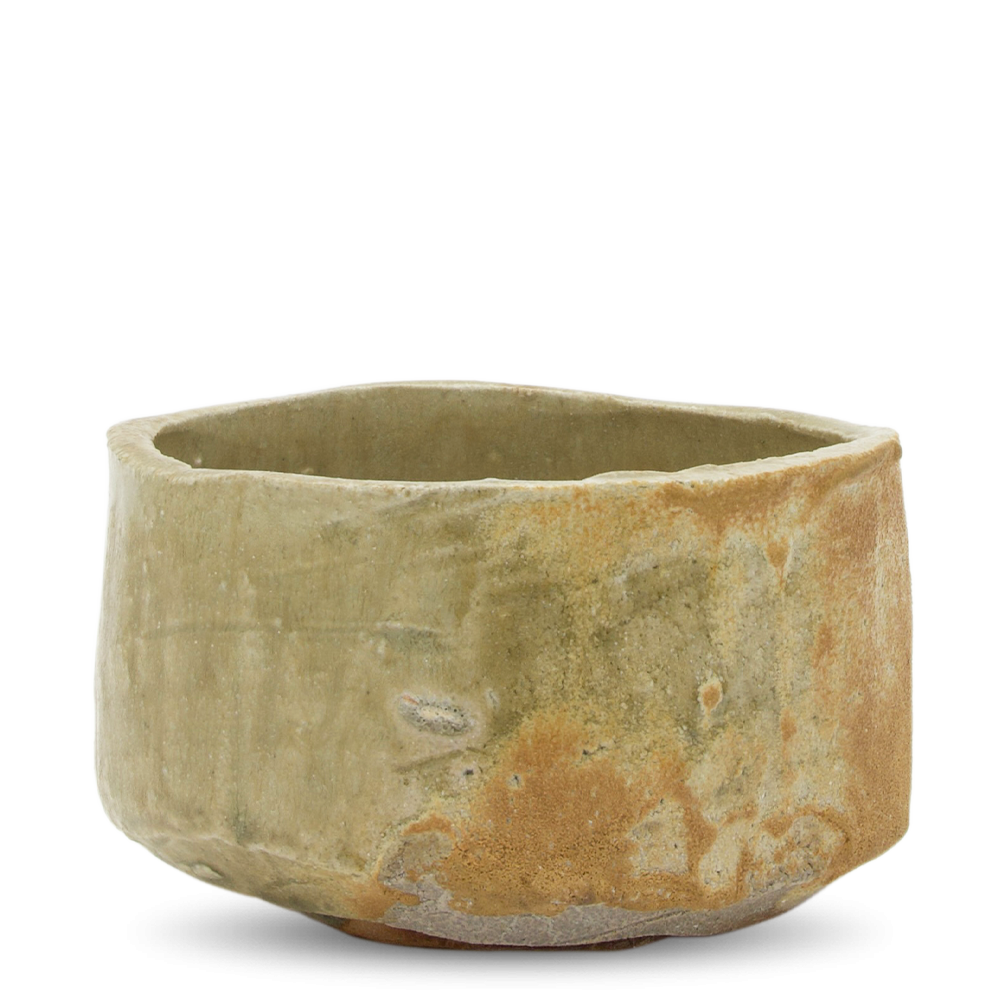
Produced in the historic Mino province, present-day Gifu prefecture, Mino-yaki has a long ceramic history dating back to the 11th century. Mino ceramic production developed in correlation with that of Seto, in neighbouring Aichi prefecture, where one of the legendary Six Ancient Kilns of Japan was located. A variety of styles and glazing techniques were produced in Mino following the Japanese tea ceremony, or Chanoyu, boom in the Momoyama period, including yellow Kiseto, black Setoguro and Tenmoku glazes, as well as Shino and Oribe wares.
Ki-seto 黄瀬戸
Literally "yellow Seto", Ki-seto ware ranges in colour from chartreuse to dark mustard. This is achieved by applying an ash glaze over a white clay body, then oxidation firing. Ki-seto may also be decorated with line carvings, floral motifs, and green accents called Tanpan, caused by copper sulphate.