

NEW "Yin & Yang" teaware collection – find inner balance with every sip

Kyusu Setsudo #2

Yoshikawa Setsudo

SKU
7716
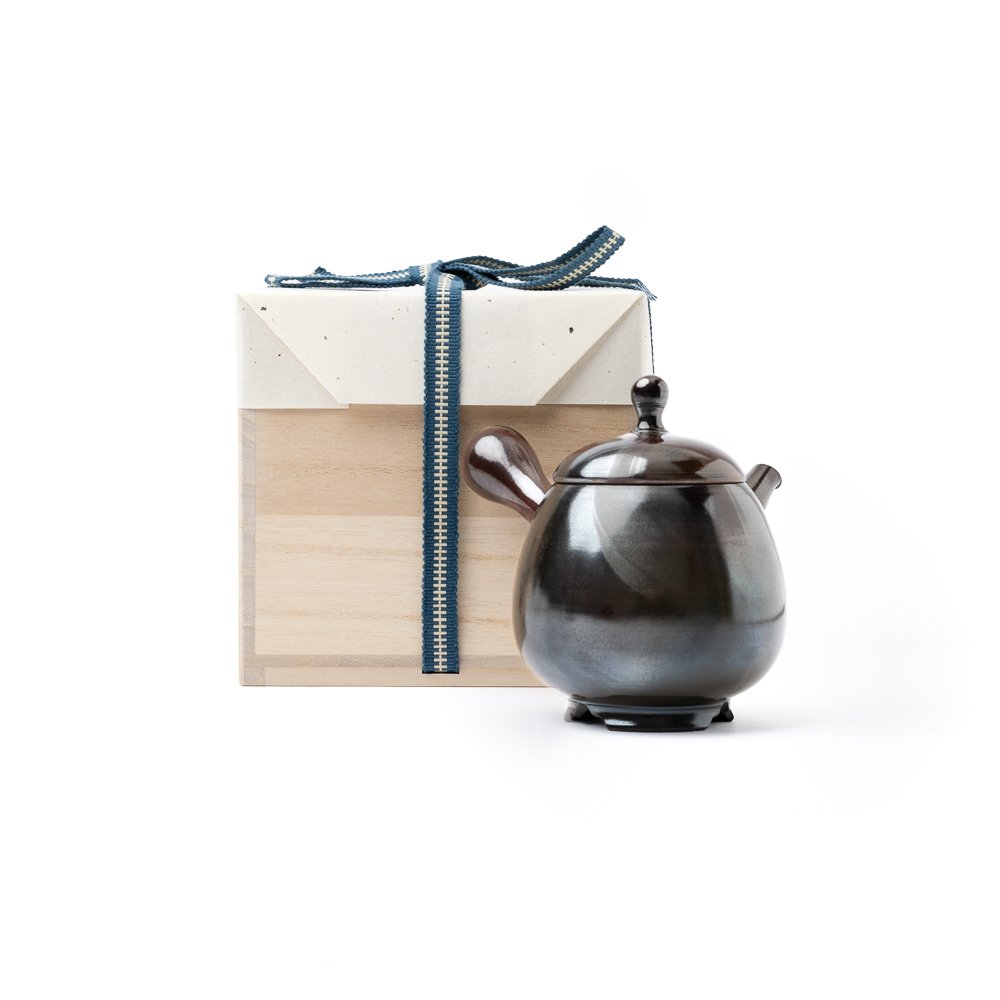
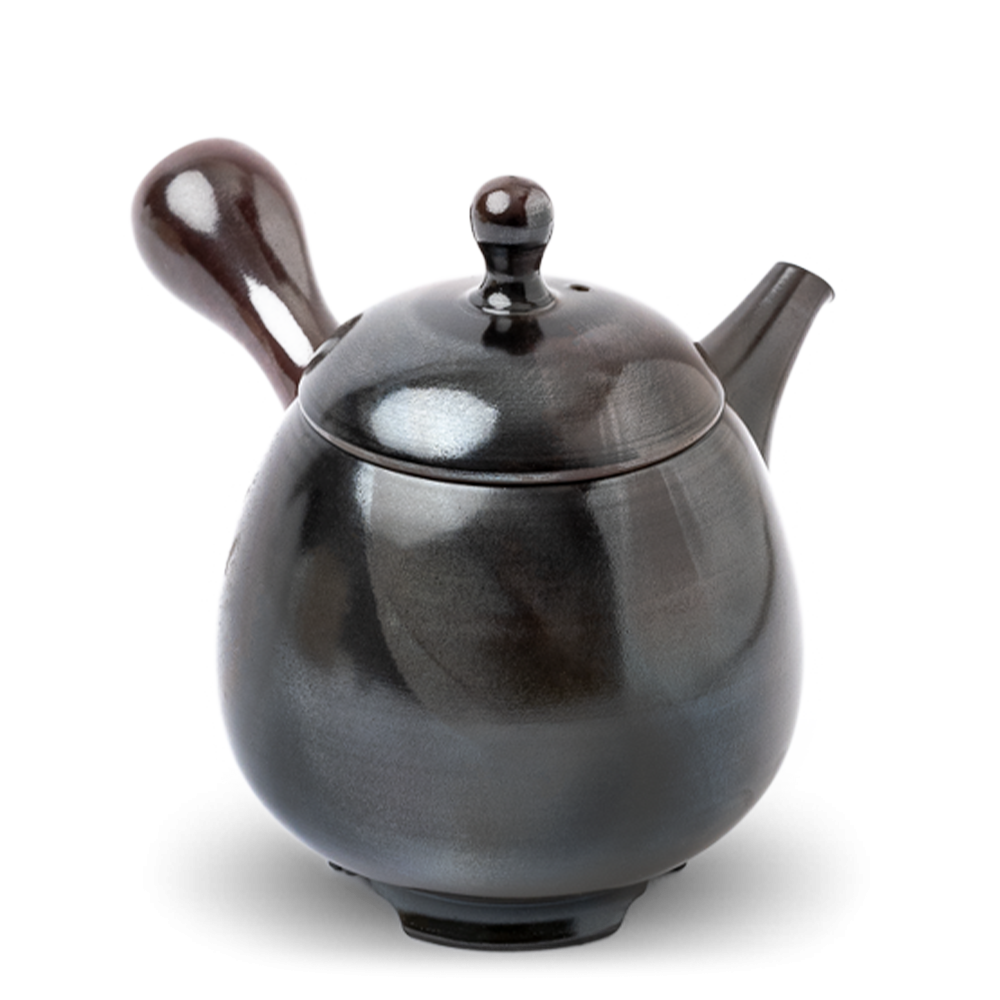
A magnificent Tokoname Kyusu masterpiece by the eminent Japanese potter, Setsudo, with signature egg-shaped body, red-brown Yōhen ombré and a carved Kōdai foot. The meticulously polished surface – so shiny that is looks varnished – highlights the exquisite craftsmanship in the perfectly smooth curves.
Artist Yoshikawa Setsudo 吉川雪堂
Type Side handle teapot (yokode kyūsu 横手急須), red-brown
Origin Tokoname, Aichi, Japan; Tokoname-yaki 常滑焼
Date Early 21st century
Material Red clay (shudei 朱泥), unglazed (Yakishime 焼き締め)
Volume 250ml
Dimensions Ø8.5cm x H9.5cm, handle 5cm, foot Ø5cm
Weight 210g
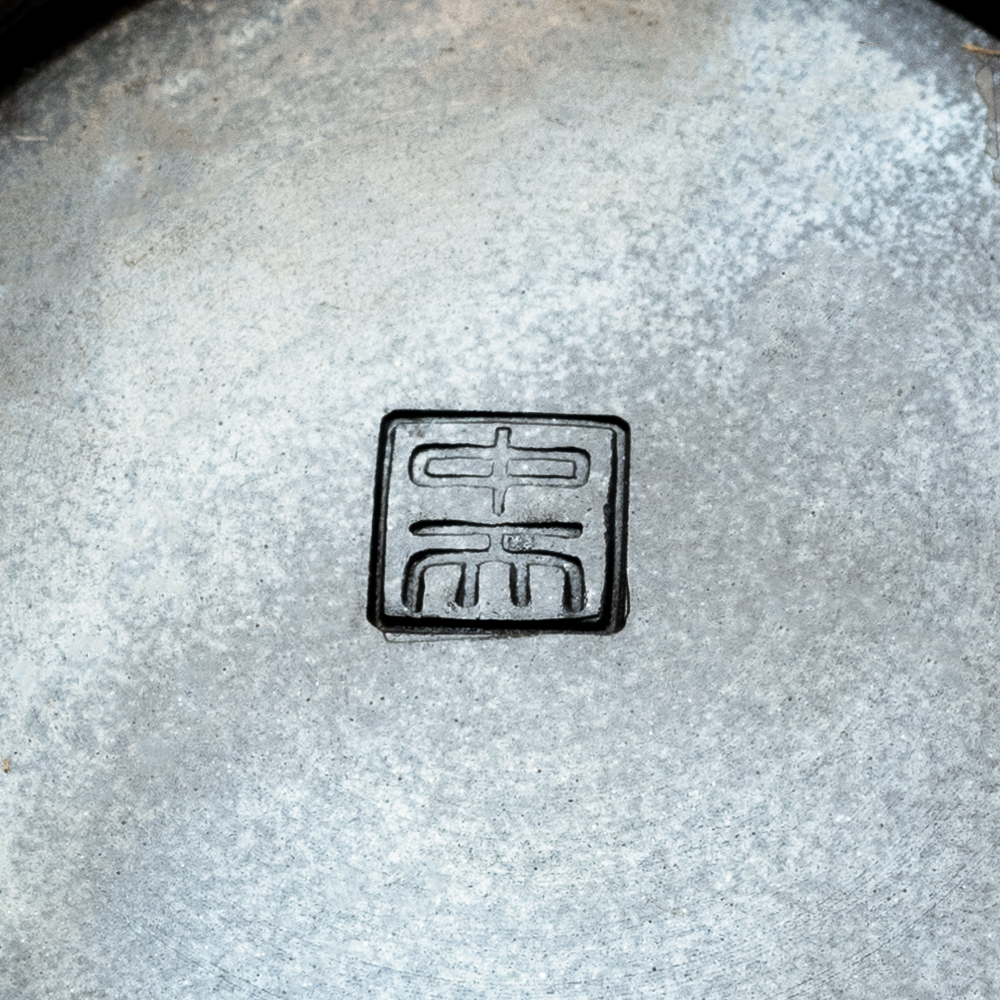
Artist Mark Seal beneath handle
Packaging Wooden box (Kiribako 桐箱)


This masterpiece is part of the Yoshi en Private Collection, shown here for display only and is not for sale.

In stock
Kyusu Tokoname Setsudo Yohen Kodai #2

Yoshikawa Setsudo 吉川雪堂

Perfection best describes the teapots of Yoshikawa Setsudo (b.1947). The third generation Kyusu artisan is a master of the potter’s wheel, his exquisite teapots with no irregularities and up to a thousand tiny hand-perforated holes in the ceramic strainers are a feat that even modern machinery cannot achieve. All his pieces are made of classic unglazed Tokoname Shudei red clay with a variety of signature finishes including Yōhen ombré, intricate illustrative carving in collaboration with his younger brother Yoshikawa Kodo, as well as painstakingly polished surfaces – which truly highlight the phenomenal craftsmanship.

Kyusu Tokoname Setsudo Yohen Kodai #2

Kyusu 急須

The traditional Japanese teapot, Kyusu are typically made of ceramics with a side handle placed at a 90° angle to the spout for ease of pouring – however the handle can also be found over the top or in the back. Kyusu are perfect for preparing green teas and tend to be on the small side to prevent overbrewing. Depending on the size, shape and type of clay a Kyusu is made from will determine what type of tea is best prepared in it. There are many different regional styles as well as Kyusu made by certified Traditional Craftsmen, which are prized amongst collectors.

Kyusu Tokoname Setsudo Yohen Kodai #2

Tokoname-yaki 常滑焼

Pottery has been produced in the city of Tokoname, Aichi prefecture, as far back as the 12th century, and since 1976 has been protected as a Traditional Craft of Japan. Tokoname was the site of the largest and oldest of the legendary Rokkoyō (六古窯): the “Six Ancient Kilns” of Japan, and is celebrated for its iron-rich Shudei clay that turns a bright red after firing. When fired a second time in a reduction oven, the red Shudei turns black – another characteristic colour of Tokoname-yaki. Traditional Tokoname Kyusu teapots are unglazed on the inside, allowing the tannins in the tea to interact with the iron in the clay body, which is said to reduce astringency and highlight the sweetness of green teas. Another key feature of these Kyusu are the perfectly fitting lids, which are ground into the clay body after firing in a technique known as Suriawase.

Production

Rokuro 轆轤

Shaped by hand on a potter's wheel.

Yōhen 窯変

Written as “kiln change”, Yōhen refers to the variations in colour and texture on the surface of ceramics that happen during the firing process. This is a feature found across various Japanese pottery styles including Tokoname, Shino, Bizen and Tenmoku. Within Tokoname-yaki, the typical two-tone Yōhen effect can be achieved by firing the ceramic item for a second time in a reduction furnace, but by partially burying it in rice husks or ashes, only the exposed part changes colour.

Kangen Shosei 還元焼成

Reduction fired: there is not enough oxygen in the kiln for complete combustion, causing red iron oxide (Fe₂O₃) in the clay to turn black (FeO).
Our recommendations

Loading...
The image could not be loaded.