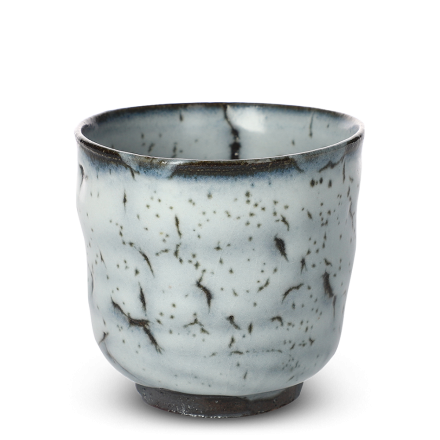



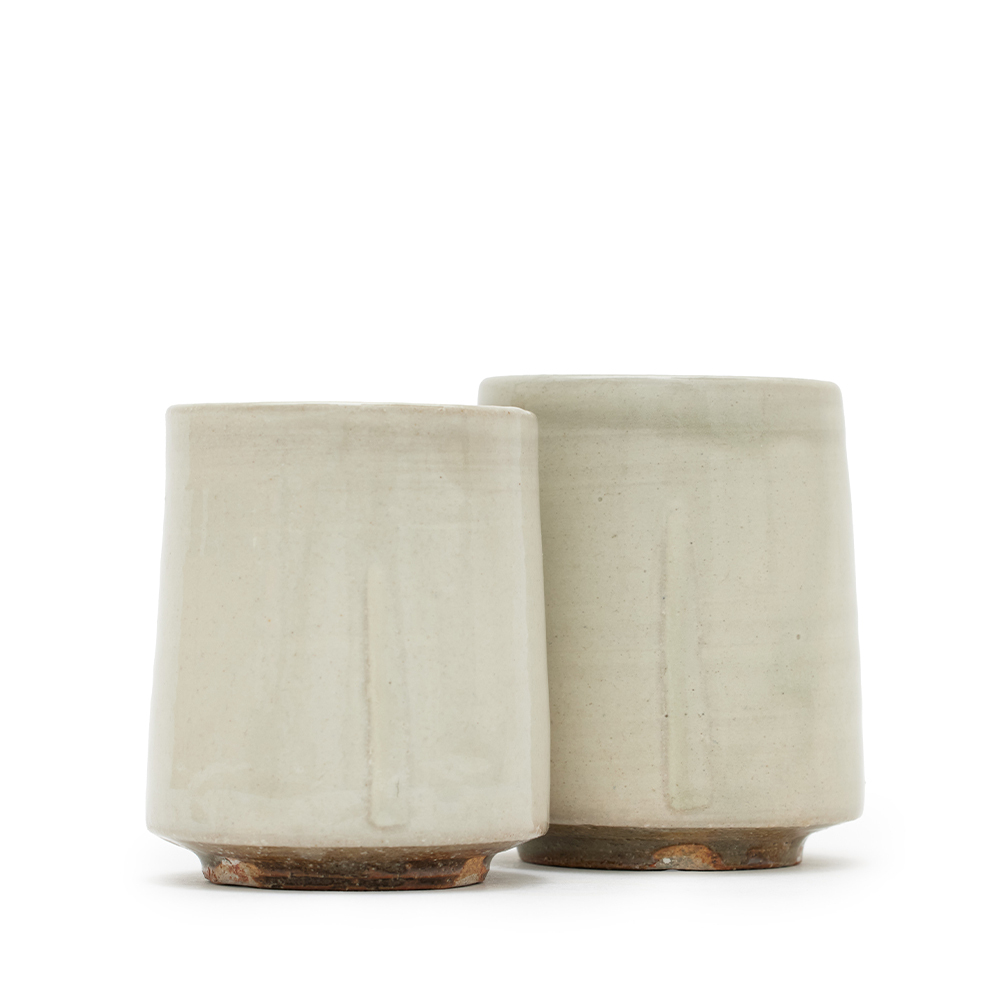
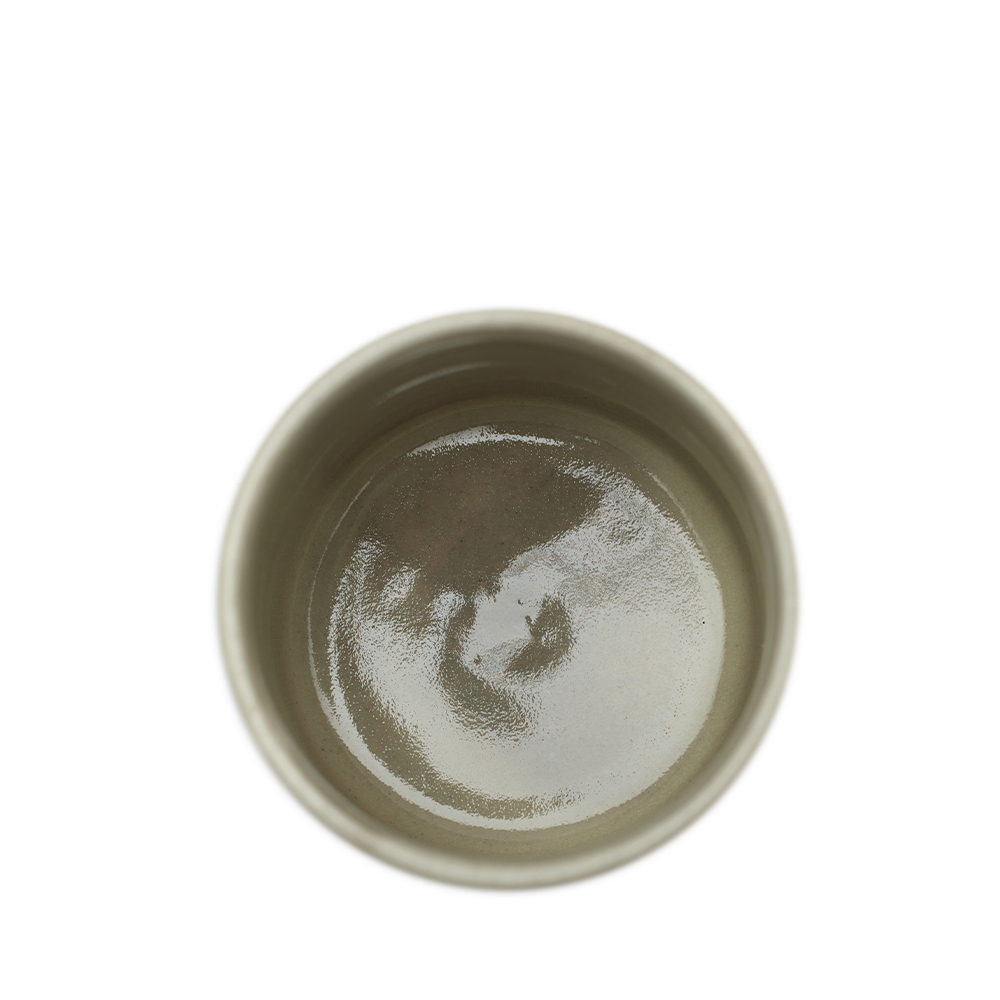


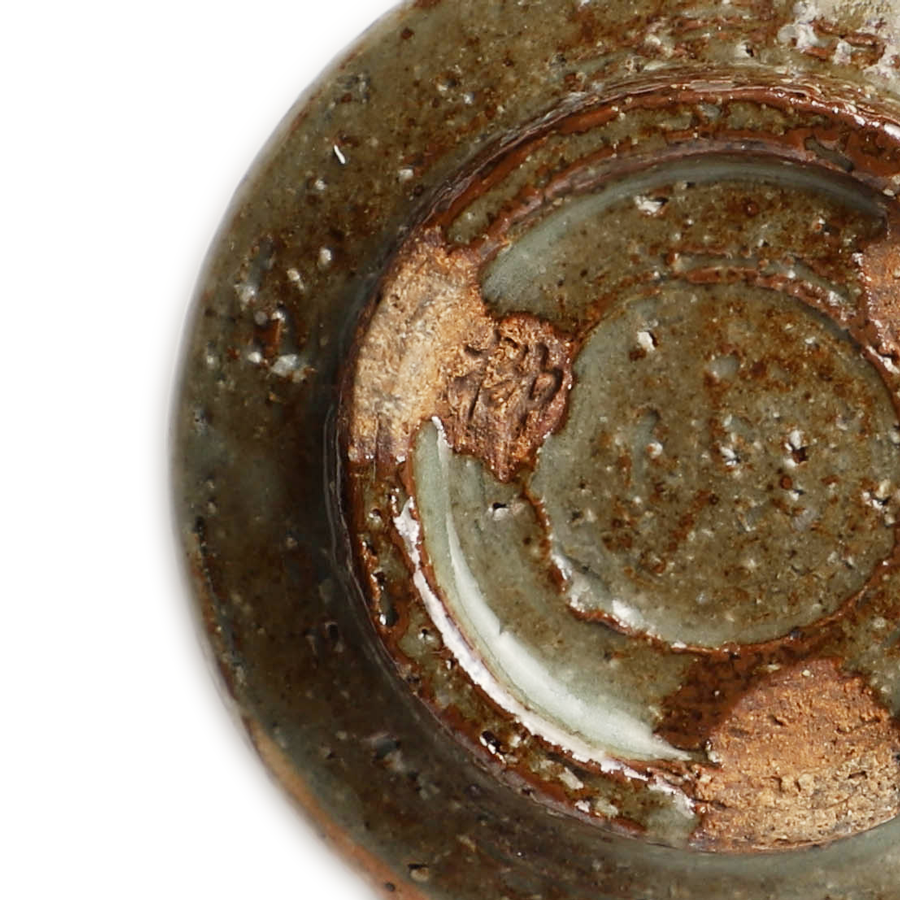
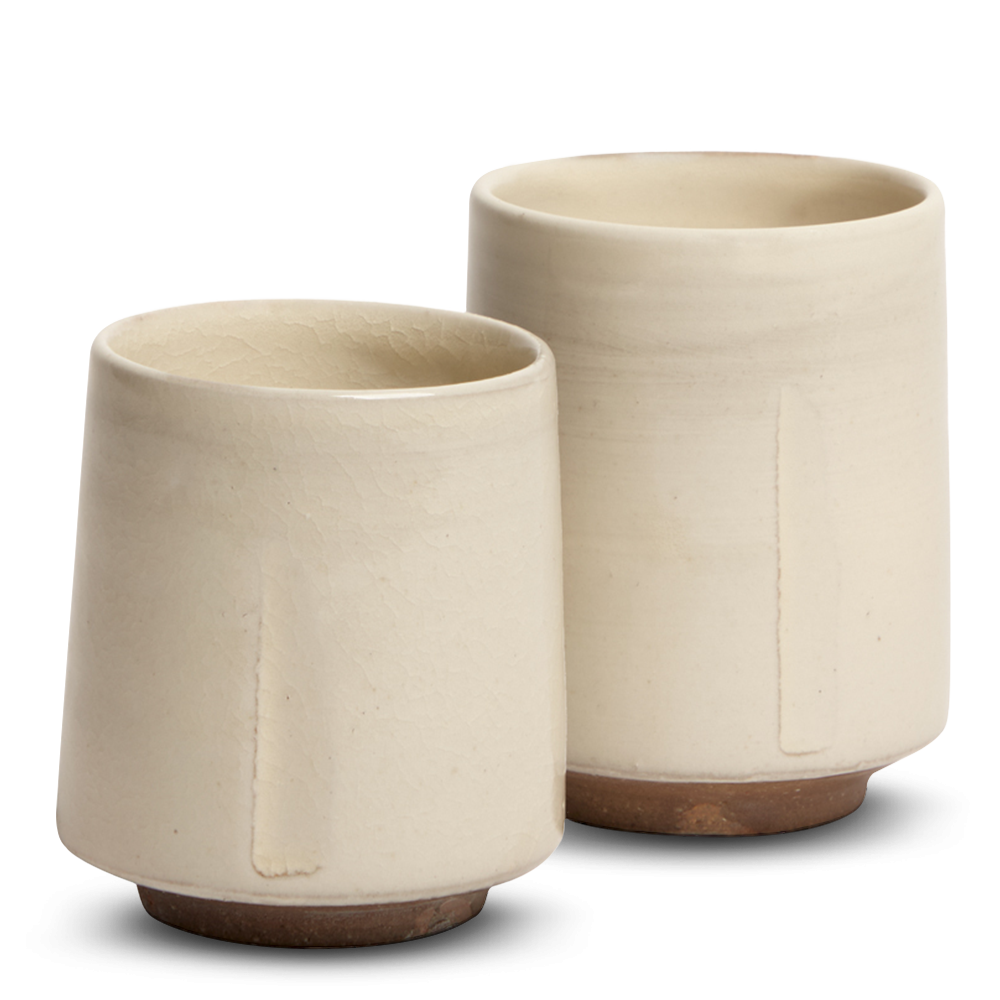
The Kohiki style developed in Korea at the beginning of the Joseon dynasty (1392-1910) and is where a dark, iron-rich clay body is dipped into a white porcelain slip, over which after drying, a thin layer of translucent feldspar or ash glaze is applied. The name Kohiki means “ground powder” and alludes to the fine powdery coating of the glaze. The more Kohiki ware is used, the more it develops its character: the colour may grow a little darker and develop tiny crackles – these natural changes are appreciated as Keshiki (literally “scenery”) by pottery lovers.
Gohon 御本
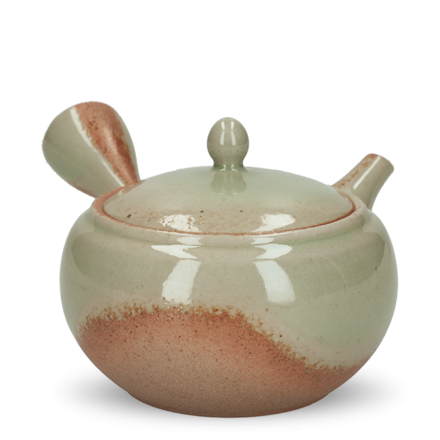
Gohon refers to a phenomenon in which reddish accents appear on the surface of ceramics after reduction firing, due to the iron in the clay rising to the surface. Since the intensity of the colour cannot be controlled, each piece of ceramic becomes a unique work of art. Gohon is often found on Kohiki wares, but are also highly valued in Asahi- and Hagi-yaki.