



Special features in location, cultivation & processing
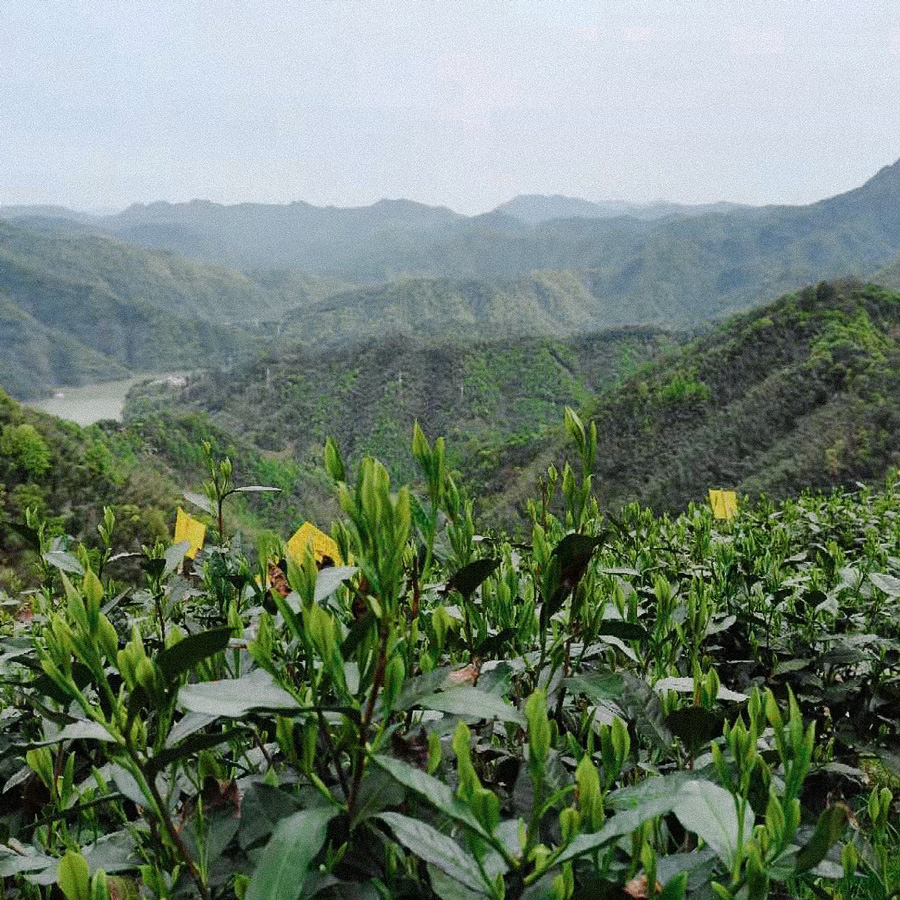
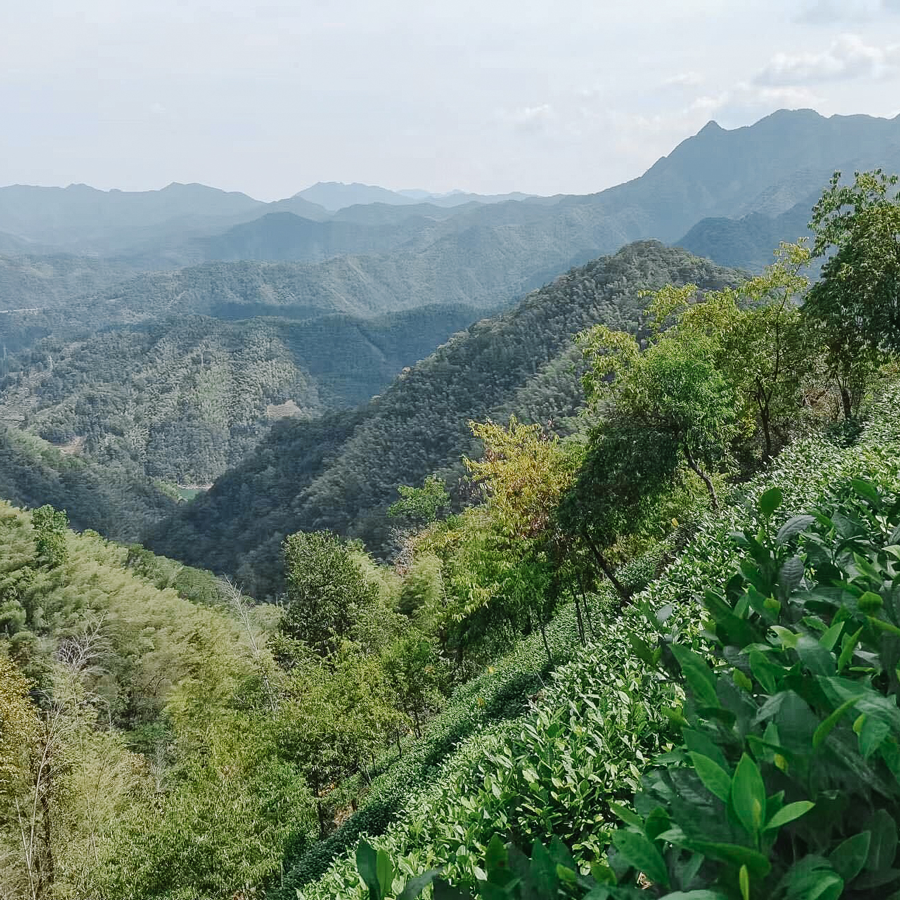
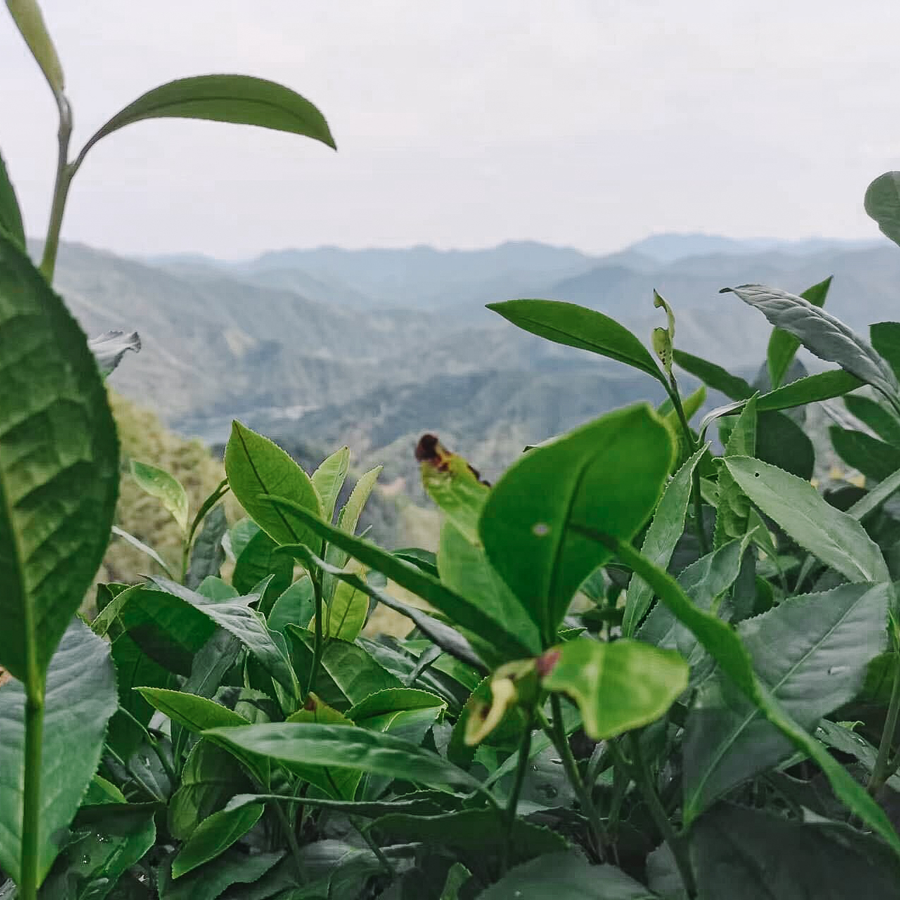
The Huang Shan mountain range (“Yellow Mountain”) in Anhui is among the five most famous mountains in China and has been depicted by Chinese painters for centuries as an idealised landscape: cloud-shrouded, steep rock formations and gnarled pines clinging to the cliffs. The region is renowned for several celebrated teas, including not only Tai Ping Hou Kui but also Keemun black tea and Huang Shan Mao Feng green tea. Within the mountain region, there are only three towns that specialise in the production of Tai Ping Hou Kui: Houkeng (猴坑 Monkey Pit), Houcun (猴村 Monkey Village) and Yanjia (颜家 Yan Family). Our Tai Ping Hou Kui comes from a tea farm in Houkeng. Because of its north-facing and slightly east-tilted location, Houkeng is regarded by connoisseurs as the finest growing area of the three. The slope lies in a shaded zone, protected from strong sunlight. Combined with the region’s misty conditions, this shading promotes a higher amino-acid content in the leaves, resulting in an especially smooth taste.
The first harvest of the year usually takes place between late March and early April, followed by another in the second half of April. These two spring harvests are considered the finest. This tea comes from the first, most valuable and most sought-after harvest of the year. During picking, meticulous care is taken to select only the finest, undamaged leaves.
In its processing, Tai Ping Hou Kui does not fundamentally differ from other Chinese green teas. After harvesting, the leaves undergo a brief withering period, followed by heating, typically in a large wok. This roasting step is known as “kill green” (殺青 Sha Qing), meaning the enzymatic oxidation or maturation of the leaves is halted through applied heat. It is the decisive step that defines the tea as a green tea. Several cycles of drying then follow in a specially designed oven.
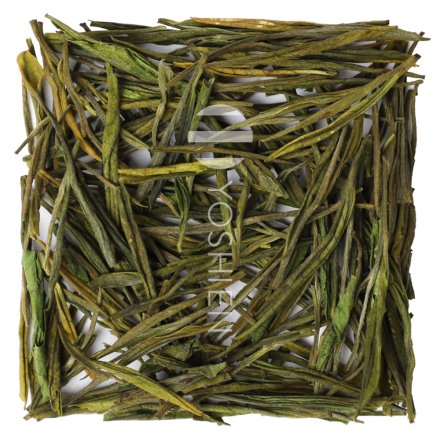
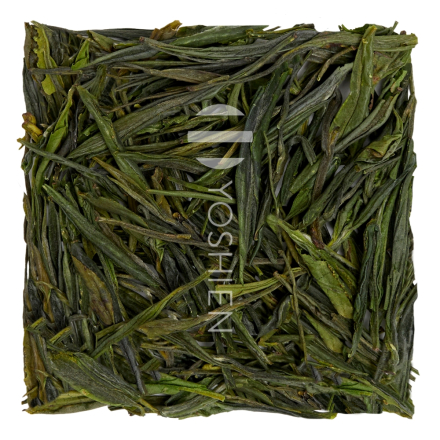
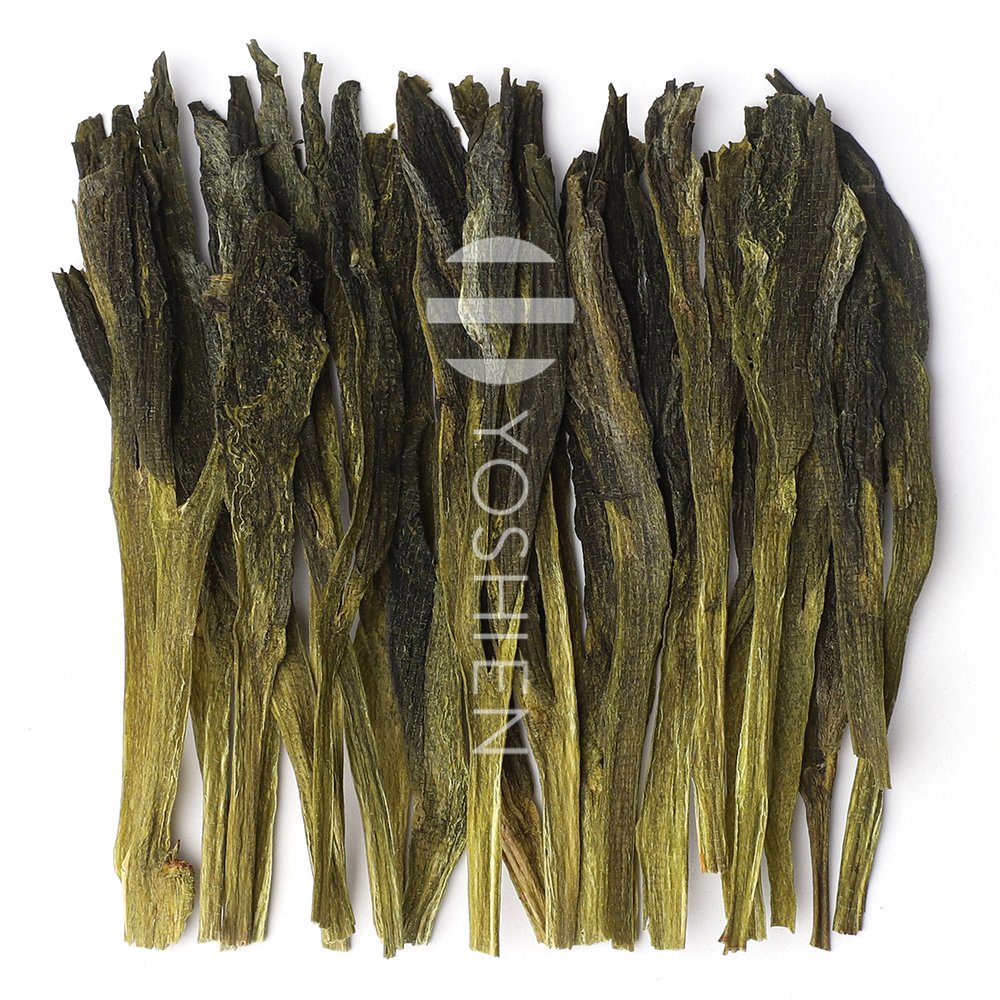
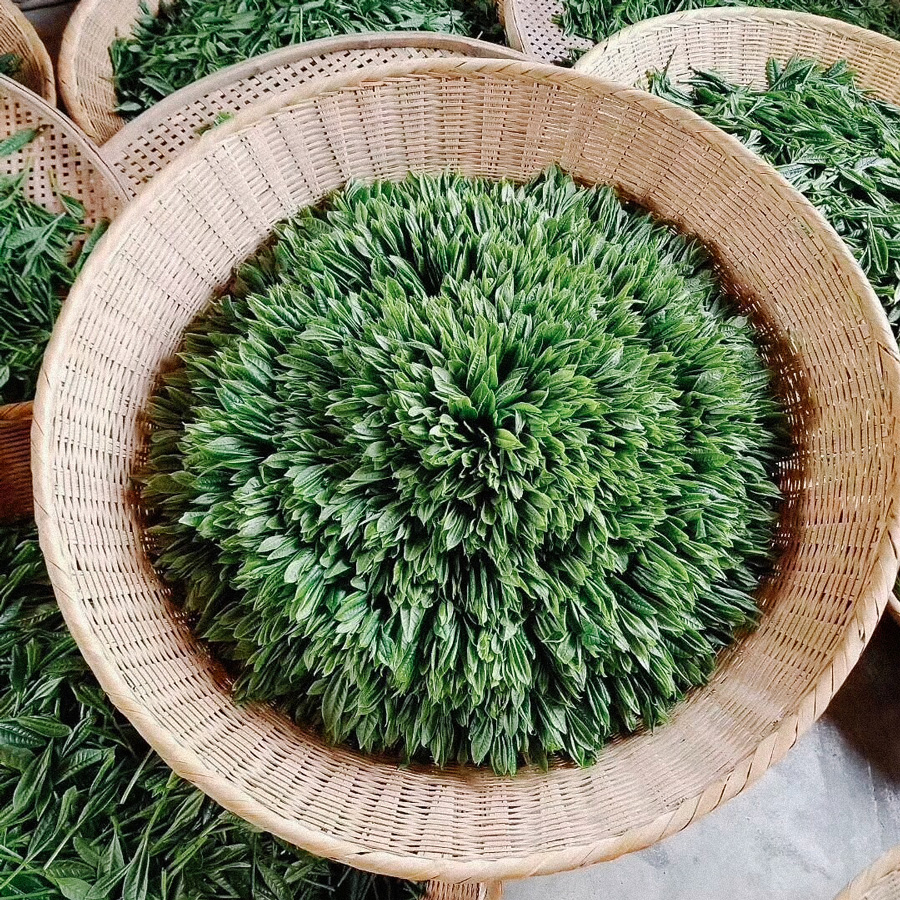
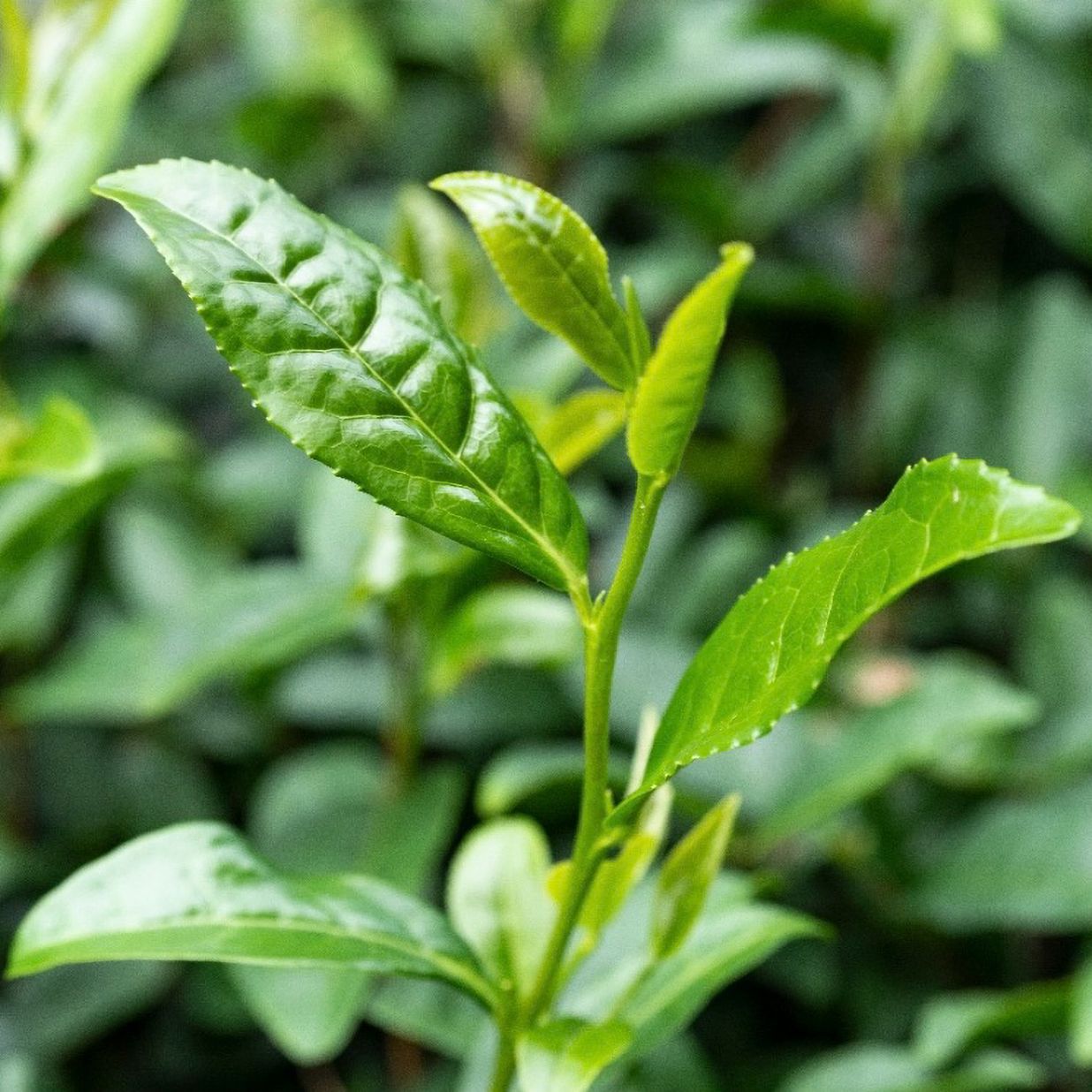
What distinguishes Tai Ping Hou Kui green tea in particular is the cultivar, the meticulous leaf selection and shaping, and its unique oven-drying process. The cultivar Shi Da Cha No. 6 (柿大茶六號), endemic to Anhui, is characterised by its relatively large, oval leaf shape. Over time, it has become recognised as the ideal cultivar for producing Tai Ping Hou Kui. After harvesting, the leaves are given only a short resting period, as they must be processed quickly by hand. Individual leaves are selectively removed from the leaf pairs to achieve uniform pairs approximately 6 cm in length, following strict standards. This work is not only extremely time-consuming but also requires great skill and, above all, experience. Swift handling is crucial, as the leaves are still undergoing natural oxidation at this stage, and their flavour changes with every passing minute.
After this stage, the leaves are gently heated in the wok for a short time to halt further oxidation. Following a brief cooling period, the decisive step that gives Tai Ping Hou Kui its signature shape begins: in several cycles at different temperatures, the leaves are heated and gently pressed in an oven fired with charcoal.
Single Origin
This tea comes 100% from the above-mentioned tea farmer, directly sourced.