

Chawan Ryonyu
Kuro-Raku

Raku Kichizaemon IX

SKU
0360
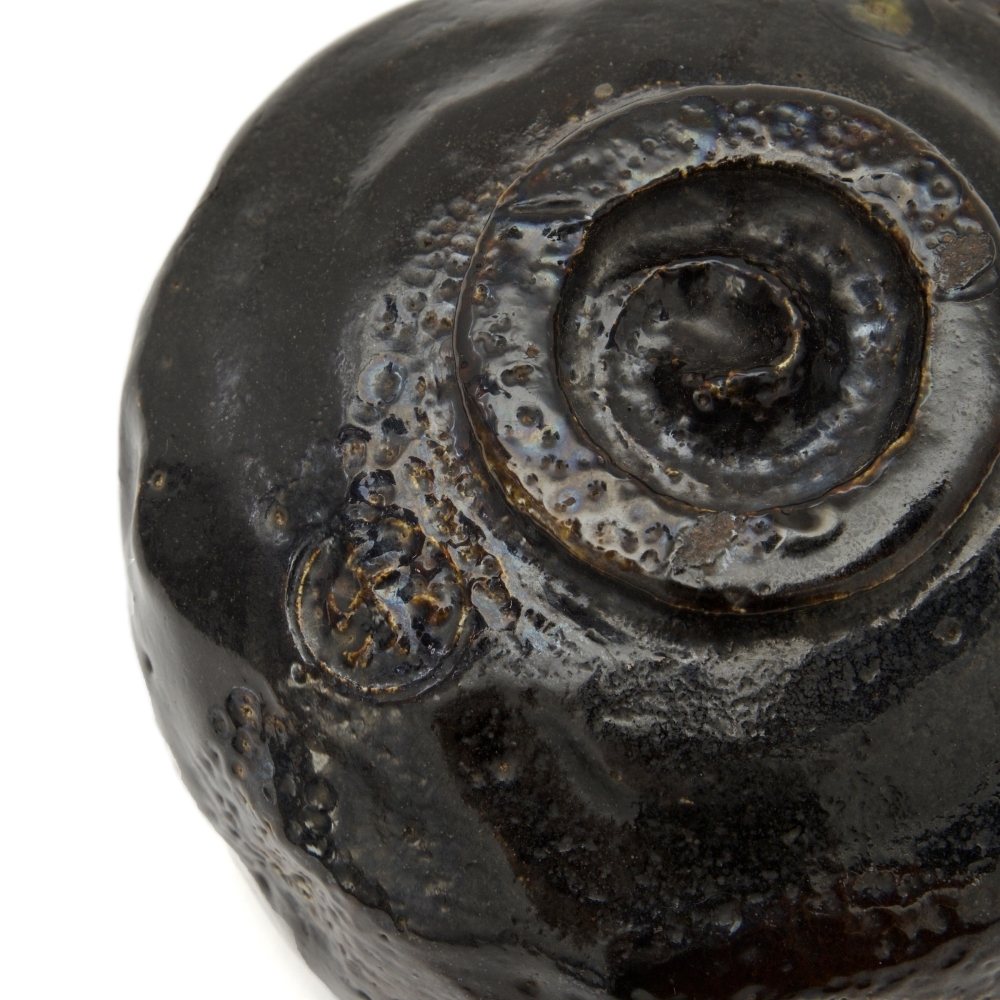
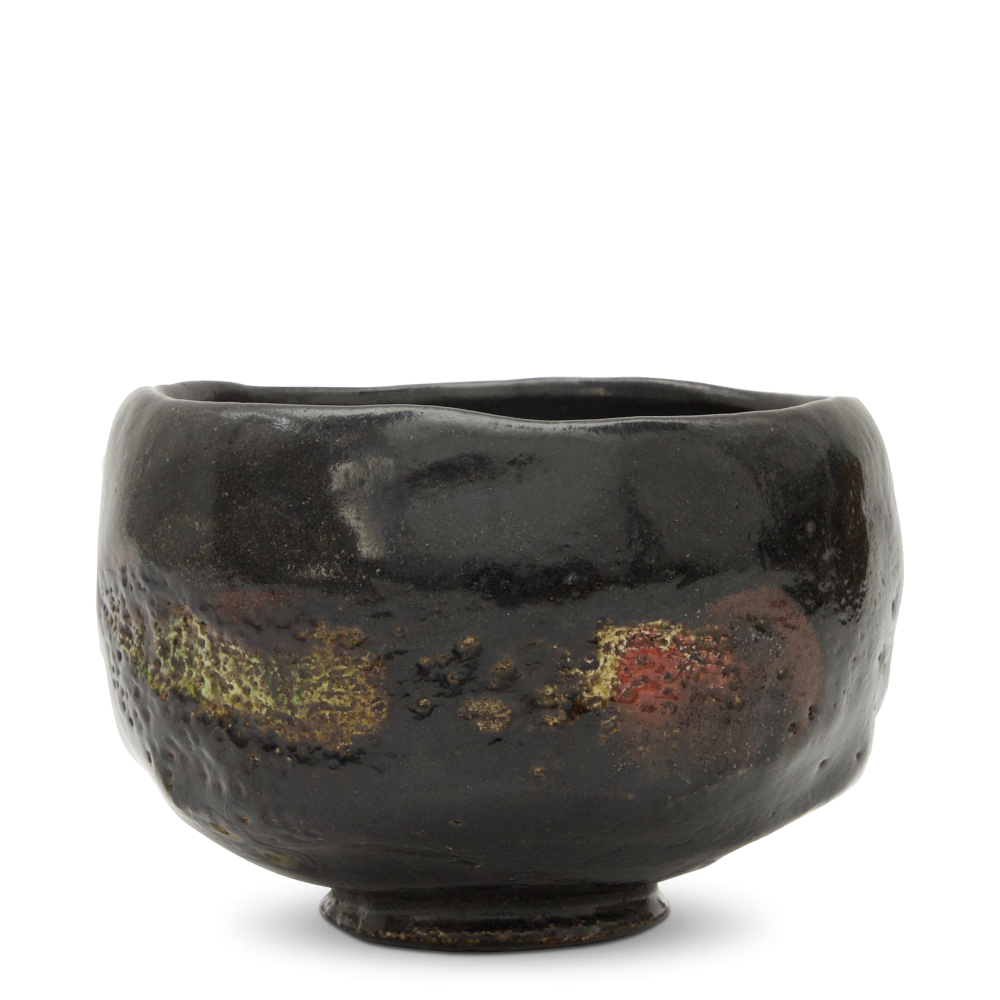
A rare Kuro Raku-yaki Chawan tea bowl by Raku Kichizaemon IX, aka Ryonyu (1756-1834), handcrafted in Kyoto in the the late 18th to early 19th century. This classic Raku Chawan has a slightly uneven, cylindrical form, completely covered in a glossy black glaze, with red-green decorative detail. Raku spiral in foot ring, with Raku stamp to the side.
Artist Raku Kichizaemon IX (Ryōnyū)
九代 樂吉左衛門 (了入)
Item Chawan tea bowl
Period Edo, late 18th to early 19th century
Origin Kyoto, Japan
Style Raku-yaki
Material Ceramic, black Raku glaze
Dimensions Ø11.6 x 7.3cm
Weight 292g
Artist's mark Raku seal to base
Packaging Signed Tomobako with Raku seal, silk bag


This masterpiece is part of the Yoshi en Private Collection, shown here for display only and is not for sale.

In stock
Raku Kichizaemon IX Ryonyu Chawan Kuro-Raku

Raku Kichizaemon IX

Ryōnyū was born in 1756, the second son of Chōnyū (1714-1770). After the early death of his older brother Tokunyū (1745-1774), the eighth head of the family, Ryōnyū assumed leadership at the age of only 14 and held the position until his retirement in 1825. His 65 years of intensive creative activity were characterised by a multitude of stylistic developments, which became more free and spontaneous in his later years. His most significant legacy lies in the use of bold trimming techniques applied vertically, horizontally and obliquely, adding dynamism and decoration to the hand-formed Raku bowl.

The Raku family traces its roots back to Tanaka Chōjirō: a 16th century Kyoto-based tile-maker who developed Raku bowls in collaboration with foremost Japanese tea master, Sen no Rikyu. After Chōjirō's death, his successor Jōkei, was bestowed the Raku seal (樂) and name by Prince Hideyoshi, which, 450 years and sixteen generations later, continues to identify the work of the Raku family today.

Raku Kichizaemon IX Ryonyu Chawan Kuro-Raku

Chawan 茶碗

The tea bowl, known as a Chawan (茶碗: "tea bowl") or Matchawan (抹茶椀: "matcha tea bowl") in Japanese, originated in China and began to be imported to Japan in the 13th century. To this day, Chawan are used in the Japanese tea ceremony to prepare and serve Koicha (濃茶): a thick, dark tea made with the finest matcha, as well as Usucha (薄茶): a thinner, frothier version – or how matcha is typically prepared for everyday drinking. Chawan come in a variety of shapes and regional styles, sometimes with the addition of seasonal motifs, making them popular items to collect.

Raku-Yaki 楽焼

Almost exclusively used for tea ceremonies, traditional Japanese Raku is a special type of hand-moulded, lead-glazed pottery that is quick-fired at low temperatures then rapidly cooled in air or water to give it its characteristic soft, warm texture. Designed to reflect the sobriety of the Wabi-cha aesthetic championed by Japanese tea master, Sen no Rikyu, Raku bowls were originally produced, without ornament, in black or red – colours believed to bring out the vibrant green of Matcha most beautifully.

Kuro-Raku 黒楽

Black or Kuro Raku tea bowls are coated in an opaque glaze traditionally made from iron- and manganese-rich stones from the Kamo river in Kyoto (Kamogawa-ishi). After applying several layers of glaze, the bowl is fired at around 1200°C for 5 to 10 minutes. The red hot bowl is then removed from the kiln with tongs – often leaving small marks on the bowl’s surface – and cooled in air or water.
Our recommendations

Loading...
The image could not be loaded.