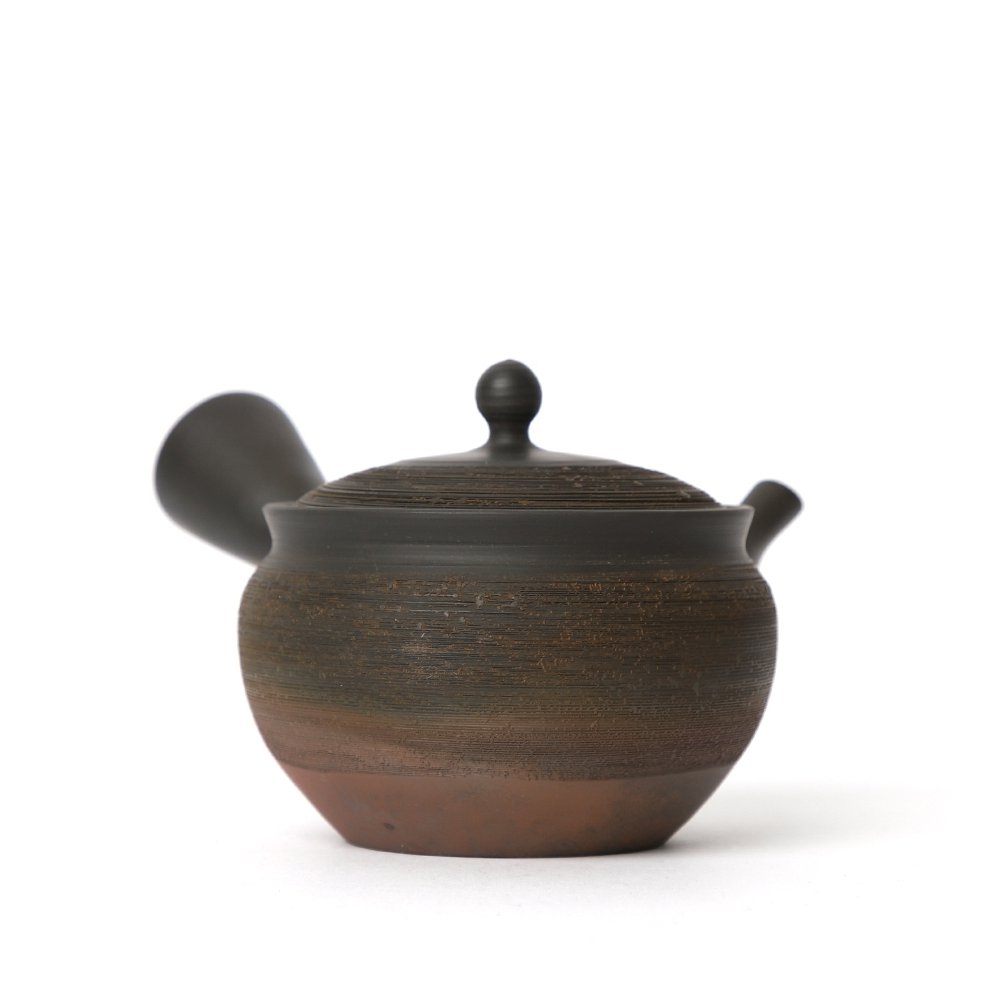
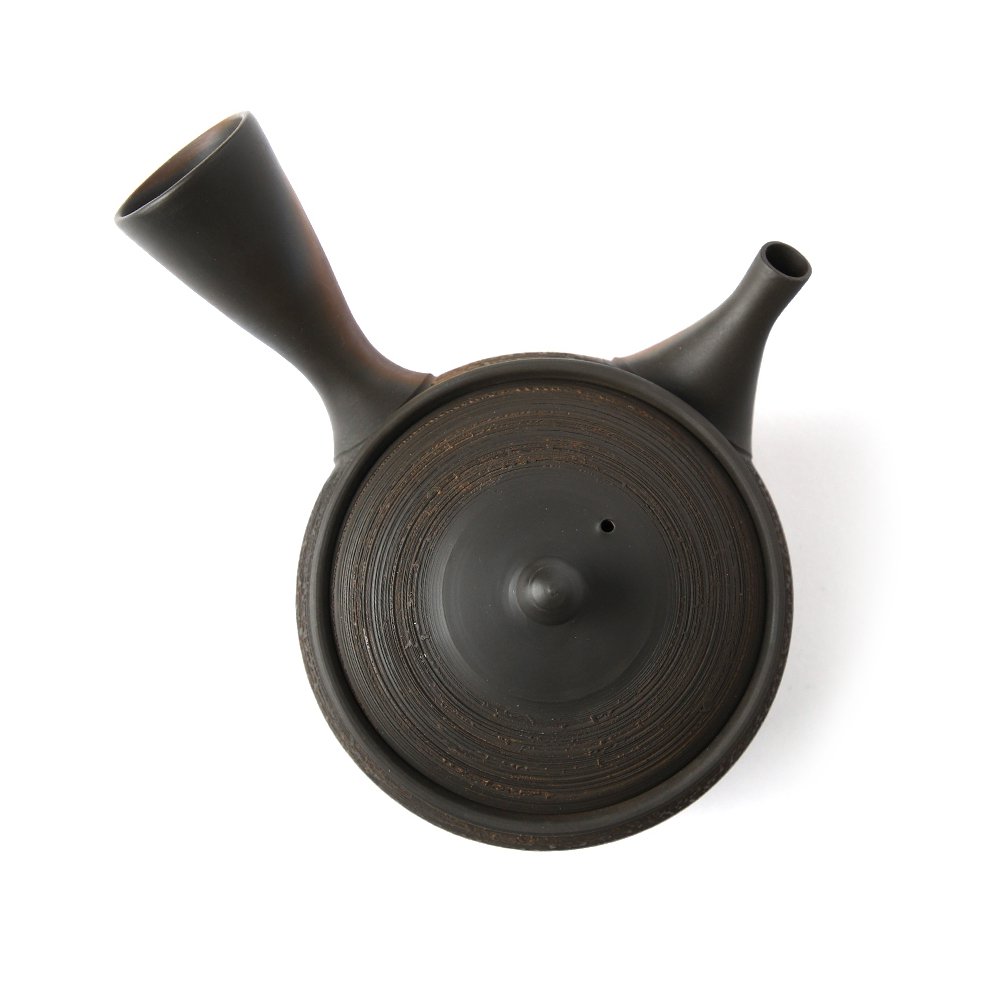
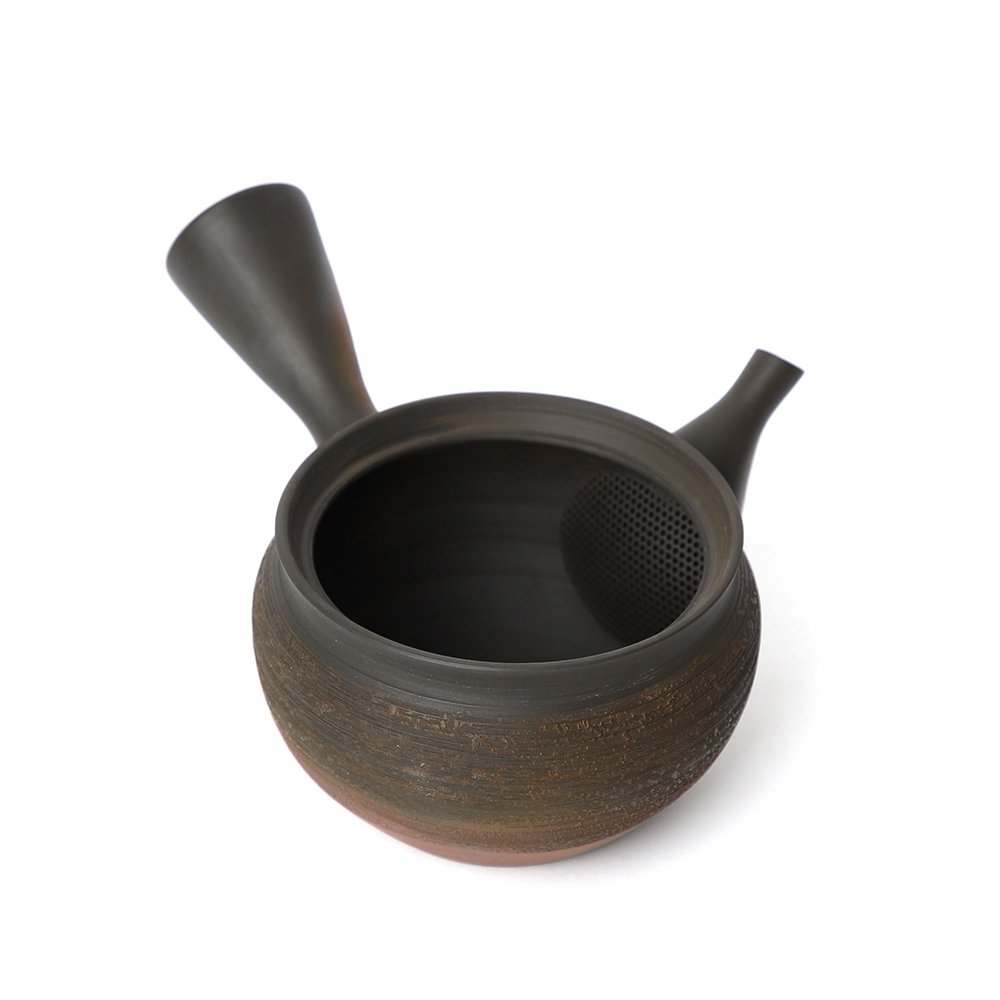
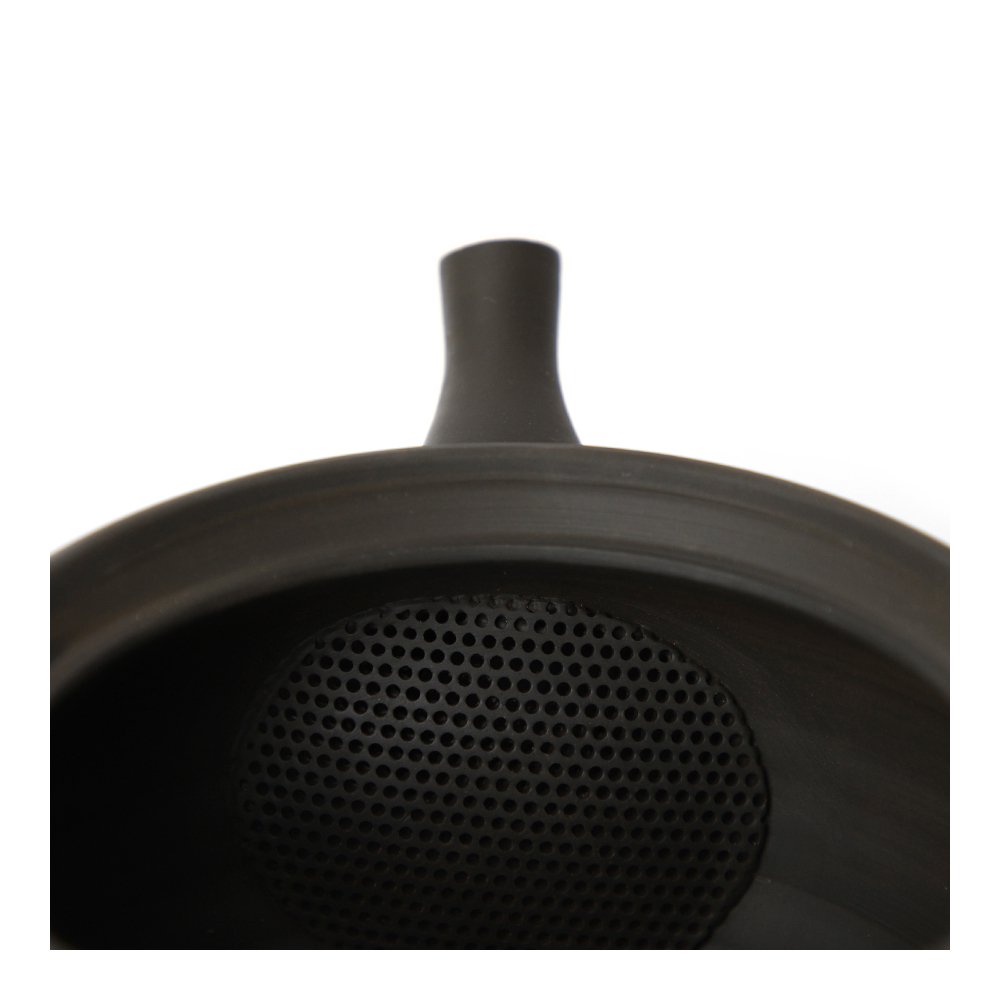
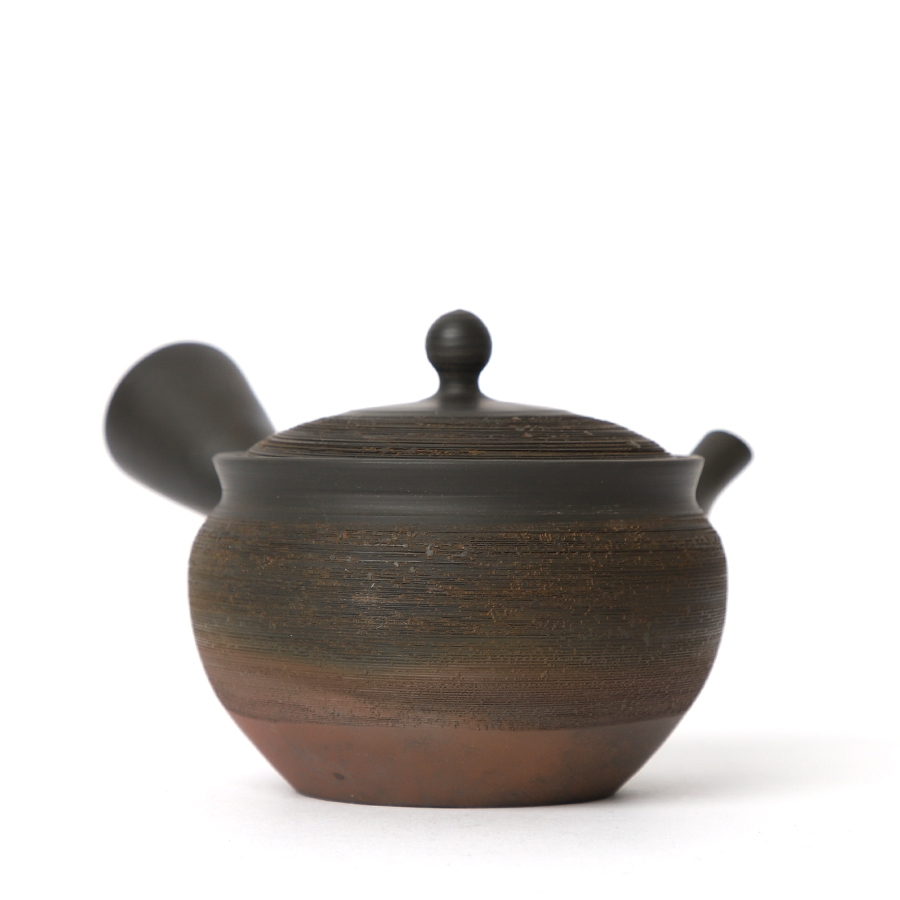
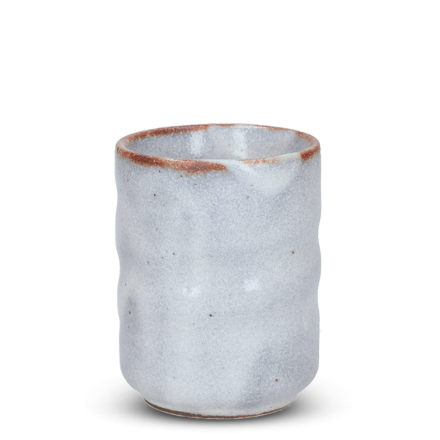
Pottery has been produced in the city of Tokoname, Aichi prefecture, since as far back as the 12th century, and since 1976 it has been protected as a traditional craft of Japan. Tokoname was the site of the largest and oldest of the legendary Six Ancient Kilns of Japan and is celebrated for its iron-rich shudei clay that turns red after firing. When fired a second time in a reduction oven, the red shudei turns black – the other characteristic colour of Tokoname-yaki. Traditional Tokoname kyusu teapots are unglazed on the inside, allowing the tannins in the tea to react with the iron in the clay body, which is said to reduce astringency and highlight the sweetness of green teas. Another key feature of these kyusu is the perfectly fitting lids, which are ground into the clay body after firing in a technique known as suriawase.
Yōhen 窯変
"Yōhen" refers to the variations in colour and texture of ceramics which happens during firing. This technique is a feature in various Japanese pottery styles, including Tokoname, Shino, Bizen and Tenmoku. In the case of Tokoname-yaki, the red/bronze and black two-tone effect can be achieved by partially burying a red, oxidation-fired item in rice husks or ashes and refiring it in a reduction furnace, which will turn the exposed part black, while leaving the buried part red.