



As for all unglazed ceramics, wash with warm water only. Do not use washing-up liquid or put in the dishwasher. After cleaning, leave the teapot to naturally dry in the air with the lid off. If tea leaves get trapped in the strainer, brush away with a soft brush, such as a toothbrush.
Kyusu Tokoname
Namikage
Hokuryu
SKU
0441
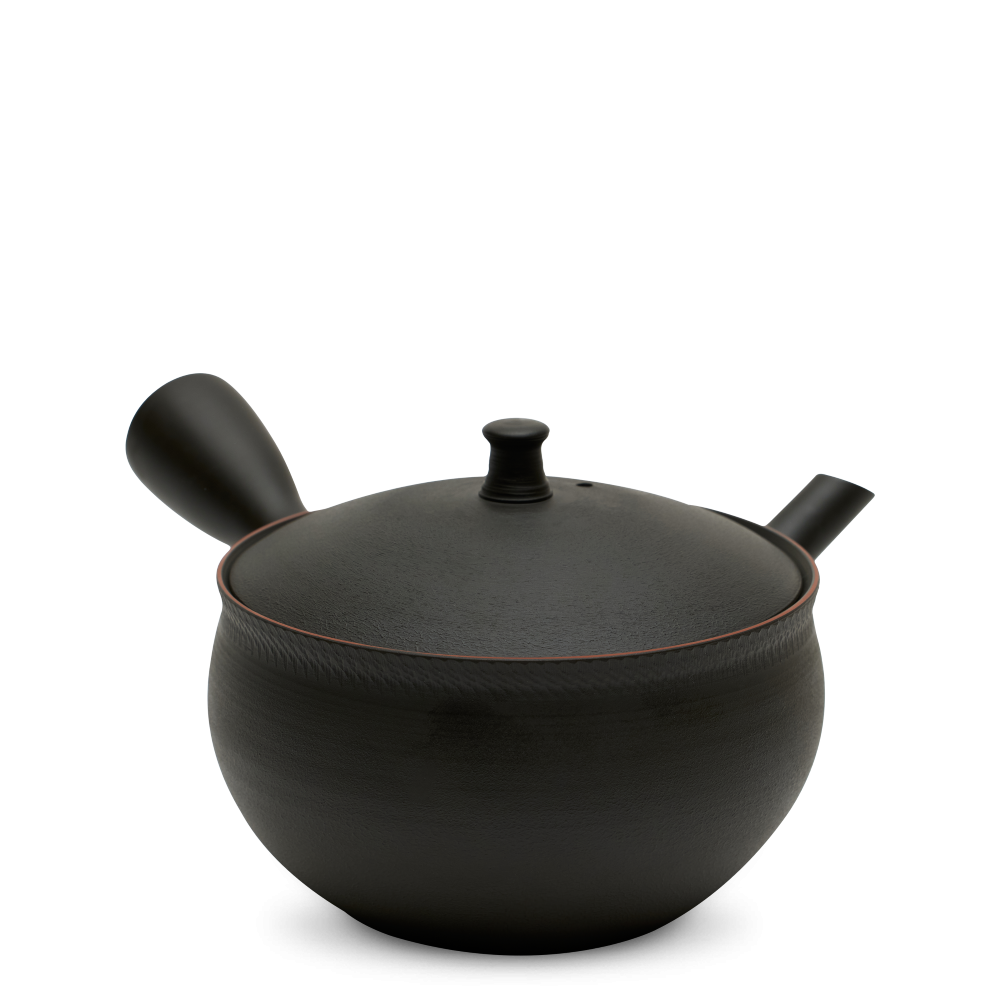
Handcrafted by 3rd-gen potter Hokuryu, this classic black Tokoname-yaki Kyusu teapot features subtle red accents and chattering at the rim. The wide-mouth design is perfect for brewing fine Japanese green teas.
| Item | Side-handle teapot |
|---|---|
| Origin | Tokoname, Aichi, Japan |
| Artist | Hokuryū / Tatsuo Umehara |
| Colour | Black |
| Volume | 240ml |
| Dimensions | Ø10 x H6.5 cm |
| Material | Ceramic, unglazed |
| Strainer | Ceramic mesh |
| Artist mark | Seal below handle |
| Packaging | Cardboard box |
Each piece is handmade and unique, therefore colour, volume and dimensions may vary slightly
In stock
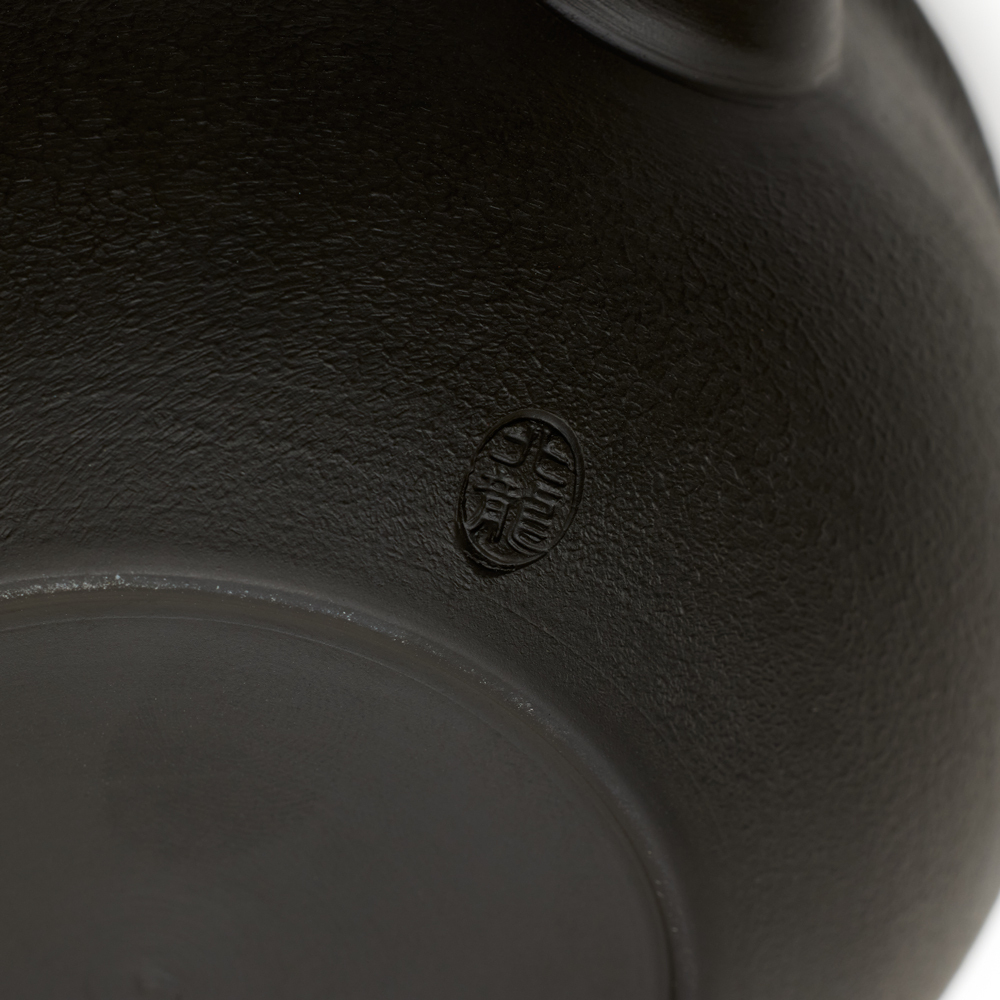
Hokuryū 北龍
One of Tokoname's younger potters, Tatsuo Umehara (梅原タツオ) was born in the city in 1974, succeeding his father as the third head of the Hokuryu kiln (北龍窯) in 1998. Whilst upholding traditions, Umehara is also credited as the inventor of the integrated ceramic strainer, now widely used by Kyusu artisans across Japan.
Kyusu 急須
The traditional Japanese teapot, Kyusu are typically made of ceramics with a side handle placed at a 90° angle to the spout for ease of pouring – however the handle can also be found over the top or in the back. Kyusu are perfect for preparing green teas and tend to be on the small side to prevent overbrewing. Depending on the size, shape and type of clay a Kyusu is made from will determine what type of tea is best prepared in it. There are many different regional styles as well as Kyusu made by certified Traditional Craftsmen, which are prized amongst collectors.
Tokoname-yaki 常滑焼
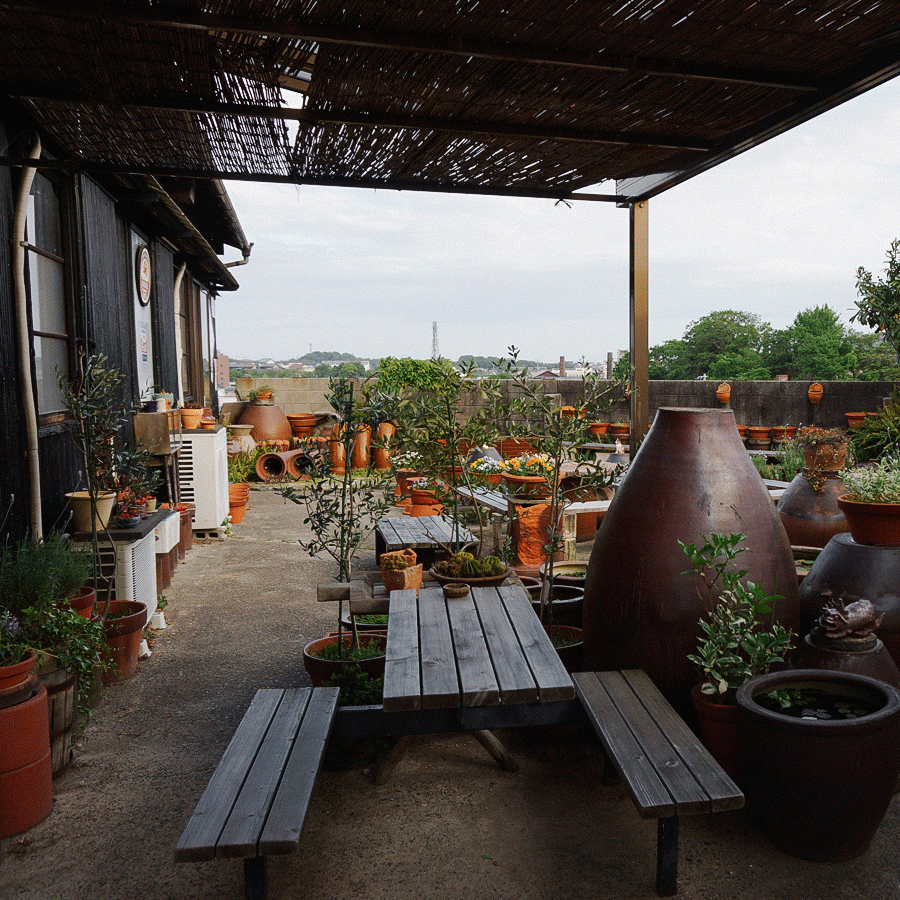
Pottery has been produced in the city of Tokoname, Aichi prefecture, as far back as the 12th century, and since 1976 has been protected as a Traditional Craft of Japan. Tokoname was the site of the largest and oldest of the legendary Rokkoyō (六古窯): the “Six Ancient Kilns” of Japan, and is celebrated for its iron-rich Shudei clay that turns a bright red after firing. When fired a second time in a reduction oven, the red Shudei turns black – another characteristic colour of Tokoname-yaki. High-fired at temperatures of around 1100°C and left unglazed (Yakishime, 焼き締め), this allows tannins in the tea to interact with the iron in the clay body, which is said to reduce astringency and highlight the sweetness of green teas. Another key feature of these Kyusu are the perfectly fitting lids, which are ground into the clay body after firing in a technique known as Suriawase.
Our recommendations

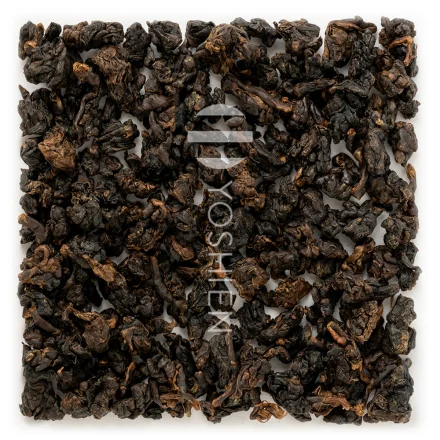
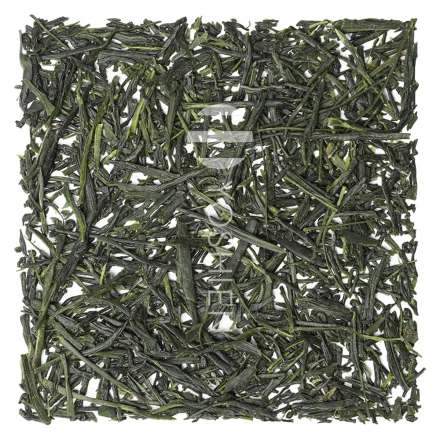
Super Premium 96 P.
Tanegashima, Kagoshima
€17.9080g
€223.75 / 1kg
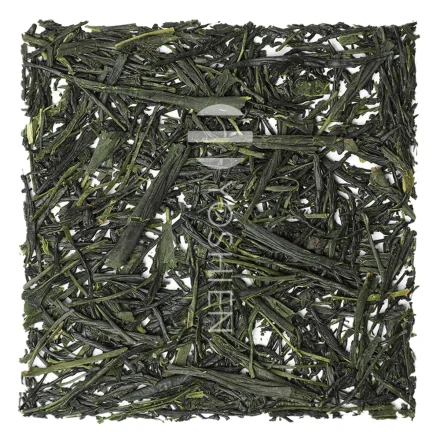
Contest Grade 99 P.
Tanegashima, Kagoshima
€24.9050g
€498.00 / 1kg