20% OFF  SELECT SENCHA  & 10% OFF ALL OTHER  SENCHA  | UNTIL 28.01.26 | CODE:

Kyusu Banko
Nagarebiri Cut

Master Iroku

SKU
5596
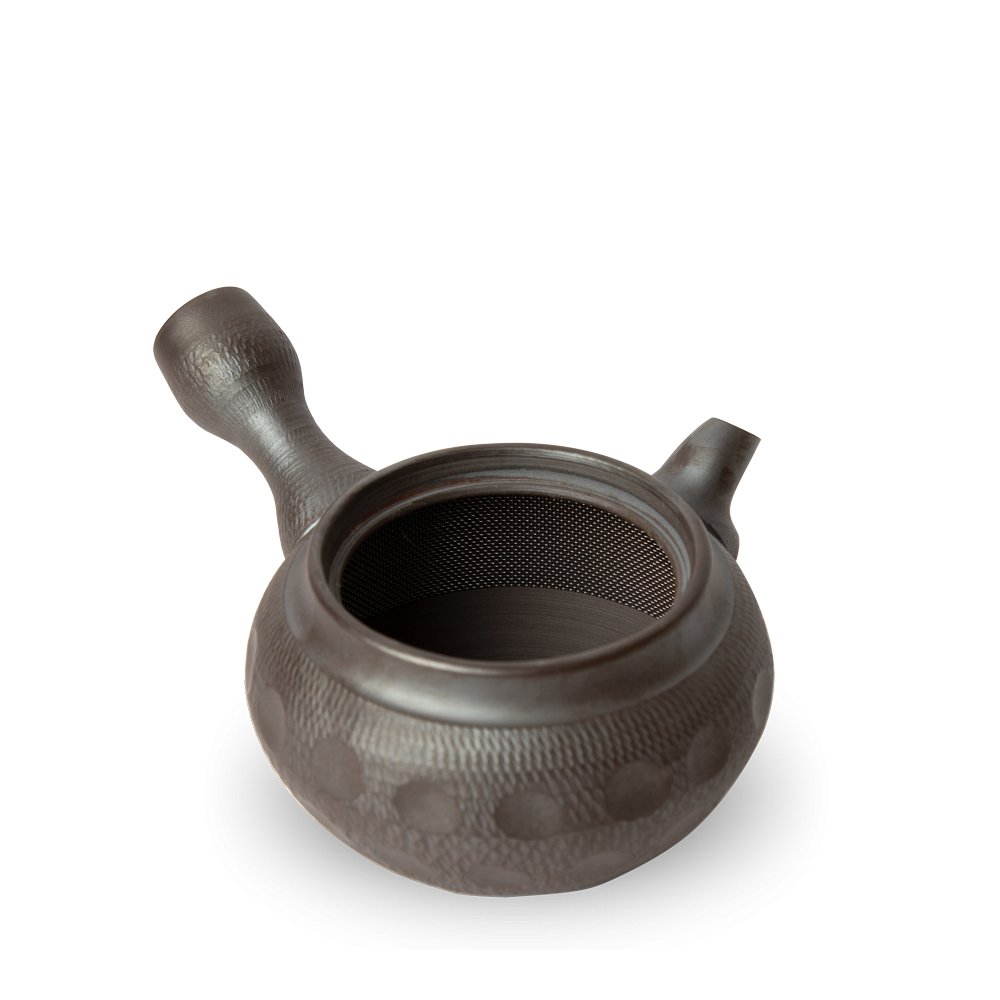
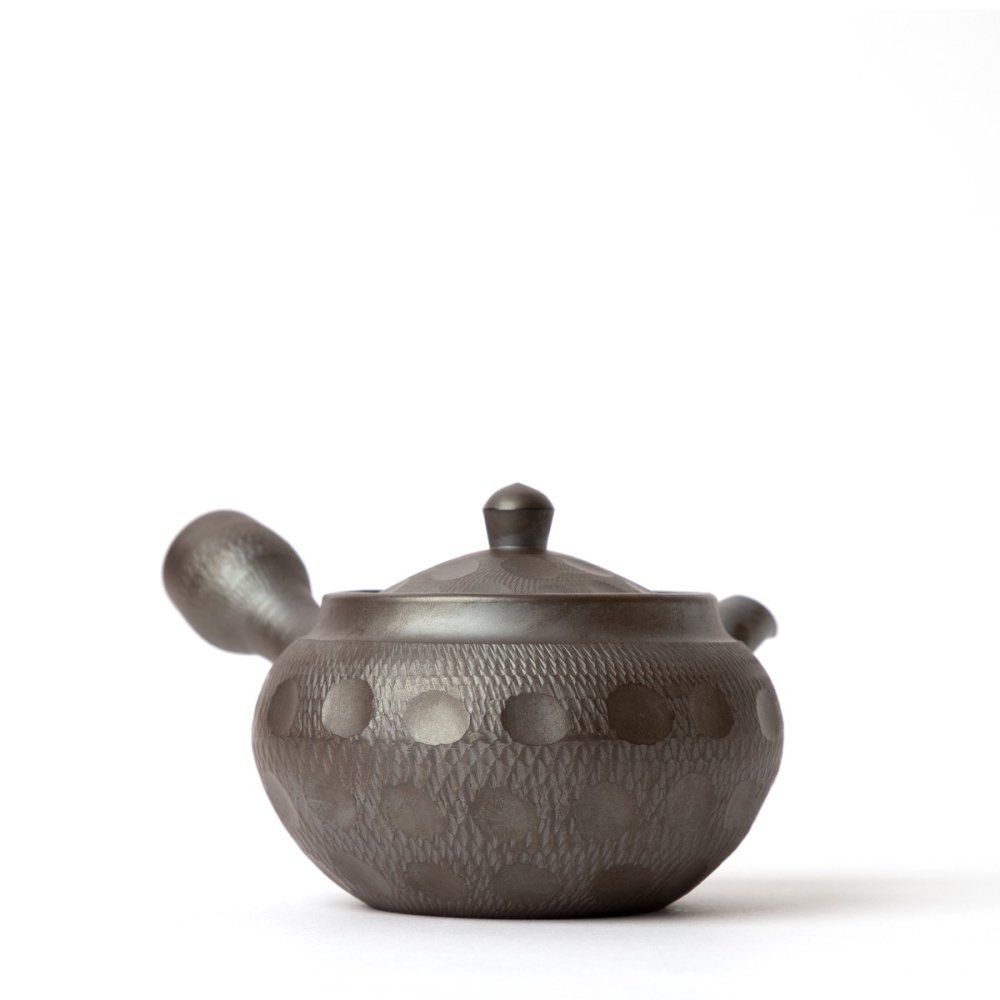
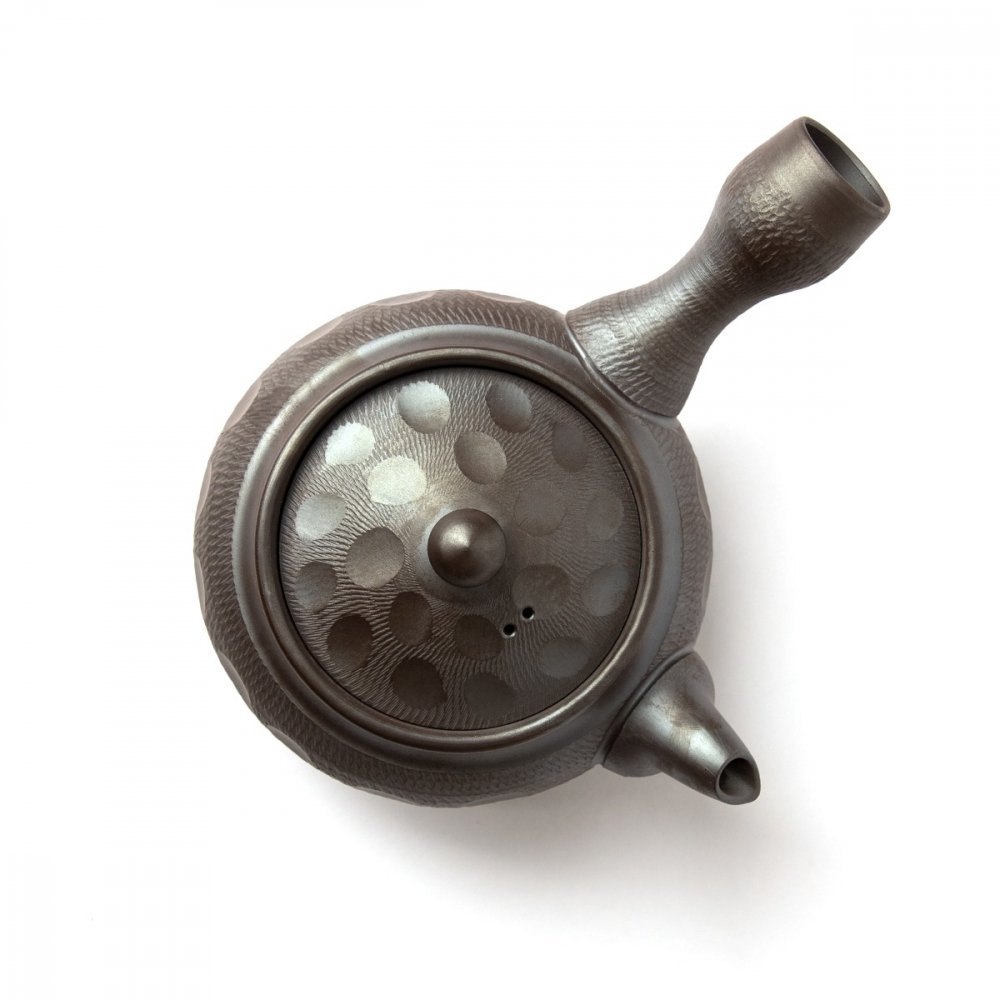
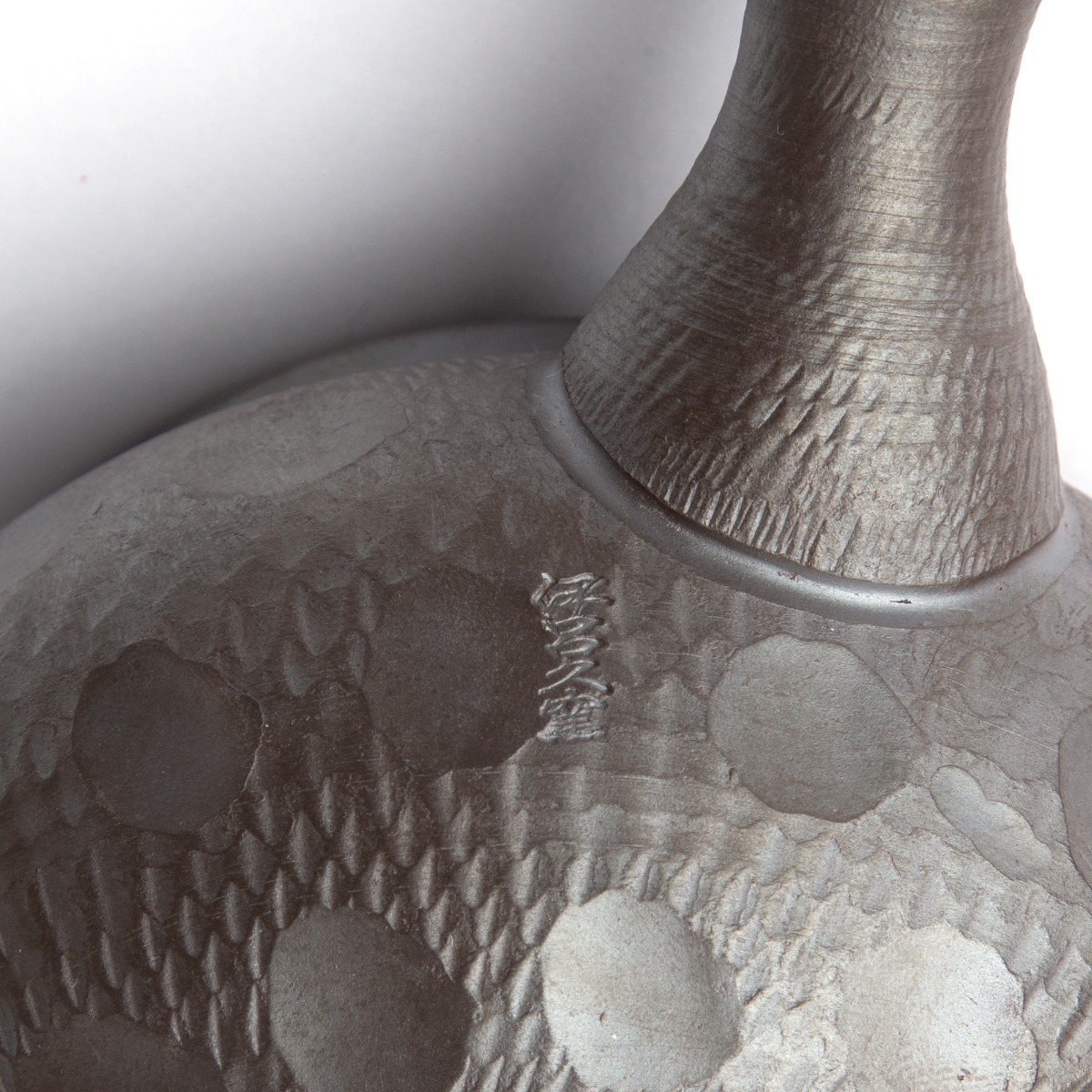
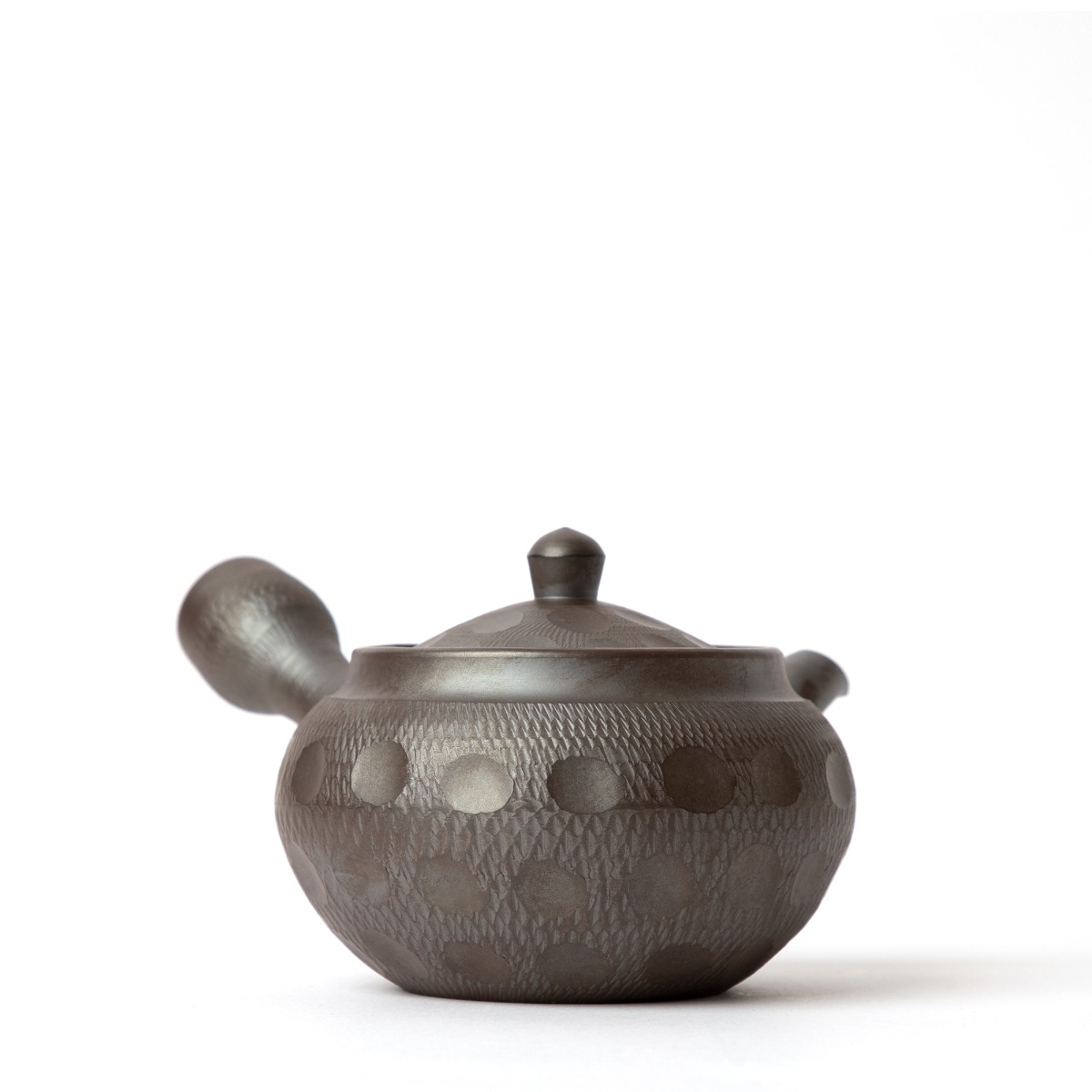
A fascinating Banko-yaki Kyusu with a unique metallic blue sheen, intricately handcrafted with bold cuts over a flowing Biri pattern by the 4th generation of the renowned distillery led by Master Iroku. Thanks to the fine-mesh strainer, it is ideal for deep-steamed Sencha and brews up to three small cups.
Type Side handle jug, yokode kyūsu (横手急須)
Kiln Banko Yaki (萬古焼)
Studio/Artist Master Iroku
OriginYokkaichi, Mie Prefecture, Japan
Capacity 300ml
Recommended filling quantityFor optimal serving, it is recommended to fill only up to the last third of the integrated strainer.
Dimensions
(diameter without handle x height without knob)
Ø10cm x 7cm (H)
Weight 320g
Clay Natural purple clay (shidei; 紫泥)
Firing Reduction firing (還元焼成)
Glaze Unglazed inside and out (yakishime; 焼き締め), polished finish for a beautiful shine
Sieve Permanently integrated stainless steel sieve (rustproof)
ProductionThe components of the lid and jug are hand-potted on the potter's wheel and then assembled to fit exactly. (rokuro; 轆轤)
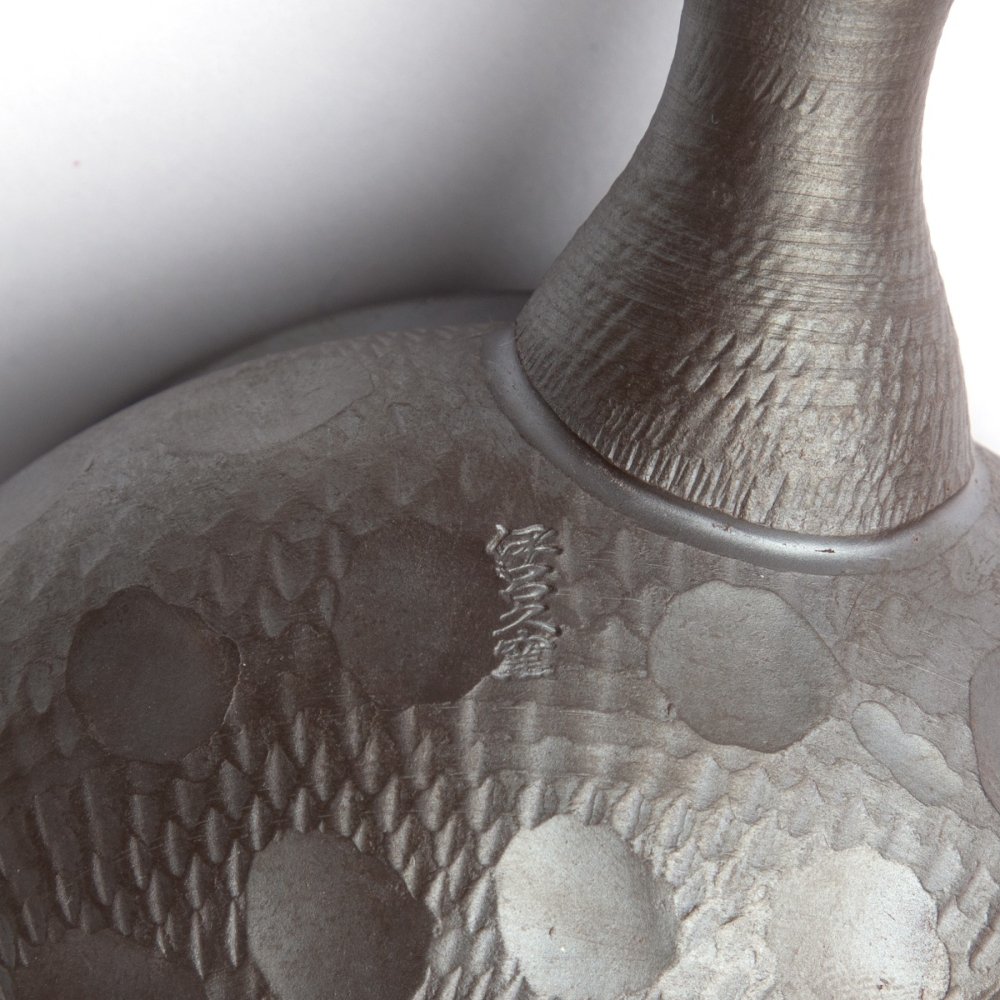
Artist's Stamp Yes
Packaging Box
€128.90

Delivery : 1–3 business days

Incl. VAT, excl. shipping

SKU
5596
In stock
Kyusu Banko Iroku Nagarebiri Cut

Iroku Mori 伊呂久

The venerable Iroku firing company was founded in 1880 in Yokkaichi in the middle of the Meiji era and is now run by the fourth generation, Iroku Mori, who, like his father, is an award-winning certified traditional craftsman. From the beginning, the ceramic studio has strived to produce novel yet playful-looking Banko Kyusus that are a joy to look at, as well as to use. Iroku has therefore always specialised in decorative techniques, in particular the traditional Matsukawa pine bark pattern applied directly to the spinning kyusu body and the characteristic Daiya diamond cut. This geometric pattern has been perfected over three generations and is cut into the surface by hand. A laborious task of great delicacy: it can take up to half a day to decorate a single kyusu. The brilliance of these diamond-cut masterpieces make them coveted collectors' items absolute jewels of Yokkaichi Banko art.

Kyusu Banko Iroku Nagarebiri Cut

Kyusu 急須

A kyusu is a traditional Japanese teapot for the ideal preparation of Japanese green tea. Fired from natural clay and unglazed on the inside, the body reacts with the water and the tea and brings out certain aromas. The tea can steep optimally free-floating in the pot; moreover, the leaves lie advantageously over the integrated sieve when poured in, so that on the one hand they filter themselves, on the other hand they allow a more complete extraction of flavours and ingredients. The tea is only ever brewed fresh, but several times. The side handle and the knob on the lid prevent the hand from coming into contact with the excessively hot body.

Throughout history, there have been hundreds of ceramic centres in Japan, wherever the volcanic soil had rich clay deposits. Some are still active today, including the six most important "old kilns" (Rokkoyo): Bizen, Shigaraki, Seto, Echizen, Tamba and Tokoname. But also others such as Karatsu, Hagi, Mino, Shino, Oribe, Setoguro Ki-Seto and Kyo-yaki, and for tea ceramics above all Banko in Yokkaichi.

They differ regionally according to the composition of the clay, the prevalent firing method, the handwork steps, decoration and glazing techniques and the fineness or deliberate coarseness of the production. Above all, the clay and the firing determine the flavourful character of the kyusu, i.e. which types of flavours of a tea are lifted or subdued by it. For this reason, tea lovers often have various Kyusu of different qualities at home, in order to enable the optimal preparation depending on the tea and its quality. Among the finest and most valuable kyusu are those made by famous artists who are renowned not only for their special talents in manufacturing, form and decoration, but also for their own production of the natural clay as well as their own firing techniques that result in unique qualities.

Led by the Living National Treasures, the most highly awarded masters, there is a whole hierarchy of craftsmanship, ranging from studios that still draw on the reputation of past masters, young and wild studios, to family-run micro-enterprises that produce the bulk of everyday ceramics. Important collector's items are the vintage kyusus, which are still made entirely from now exhausted deposits of the highest quality natural clay of the respective region and thus achieve incomparable qualities in tea infusion.


Kyusu Banko Iroku Nagarebiri Cut

Banko Yaki 萬古焼

Merchant and passionate chajin (“tea person”) Nunami Rozan is credited as the founding father of Banko-yaki. Back in the 18th century he opened a kiln in what is now Asahi-machi, Mie prefecture, stamping his wares with 萬古不易 – banko-fueki: “eternally unchanging” – in the hope that his ceramics would be passed down across generations forever. Today Banko-yaki is still produced in the Mie prefecture, primarily in the city of Yokkaichi, and is a protected traditional craft of Japan. Synonymous with Banko is the local, iron-rich shidei "purple clay", which when baked in a high-temperature reduction furnace becomes very heat resistant and turns the characteristic deep violet-brown of Banko-yaki, with an almost metallic sheen. It is said that the tannins in green tea react with the iron in unglazed shidei teaware to soften the astringency of the tea, highlighting its sweetness; therefore umami-rich teas such as sencha, kabusecha and gyokuro come highly recommended when using Banko.

Care

The Shidei Banko will quickly develop a patina and gain more and more lustre with use. In the first few months it is normal to see fingerprints on the surface, but these will gradually disappear as the surface begins to develop a deep lustre – simply enjoy watching the kyusu transform in your hands! Use only water and a soft cloth to clean it and then allow it to air dry. Do not use detergents and do not put it in the dishwasher. Hard water can cause limescale deposits. In this case, rinse with soft bottled water and wipe with a soft cloth.

Our recommendations

Loading...
The image could not be loaded.