



ISHIKAWA SEICHA
AWARD-WINNING PIONEERS OF ORGANIC MATCHA CULTIVATION
| Tea Farm: |
Ishikawa Seicha |
|---|---|
| Terroir: |
Toyota, Aichi, Japan |
| Elevation: |
650m above sea level |
| Cultivation: |
EU certified organic & JAS organic since 1995, pesticide-free cultivation since 1978 |
| Focus: |
The finest Matcha, Kabusecha, & Sencha |
Few tea farmers in Japan have made as significant a contribution to organic tea cultivation as Ishikawa Seicha. Now in its third generation, the family farm is run by Tatsuki Ishikawa and tended exclusively by the four adult members of the Ishikawa family. A true pioneer in organic tea farming, Ishikawa Seicha became the first farm in Japan to achieve JAS organic certification for its Matcha. In 2008, the family's decades of dedication to advancing organic tea cultivation were recognised with the prestigious Gold Prize awarded by the Japanese Prime Minister – an honour bestowed upon just one farmer each year. This remarkable distinction is one of many accolades celebrating Ishikawa's exceptional achievements. The outstanding quality of their teas, combined with an unwavering commitment to organic farming, has earned Ishikawa Seicha an international reputation. By meeting the rigorous organic standards of Japan and Germany, as well as the particularly stringent certification requirements of the USA and Switzerland, the farm has achieved an export share rarely seen among Japanese tea producers – a source of well-deserved pride for the Ishikawa family. The exceptional character of their Matcha begins with the land itself. Aichi's distinctive climate, together with the meticulous care devoted to the soil and the use of natural organic fertilisers such as peanut meal, creates ideal conditions for tea plants to develop their remarkably delicate, refined aromas. These carefully nurtured leaves form the foundation of Ishikawa Seicha's exquisite gourmet Matcha. Beyond his expertise in tea cultivation, Tatsuki Ishikawa is an accomplished and award-winning practitioner of the Japanese tea ceremony, tea tasting and traditional hand-rolling techniques. He also holds the prestigious title of Nihoncha Instructor, a demanding qualification attained by only a select few tea farmers. Beyond his own achievements, he is deeply committed to inspiring future generations to embrace agriculture and farming in harmony with nature, actively sharing his knowledge and passion through a wide range of projects and initiatives.
TERROIR
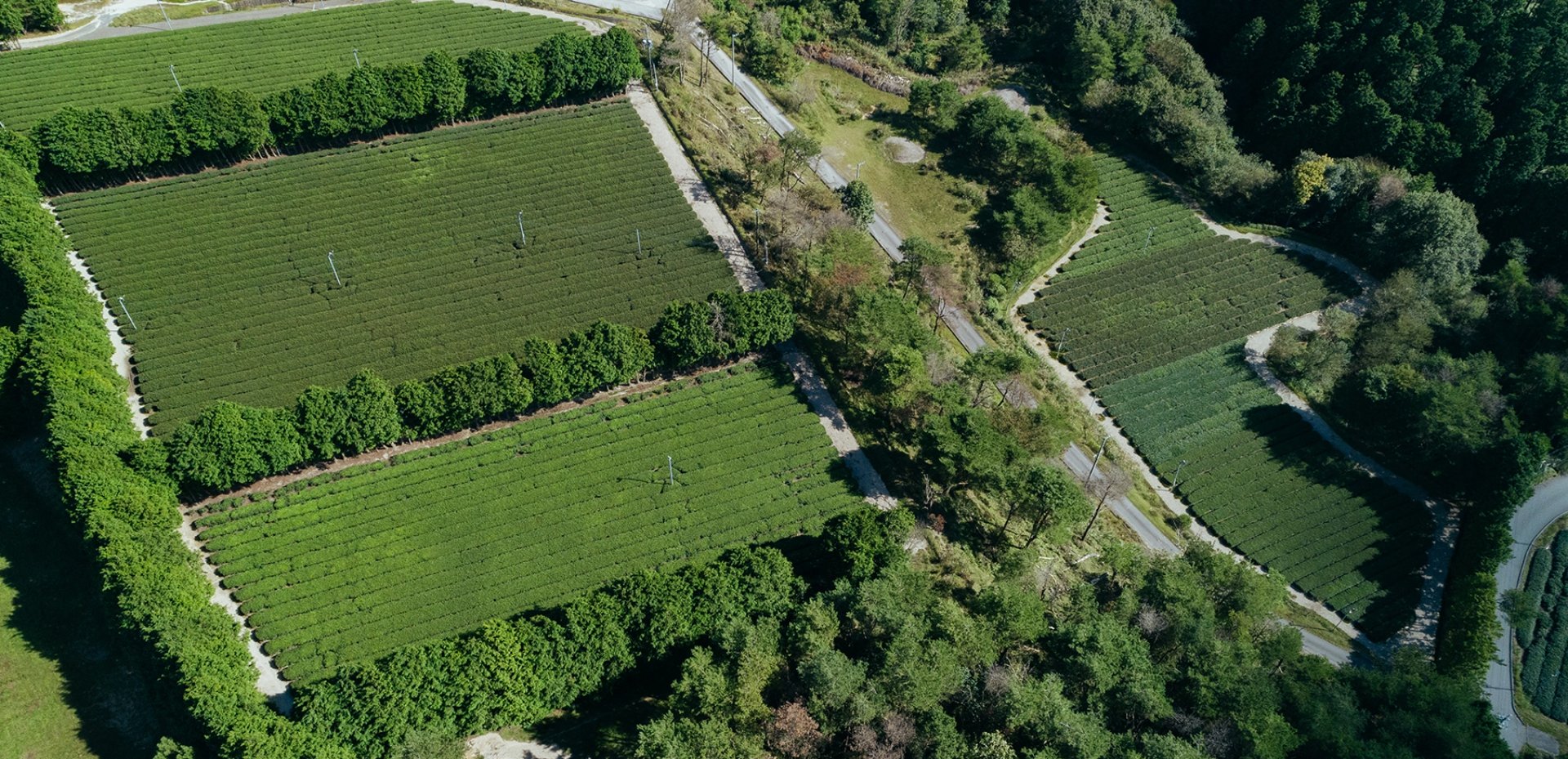
At an altitude of 650 metres above sea level, Ishikawa's tea fields are among the highest in Japan. Winter temperatures can fall below –15°C, while pronounced differences between day and night temperatures persist throughout the year. Although these conditions encourage the development of richly aromatic teas and help keep pests naturally at bay, the bitter winter cold presents a particular challenge for tea cultivation. When Mr Ishikawa's father began the painstaking work of establishing new tea fields in the Shimoyama district of Toyota City in the late 1970s, he received valuable guidance from a nearby tea research station. Its specialists recommended the newly developed Komakage cultivar, whose exceptional resistance to cold made it ideally suited to the mountainous terroir. The soil, too, required years of careful preparation before it could support thriving tea plants. Natural organic materials such as wood chips and peanut meal were gradually incorporated to enrich the soil and improve its fertility. After more than a decade of dedicated cultivation, the once-unproductive land had been transformed into fertile, highly productive soil with a healthy, crumbly structure known as danryu-kozo. Nestled in remote mountains, surrounded by dense forests, Ishikawa's tea fields benefit from exceptionally pure air, sheltered from harmful environmental influences. Together with the distinctive mountain climate and carefully nurtured soil, these pristine surroundings provide ideal conditions for cultivating exquisitely aromatic mountain-grown Matcha.
THE JOURNEY TO JAPAN'S FIRST ORGANIC MATCHA FARM
The Ishikawa family's original tea fields lay at lower elevations, but in the late 1970s, they had to give way to the construction of a railway line. In return, the government allocated Mr Ishikawa's father a new plot of land high in the mountains, where he faced the formidable challenge of establishing an entirely new tea farm from the ground up. It was a gruelling undertaking that demanded extraordinary perseverance, especially through the bitter mountain winters. Day after day, he toiled in the fields, undeterred by freezing temperatures, and spent his nights in a disused, poorly insulated bus parked nearby. Sustaining him through these hardships was an unwavering determination to preserve his family's tea-growing heritage while pursuing a deeply held ambition: to cultivate tea entirely without chemical pesticides. True to this vision, the fields in Shimoyama have remained free from chemical pesticides ever since they were first established. The family's dedication to organic cultivation extends to every aspect of their farming practices. All fertilisers are of natural, organic origin and are prepared with exceptional care. Peanut meal, for example, provides the soil with an essential source of nitrogen. Rather than relying on the commonly used chemical solvent n-hexane to extract the oil, the family chooses a purely mechanical pressing process – a method that is considerably more costly, reflecting their uncompromising approach to organic farming. Having cultivated tea organically and sustainably long before the introduction of standardised JAS Organic regulations, Ishikawa Seicha was exceptionally well prepared when the opportunity for certification arose in 1995. While other farmers who had only recently converted to organic cultivation faced years of waiting, Ishikawa Seicha needed to make only minor adjustments to meet the requirements. As a result, the family became the first Tencha and Matcha producers in Japan to receive JAS Organic certification for their farm. The family takes particular pride in meeting not only the Japanese JAS Organic standards, but also the stringent requirements of international certifications such as EU Organic and USDA Organic. This exceptional commitment to quality and organic integrity has enabled Ishikawa Seicha to export up to 80% of its production – an unusually high proportion among Japanese tea farmers. Today, their outstanding Matcha is highly regarded internationally, having earned the appreciation and loyalty of tea enthusiasts around the world.
FROM BOXER TO ONE OF JAPAN'S LEADING MATCHA FARMERS
Now in its third generation, Ishikawa Seicha is run by Mr Tatsuki Ishikawa, who has devoted himself to tea cultivation with great passion and dedication. Yet his path to becoming one of Japan's most respected tea farmers was far from straightforward. Growing up in Aichi, a region dominated by the automotive industry, Mr Ishikawa initially felt little enthusiasm for his parents' agricultural work. As he recalls, he often felt inferior to his classmates, whose parents worked in industry rather than farming. During his university years, he therefore pursued an entirely different ambition, dedicating himself to his great passion for professional boxing, with the aim of building a career in the sport. It was only after graduating from university that he discovered his own passion for tea cultivation. The prospect of producing exceptional teas through his own hard work and sharing them with people who would truly appreciate them sparked a new sense of purpose. Before long, the aspiring professional boxer had become one of Japan's most highly regarded tea farmers. His extensive knowledge and expertise across virtually every aspect of Japanese tea culture are particularly impressive. From earning the demanding qualification of Nihoncha Instructor and training in the country's leading schools of tea ceremony to winning competitions in traditional tea hand-rolling and tea tasting, Mr Ishikawa continually seeks opportunities to deepen his understanding, refine his skills and demonstrate his craftsmanship. Equally remarkable is his commitment to organic cultivation and regional agriculture, a legacy inherited from his father. From the very beginning, Ishikawa Seicha has sought not only to cultivate its own tea organically, but also to encourage neighbouring farmers, many of whom were initially sceptical, to adopt organic farming methods. Over the years, these efforts have met with considerable success. In recognition of the family's longstanding dedication to advancing organic agriculture, Ishikawa Seicha received the prestigious Japanese Prime Minister's Prize in 2008. Awarded to just one farmer each year for outstanding contributions to Japanese agriculture, it remains a particularly distinguished honour. To this day, inspiring the next generation to embrace agriculture remains a cause especially close to Mr Ishikawa's heart. Japan's farming population has been ageing rapidly for many years, while younger generations often show little interest in agricultural work – an attitude he understands well from his own experience. Determined to help change this perception, Mr Ishikawa has taken on a leading role in a regional group of young, creative individuals who share his vision of making agriculture more appealing to future generations. Through innovative projects, including the establishment of a farm café, the group aims to bring fresh ideas and renewed enthusiasm to rural farming communities.
ISHIKAWA SEICHA
TEAS