




Special features in location, cultivation & processing
Much of the world’s Yerba Mate is grown in monocultures on cleared plantations, in which the mate plants grow at a uniform height and are fully exposed to intense sunlight. To protect themselves, the plants can develop higher levels of acidity and caffeine, which may result in a more bitter, less balanced cup.
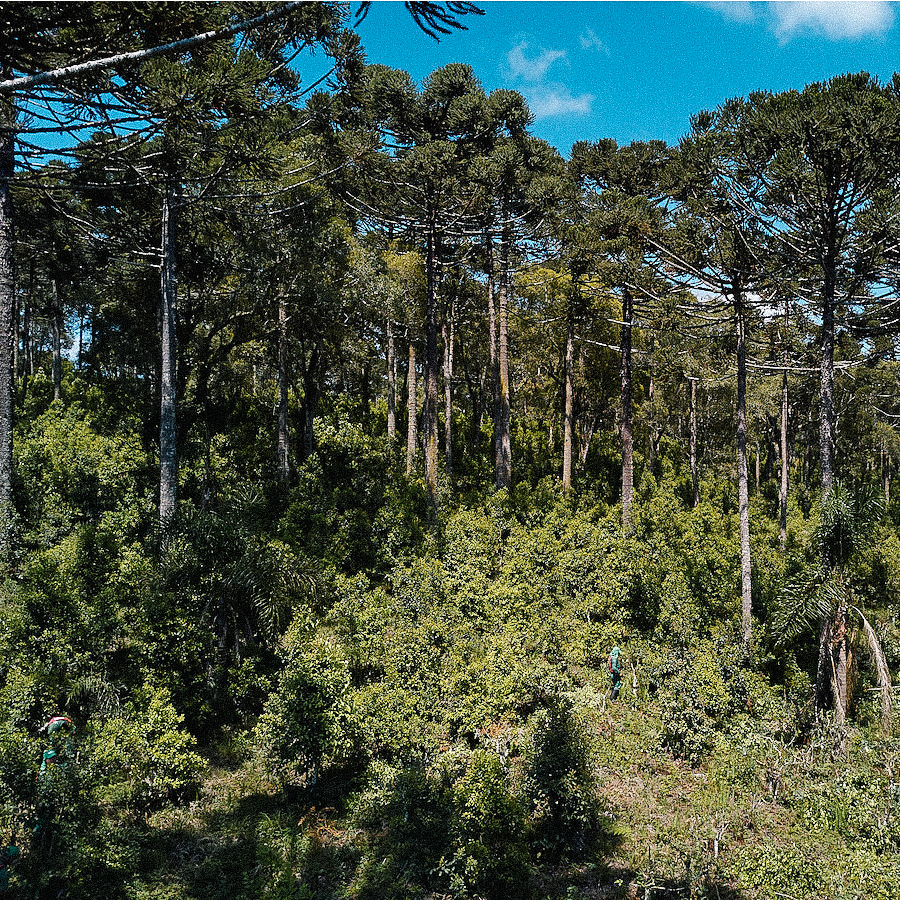
Our Triunfo Mate, by contrast, grows in mixed-forest plantations among the native vegetation of the Atlantic rainforest. The surrounding forest provides natural shade, while the plants benefit from growing alongside other species within their original habitat. This symbiotic environment supports a rich supply of nutrients and contributes to an exceptionally aromatic, smooth and harmonious Yerba Mate.
This approach also helps protect the Atlantic rainforest, an ecosystem that has suffered extensive deforestation. Rather than clearing the forest for cultivation, new mate trees are planted within it, supporting its natural regeneration while preserving the surrounding vegetation.
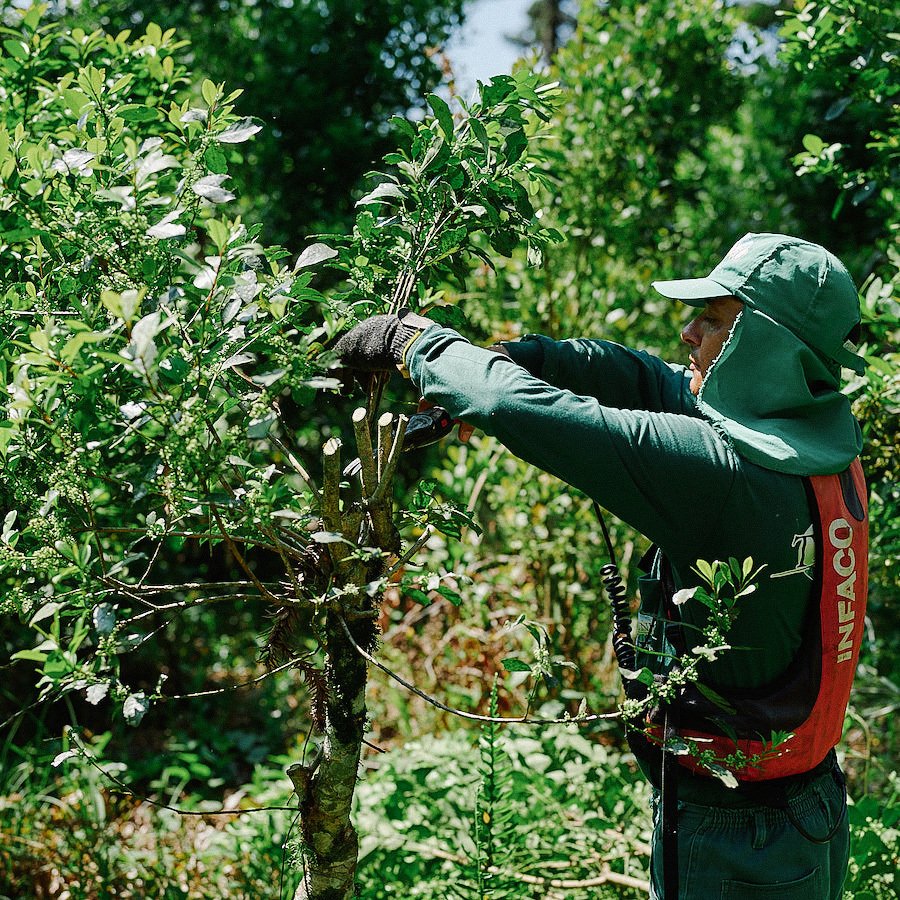
To give each tree ample time to recover between harvests, the plantation is divided into two sections that are harvested in alternating years. This allows each plant two full years to develop fresh shoots and regain its strength before being harvested again. The branches are cut using electric pruning shears, reducing strain on the workers’ wrists while allowing even thicker branches to be cut cleanly and precisely without crushing the plant. This gentle approach also supports healthy regeneration of the trees.
After harvesting, the mate leaves are processed directly by the farmer and dried in a specialised two-stage process using an open fire fuelled by sustainably grown eucalyptus. Modern drying technology ensures that the leaves never come into direct contact with the smoke or its combustion residues, unlike traditional methods in which smoke may come into contact with the leaves.
The Origin of Yerba Mate
Yerba Mate has been consumed by Indigenous peoples of South America for more than 500 years. The Guaraní, whose communities today live across Brazil, Paraguay, Bolivia and Argentina, were among to process the mate plant into mate tea by grinding it and drying it over a fire. The traditional way of enjoying mate is also rooted in Guaraní culture: prepared in a gourd and sipped through a filtered drinking straw known as a bombilla.
To this day, mate remains a drink of enormous social and cultural significance in many countries across Central and South America. Sharing a mate is always an opportunity to chat, take a break, nurture relationships, or get together after a day’s work. For the workers on our farm, too, not a day goes by without sharing a mate together. The Yerba Mate is most often prepared in a large, often beautifully decorated gourd and passed from person to person, with hot water topped up as needed from the ever-present thermos flask.
Organic Certification

PL-EKO-01
Nicht-EU-Landwirtschaft