


Special features in location, cultivation & processing
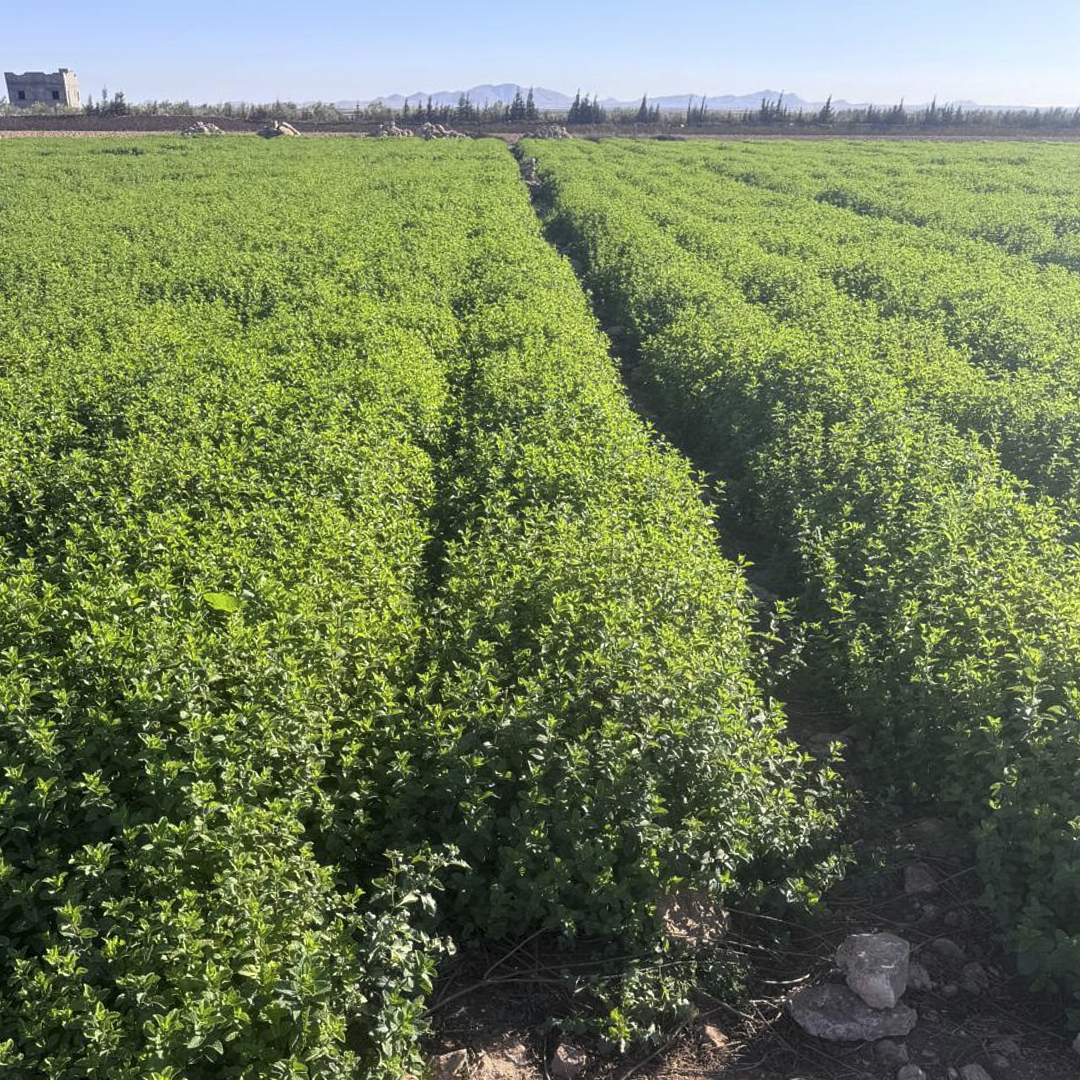
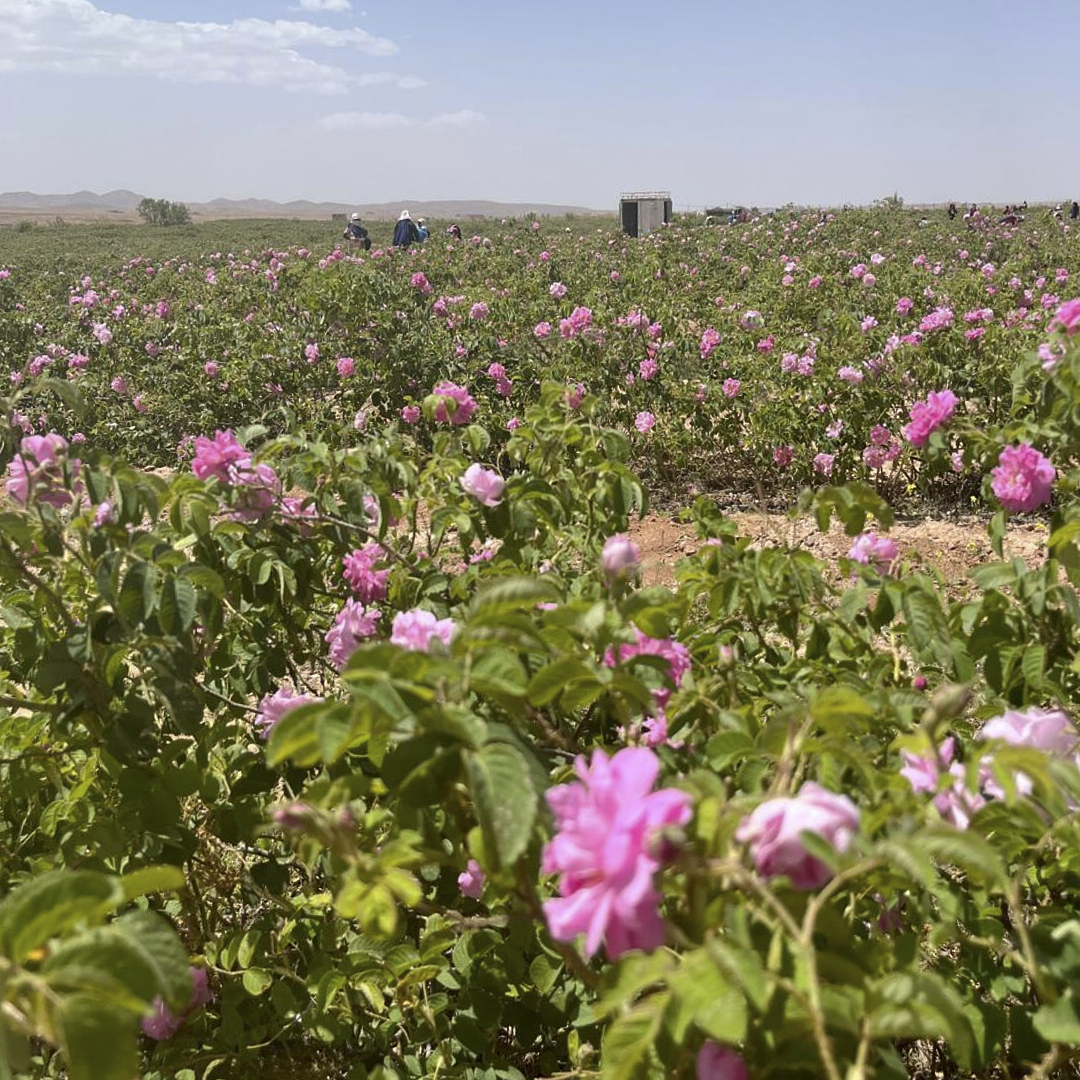
On the other side of the High Atlas Mountains, in south-eastern Morocco, the Dades Valley unfolds between the snow-capped peaks of Jebel Toubkal and the vast expanse of the desert. Known as the “Valley of Roses”, it lies at the confluence of the Dades and M’Goun rivers. At an altitude of 1,470 metres sits the town of Kelaat M’Gouna, a lush oasis at the heart of this “Moroccan Colorado”, renowned for its striking ochre landscapes, adobe kasbahs and traditional Berber villages.
According to legend, the Damask rose was introduced to Morocco in the 10th century by pilgrims returning from Mecca, who are said to have dropped a few seeds along their journey. Originally, rose bushes in the region were not cultivated for their flowers, but used as natural hedges to protect cereal crops, fruit trees and livestock, while also marking boundaries between neighbouring lands. Over time, the rose became deeply rooted in local tradition and cultivation practices passed down through generations.
Celebrated for its powerful fragrance and remarkable resilience, the Damask rose flourishes in the valley’s arid climate. Harvest season takes place each spring, between April and May, bringing the region to life with activity and celebration. Every May, at the end of the harvest, the valley hosts the Moussem des Roses (Rose Festival), a vibrant cultural event attracting thousands of visitors from around the world, marked by traditional Berber music, songs and dances.
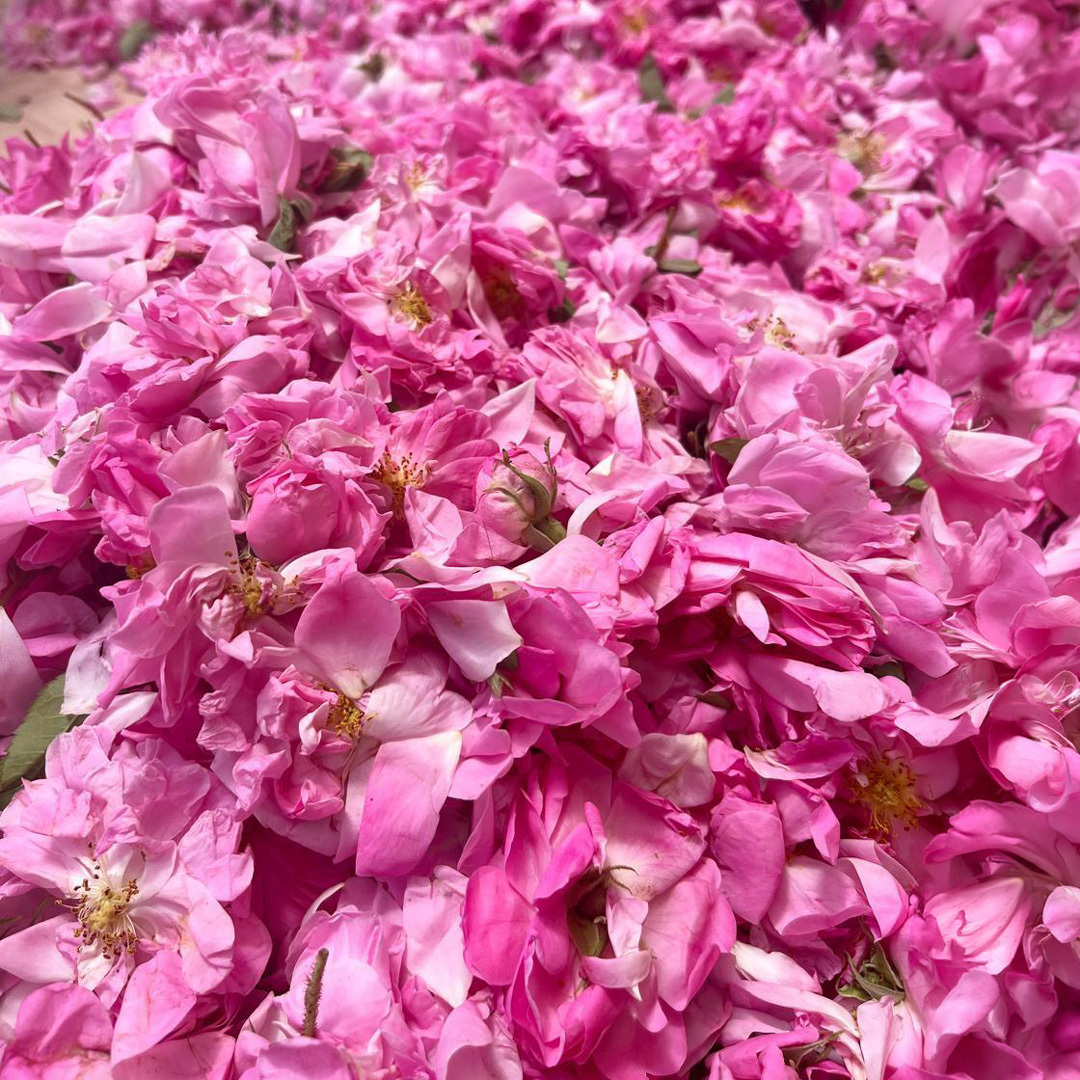
Each year, tonnes of roses are handpicked at dawn, from as early as five or six o’clock in the morning, to preserve the flowers’ delicate fragrance at its purest. A cornerstone of the local economy and a cherished symbol of Moroccan heritage, the rose is omnipresent in daily life, from rejuvenating hammam rituals to culinary traditions, including ras el-hanout spice blends and traditional pastries.
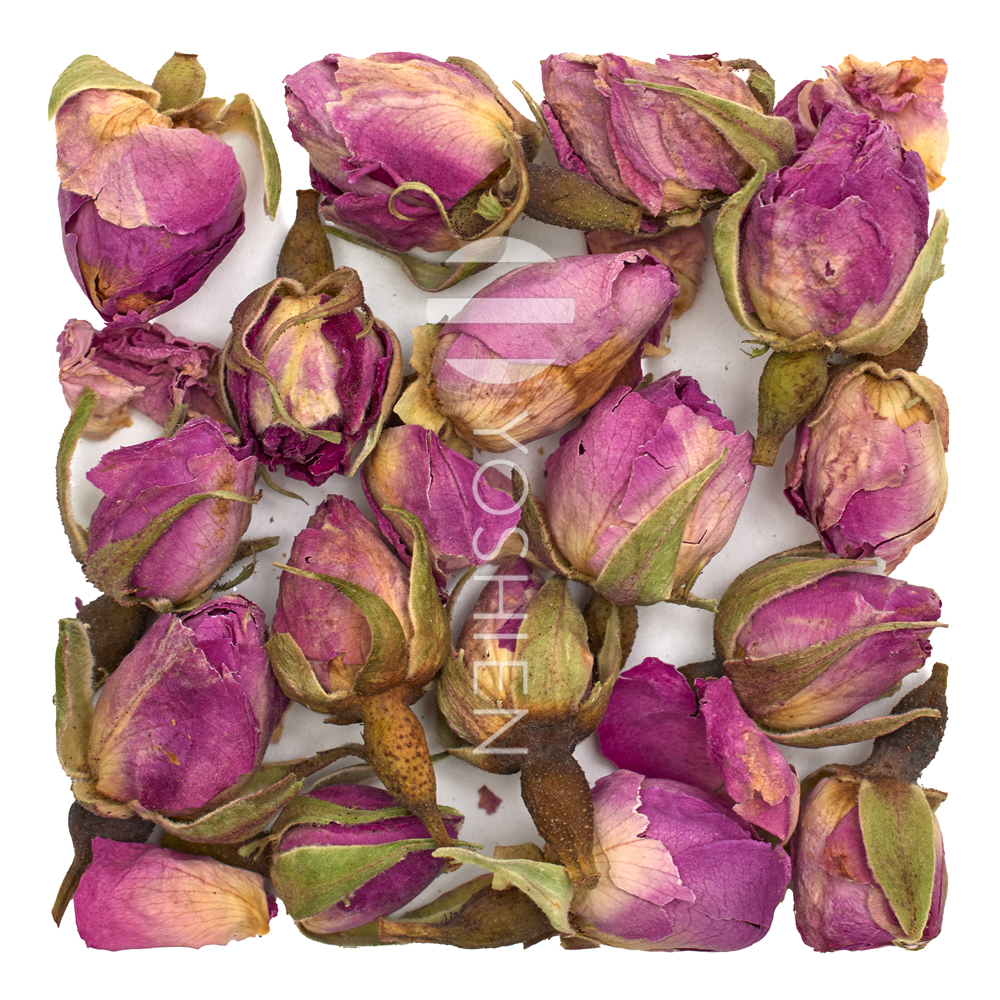
Cultivated according to the highest organic farming standards and entirely free from pesticides, the Damask rose is irrigated through carefully managed wells and drip irrigation systems. This sustainable approach combines ancestral agricultural knowledge with environmental responsibility, helping local communities respond to the challenges of drought and climate change in the Atlas valleys. Thanks to meticulous hand harvesting and the constant care devoted to the rose bushes, the process preserves the flower’s active properties and exquisite fragrance, producing rosebuds of exceptional purity.