



Wash by hand or in dishwasher. Do not put in microwave.
Shochu Cup
Ryumonji Kuromon
Ryumonji-yaki
SKU
0521
This small, robust Black Satsuma cup, handcrafted at the historic Ryumonji kiln in Kagoshima using only local materials, is covered in a black glaze with a flowing band of blue. Perfect for enjoying spirits such as shochu and sake, as well as precious Japanese green teas and more.
| Item | Shochu cup |
|---|---|
| Colour | Black, blue |
| Studio | Ryumonji |
| Origin | Kagoshima, Japan |
| Style | Satsuma-yaki |
| Volume | 35 ml |
| Dimensions | Ø6.5 x H4 cm |
| Material | Dark volcanic clay |
| Glaze | Kuro-yu Ao-nagashi (黒釉青流 "black glaze blue splash") |
Each piece is handcrafted and unique, therefore colour, volume and dimensions may vary slightly
In stock
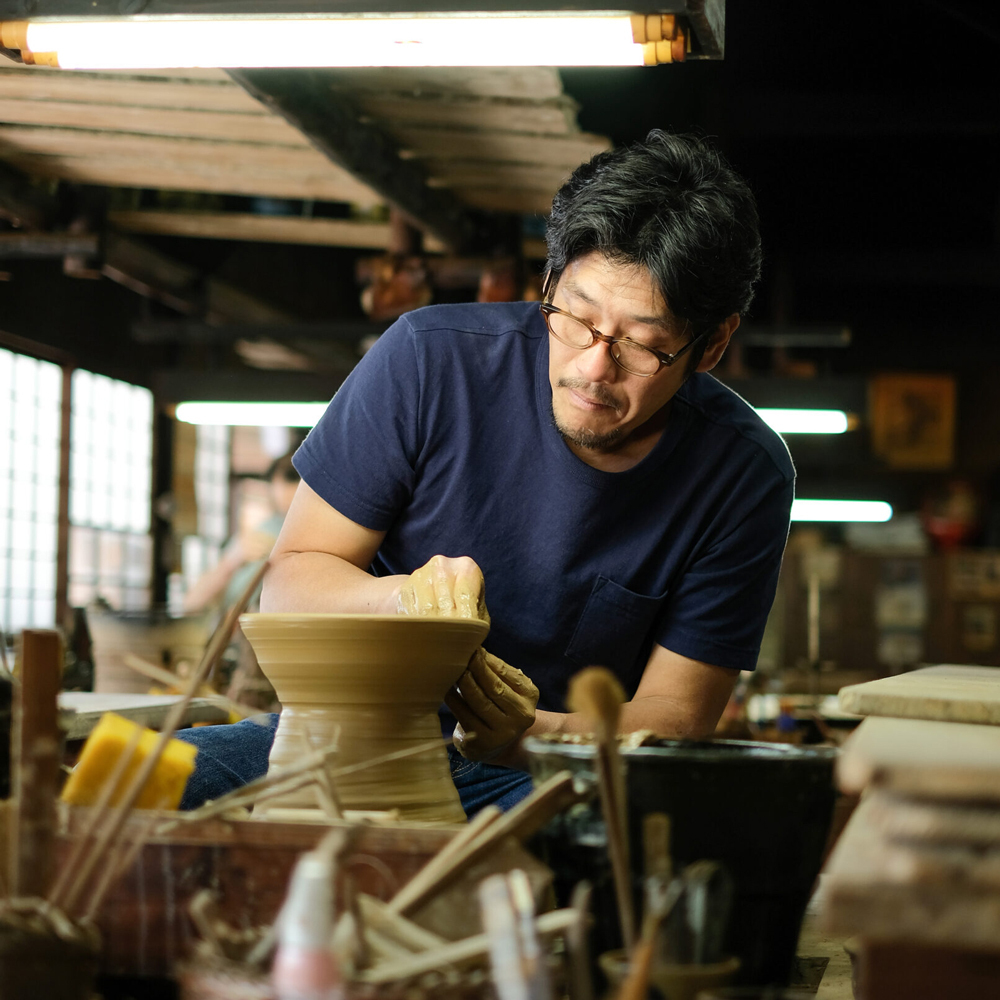
Ryumonji-yaki 龍門司焼
Established in 1688 by Korean potters in Kagoshima, Japan, the Ryumonji kiln today has operated as a pottery union since 1948. The kiln is currently led by certified Master Craftsman, Shiro Kawahara, working alongside his son Ryohei and other relatives.
One of three remaining schools of Satsuma-yaki, Ryumonji-yaki specialises in functional, robust Black Satsuma wares, made from local, dark volcanic clay. These pieces are then finished with their signature glazes, including Dakatsu ("snake"), Samehada ("shark skin"), and Sansai ("three colours") – the latter of which is officially recognised as an Intangible Cultural Property of Kagoshima Prefecture. All glazes are made using raw materials, such as stones, pumice, mud and rice husks, sourced within a 3km radius of the kiln.
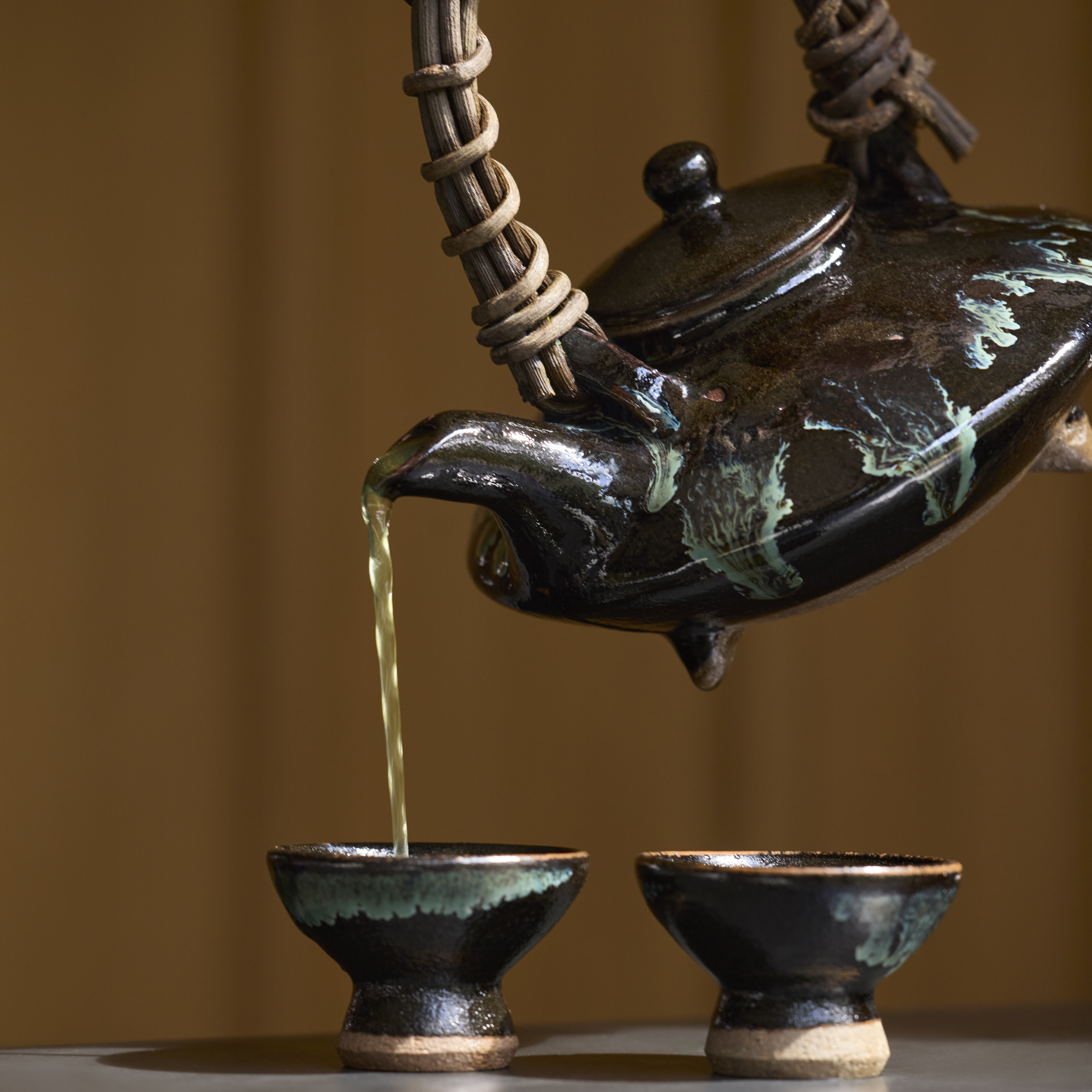
Satsuma-yaki 薩摩焼
Made in present-day Kagoshima prefecture in southwestern Japan, Satsuma wares date back to the late 16th century when skilled Korean potters were forcibly brought over following the Imjin War. Using their expertise, a multifaceted ceramic tradition soon emerged in the region, encompassing a variety of styles and kilns. These wares can be broadly categorized into delicate, white Shiromon and durable, black Kuromon. White Satsuma wares were historically exclusively made for the ruling class and often elaborately decorated with gold – which captivated European audiences at the 1867 Paris World Exposition. By contrast, Black Satsuma wares were, and continue to be, used to make practical, everyday tableware.