

Ichō Kamairi Takachiho P.Free

Contest Grade 99 P.

SKU
0482
Due to the use of the Takachiho cultivar and the rare combination of withering and pan-firing, a delicate aroma of linden blossom honey unfolds. The infusion is silky, full-bodied and free from bitterness. 60g
Character Velvety, floral, delicate honey sweetness, hints of linden blossom and dandelion, buttery smooth, refreshing, thirst-quenching
Tea Farm A multi-award-winning tea farm in Gokase, Miyazaki, specialising in Kamairicha
Terroir Gokase, Miyazaki Prefecture, Japan
Harvest 1st harvest (Ichibancha), late May 2025
Cultivar Takachiho
Elevation 600m above sea level
Cultivation Cultivated without chemical pesticides
Laboratory Tests Radioactivity (annual test of the region) and pesticides
Grade 99/100 P. (Kamairicha category); Contest Grade
€25.90
60g

Delivery : up to 5 business days

Incl. VAT, excl. shipping

SKU
0482
€323.75 / 1kg
In stock
Icho Kamairi Takachiho Pest. Free

Character

Tasting Notes

A tea whose multi-layered aromatic profile combines nuances from a wide variety of tea styles, harmoniously uniting them into one. From the very first sip, this Ichō Kamairicha captivates with its exceptionally velvety mouthfeel: smooth as honey, with fine nuances and a delicate sweetness reminiscent of clear blossom honey. Aromatically, it recalls the warm fragrance of linden blossom or dandelion, evoking a spoonful of linden honey gently stirred into the cup. Buttery-soft, free from bitterness and carried by a light, floral honeyed sweetness, it lingers pleasantly on the palate. In terms of flavour, it moves distinctly away from classic Kamairicha green tea, instead approaching the elegance of a high-quality oolong. On the second infusion, the characteristic aroma remains, yet the mouthfeel becomes noticeably lighter and less sweet. The tea unfolds with greater freshness, reminiscent of a gentle linden blossom tea. Refreshing and thirst-quenching, it is an ideal companion for serene moments throughout the day.

Leaf

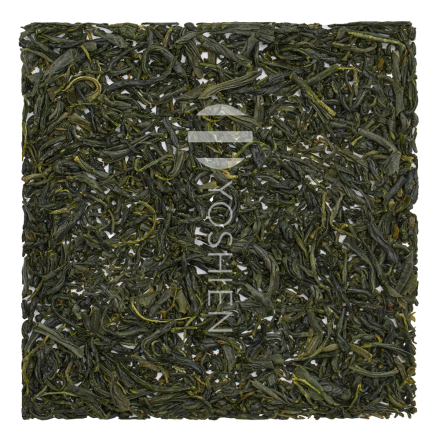
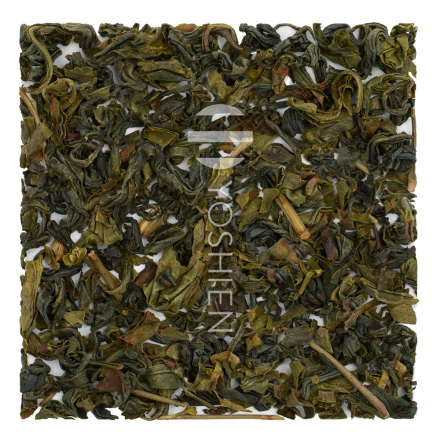
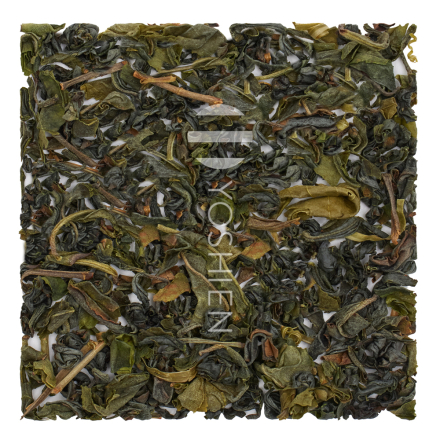
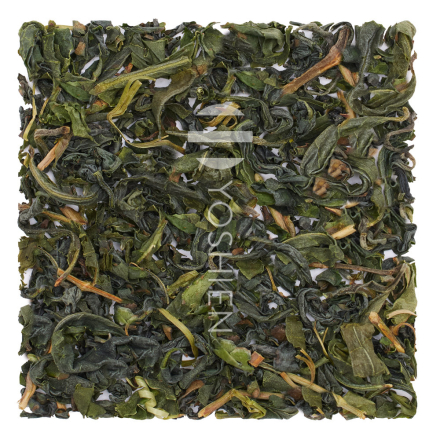
Curled and slightly open, dark to light green

Cup

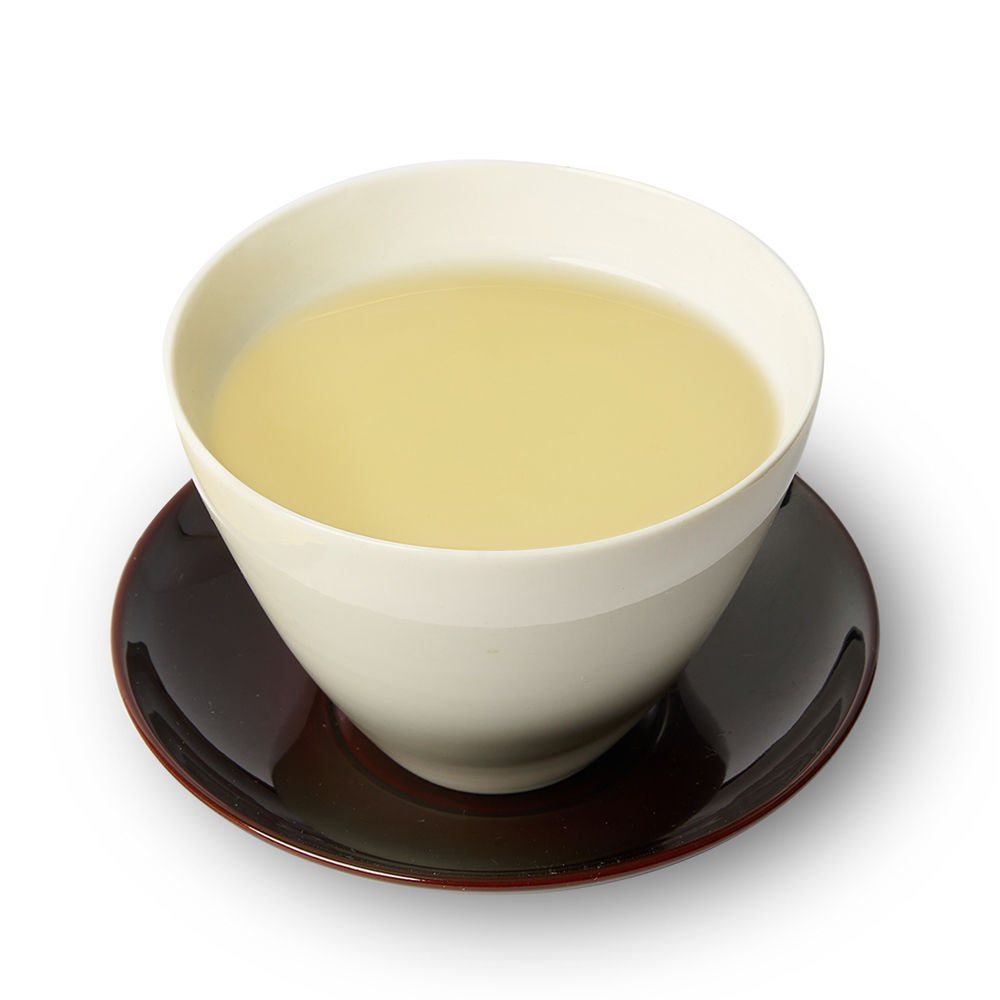
Clear, honey-yellow infusion

Icho Kamairi Takachiho Pest. Free

Kamairicha

Kamairicha (Jap. kama 釜: pan / kettle) refers to gently pan- or oven-fired green teas, which are a true rarity, as Japanese green teas such as Sencha are typically steamed rather than roasted. Compared to Sencha, these teas are more restrained: less “grassy”, bitter or astringent, more sweet and nutty, with a longer-lasting aftertaste. Another distinctive feature is their lightly curled needle shape (Kamaguri) and the bright green infusion colour.

Ichō Kamairicha

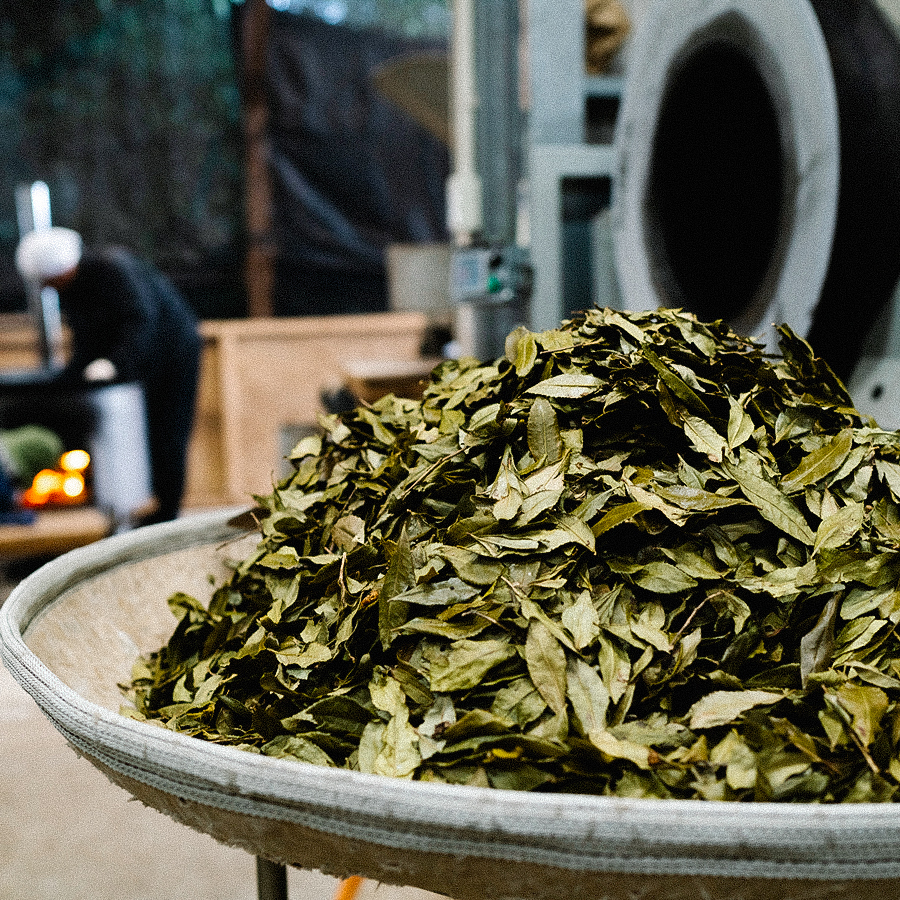
Ichō means “withering” in Japanese, alluding to an unusual step in the production process: the deliberate pre-withering of the tea leaves. Whereas green tea is traditionally heated early on to halt oxidation and preserve the fresh, verdant character of the newly harvested leaf, withering has established itself in recent years as a rare but increasingly popular technique. This produces green teas with a distinctive, floral aromatic profile, reminiscent of lightly oxidised oolongs from China and Taiwan. The tea retains a satisfying depth and body, creating a harmonious balance between the freshness and strength of green tea and the fragrant elegance of fine oolongs.

Yoshien Labortests

Laboratory Tests

We go to great lengths to identify the finest organic tea farms across the world’s most celebrated terroirs. All our teas are sourced directly from the farmer and, with a few exceptions, are certified organic or come from pesticide-free farms. Each batch of tea for every harvest is tested for pesticides and other pollutants in an independent German lab to ensure they meet our strict quality standards as well as HACCP food safety requirements. Likewise, the regions of Japan from which we source our teas are tested for radioactivity for every harvest.

Yoshien

Yoshi En

World's Finest Organic Teas

Our comprehensive portfolio focuses on organic, single-origin teas sourced directly from renowned farms. We believe in creating partnerships with farmers who share our values and are committed to sustainable, responsible tea cultivation. Thanks to these strong relationships our exciting range is constantly growing and evolving. As an international team of dedicated and passionate tea experts, we are committed to preserving centuries-old tea culture while ensuring it remains relevant and continues to bring joy in the present. About Yoshi En.

Cultivation & Processing

Gokase 五ヶ瀬

Gokase is situated at a relatively high elevation, at over 500 metres in the mountainous north of Miyazaki. Although it still lies within a subtropical climate zone, with summer temperatures reaching up to 33°C, night-time and winter temperatures here can drop significantly, at times falling as low as –10°C. Snowfall is not uncommon in winter, and frost may occur from early October through to the end of April.

Kamairi

This green tea is produced as Kamairicha (釜炒り茶) – with kama (釜) meaning “kiln”, iri (炒り) “roasted”, and cha (茶) “tea”. It is crafted in a manner closely resembling most Chinese green teas, where oxidation is halted via pan-firing.

Kamairicha is considered a rarity in Japan, with only a small number of tea farmers specialising in this distinctive style.

Pan-firing

There are numerous variations of Kamairi techniques. Traditionally, the tea was hand-roasted in a pan heated with high-quality wood, providing a steady and long-lasting heat at varying temperatures.

In Miyazaki and Kumamoto (Aoyanagi method), this process was carried out primarily in a flat pan (Hiragama), which was also used for roasting other crops. In Ureshino, the tea was typically fired in a specially designed pan set at an angle of around 45 degrees.

Today, most production in Japan relies on metal kilns powered by gas or electricity. The tea is usually fired in several stages, initially for a short period at high temperatures of around 300–400°C, followed by a gentler finishing phase at approximately 100°C.

Kamairicha and Ceramics: A Shared Chinese Heritage

The Kamairicha technique was originally introduced to Japan from China alongside ceramic kiln technology. It was brought to Ureshino by the Chinese potter Hong Lin Min (紅令民) in 1504. Kamairi and tea seeds from China were brought to Yame as early as 1406, brought to Reigan Temple by the Japanese monk Eirin Shyuzui. Since then, Kamairicha has become firmly rooted in the tea culture of Kyushu. Tea farms in the northern highlands of Miyazaki, as well as in Ureshino, are today regarded among Japan’s finest producers of this distinctive style.

Kamairicha

Unlike steamed green teas, this tea develops a distinctive, gently nutty character through kiln firing. It is notably lower in bitterness and astringency, with reduced chlorophyll and grassy notes, and a sweet, lingering finish. This characteristic profile is known as "kamaka" (釜香) – from kama (釜, “kettle” or “pan”) and ka (香, “aroma”). Kamairicha also pairs exceptionally well with rich, savoury dishes, complementing the hearty cuisine traditionally enjoyed in Kyushu.
 

Preparation

Brewing Guide

3 heaped tsp per 100–300ml water (60°C), steep for 2 mins. Suitable for several infusions.

Alternatively, we recommend the classic preparation of Kamairicha at 80–90°C with a maximum infusion time of 30 seconds. This produces a hot, clear infusion with a pleasantly light aroma and minimal bitterness. Multiple subsequent infusions are possible at the same water temperature, with an infusion time of around 10 seconds.

Packaging & Storage

Packaged in an especially high-quality, airtight, flavour-protecting pouch with zipper and stand-up base. Its special nine-layer coating ensures maximum protection against contamination and oxidation. When closing the pouch, press out as much air as possible before snapping shut. Alternatively, and especially for longer-term storage, we recommend our stylish and airtight tea caddies.

Recommended Teapot

This pan-fired Kamairicha is best prepared in a black Tokoname Kyusu with a fine ceramic filter. Alternatively, a Kyusu made from high-quality porcelain is also suitable, offering a more neutral flavour profile.

Our recommendations

Loading...
The image could not be loaded.