

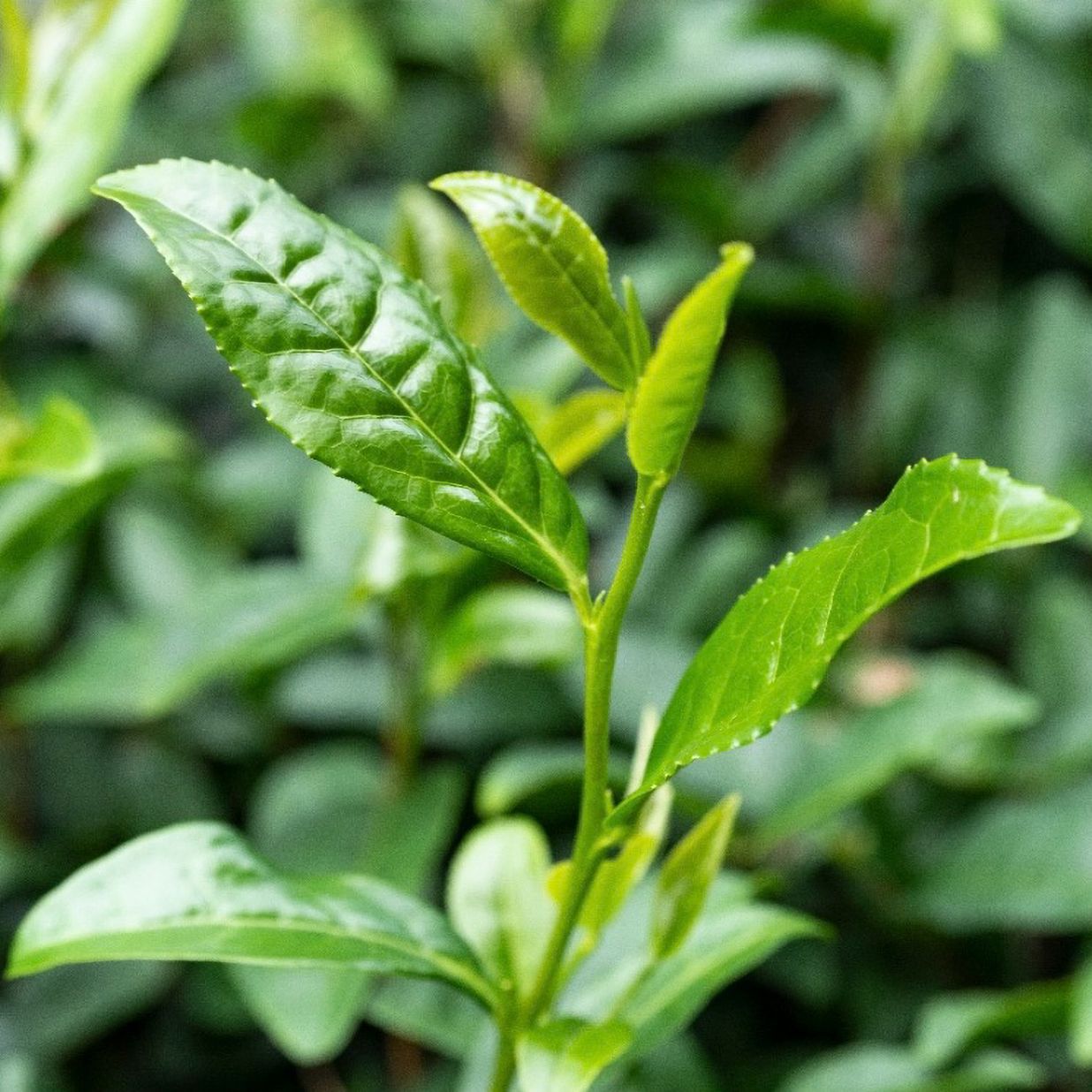
HAY FEVER? DISCOVER  BENIFUUKI TEA WITH NATURAL ANTIHISTAMINE PROPERTIES

La La Shan Oolong
Nong Xiang P.Free

Imperial Grade 99 P.

SKU
3663
High Mountain Nong Xiang (“rich aroma”) Oolong tea from the top terroir of La La Mountain, 1,400m. Imperial grade, medium-fermented and medium to strongly roasted. Grown without chemical pesticides. First harvest, hand-picked, 100% natural with no added flavourings. Directly sourced from an award-winning tea farm in Taiwan. 40g
Character Sweet, full, mild, pronounced roasted note, light floral notes of osmanthus and lily
Tea Farm A small, privately owned tea farm specialising in High Mountain Oolong tea
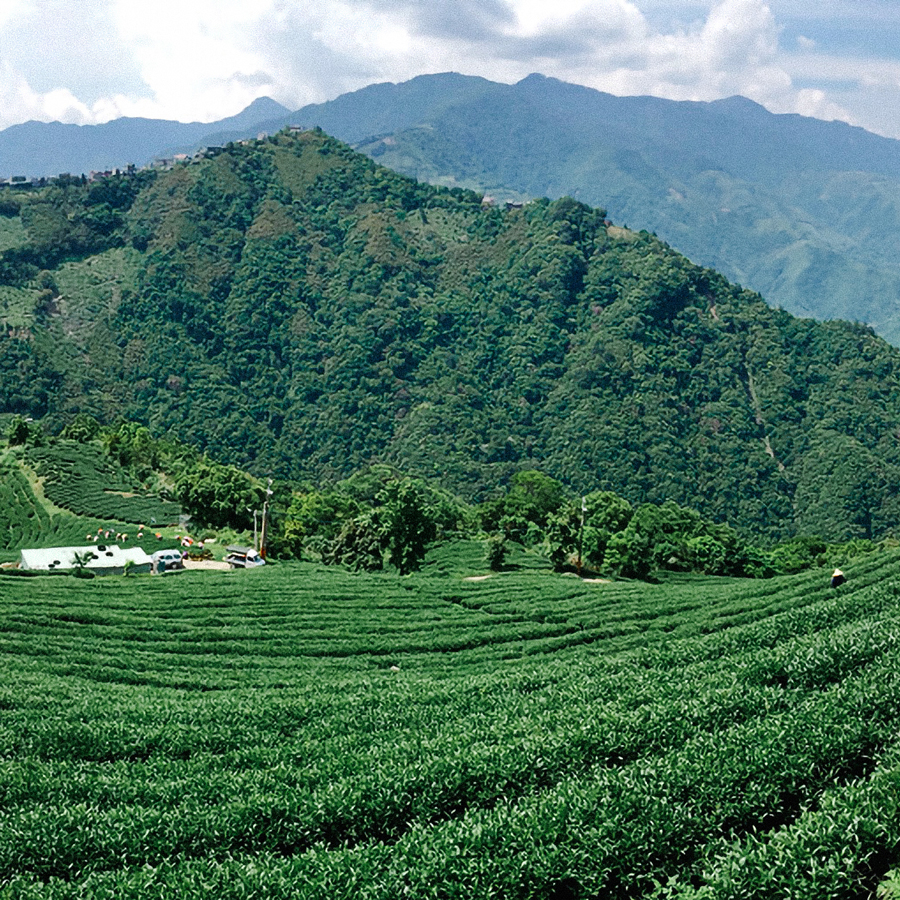
Terroir La La Mountain (Daguan Mountain), Fuxing, Taoyuan, Taiwan
Harvest 1st picking of the 1st harvest, mid-May 2024, hand-harvested
Cultivar Qing Xin (green heart)
Elevation 1,400m above sea level
Oxidation/Fermentation Light (16%)
Roasting Medium-strong oven roasting (50%)
Wilting/Oxidation Process An elaborate two-stage withering process, partial fermentation, oven heating at 78°C to halt oxidation, rolling, ball cloth rolling, oven drying, roasting
Cultivation Cultivation without the use of chemical pesticides
Laboratory Tests Pesticides
Grade 98/100 p. (Oolong category); Imperial Grade
€22.90
40g

Delivery : up to 5 business days

Incl. VAT, excl. shipping

SKU
3663
€572.50 / 1kg

Back in Stock after 2026 Harvest

Notify me when this product is available:

Incl. VAT, excl. shipping

SKU
3663
€572.50 / 1kg
Reminder set
High Mountain Nong Xiang Oolong Tea Taiwan

Tea Farm

The award-winning tea farm behind this exceptional High Mountain Oolong is deeply committed to uncompromisingly natural cultivation. For more than five years, it has followed Taiwan’s highest ecological standards, producing tea in close harmony with nature. Lala Mountain provides the ideal conditions for this approach, with its celebrated high-altitude terroir offering an exceptional natural environment for the cultivation of High Mountain Oolong.

The tea bushes are around ten years old and are tended entirely by hand. To preserve both the quality and natural pH balance of the humus-rich soil, the tea farmer relies exclusively on natural fertilisers. Since 2015, the small privately owned farm has held certification from Taiwan’s Tse Xin Organic Certification Corporation, becoming the first tea farm on Lala Mountain to achieve the country’s highest national organic standard. In many respects, these standards exceed those required by European organic certifications.

High Mountain Nong Xiang Oolong Tea Taiwan

Character

Tasting Notes

Grown at an altitude of 1,400 metres, this hand-picked Oolong is crafted from only the finest buds and leaves of the first harvest of the prized Qing Xin cultivar. Medium oxidised (16%) and medium to heavily roasted (50%), it develops a sweet, peach-fruit character with elegant notes of osmanthus and lily.

In terms of intensity, it offers a balanced and well-rounded profile. The longer roasting process gives the tea a comforting warmth while naturally reducing its caffeine content, making it especially well-suited to the later hours of the day.

Leaf

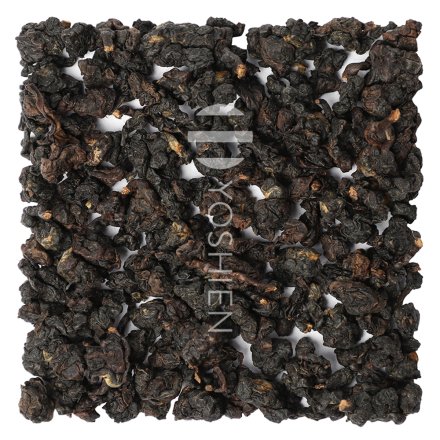
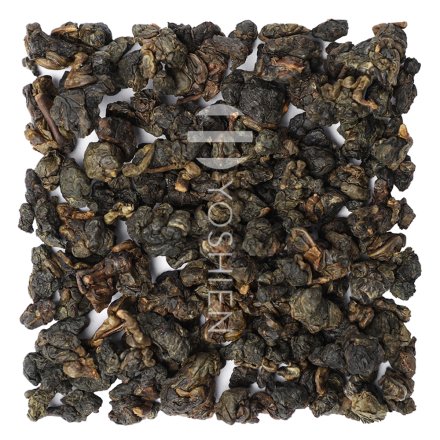
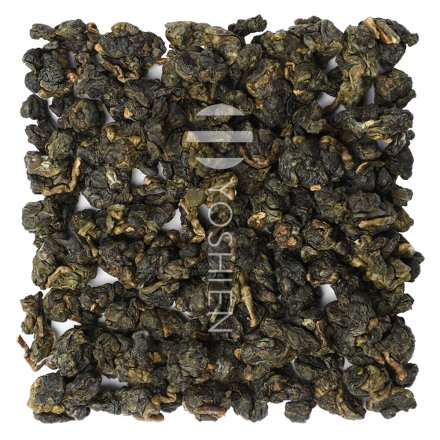
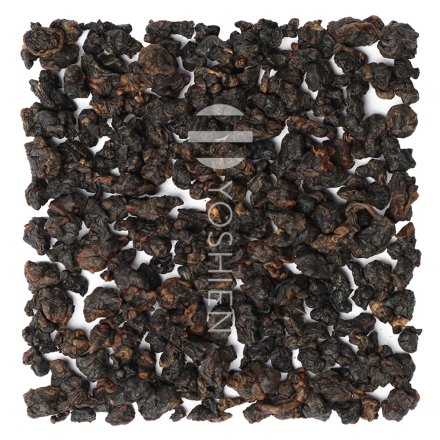
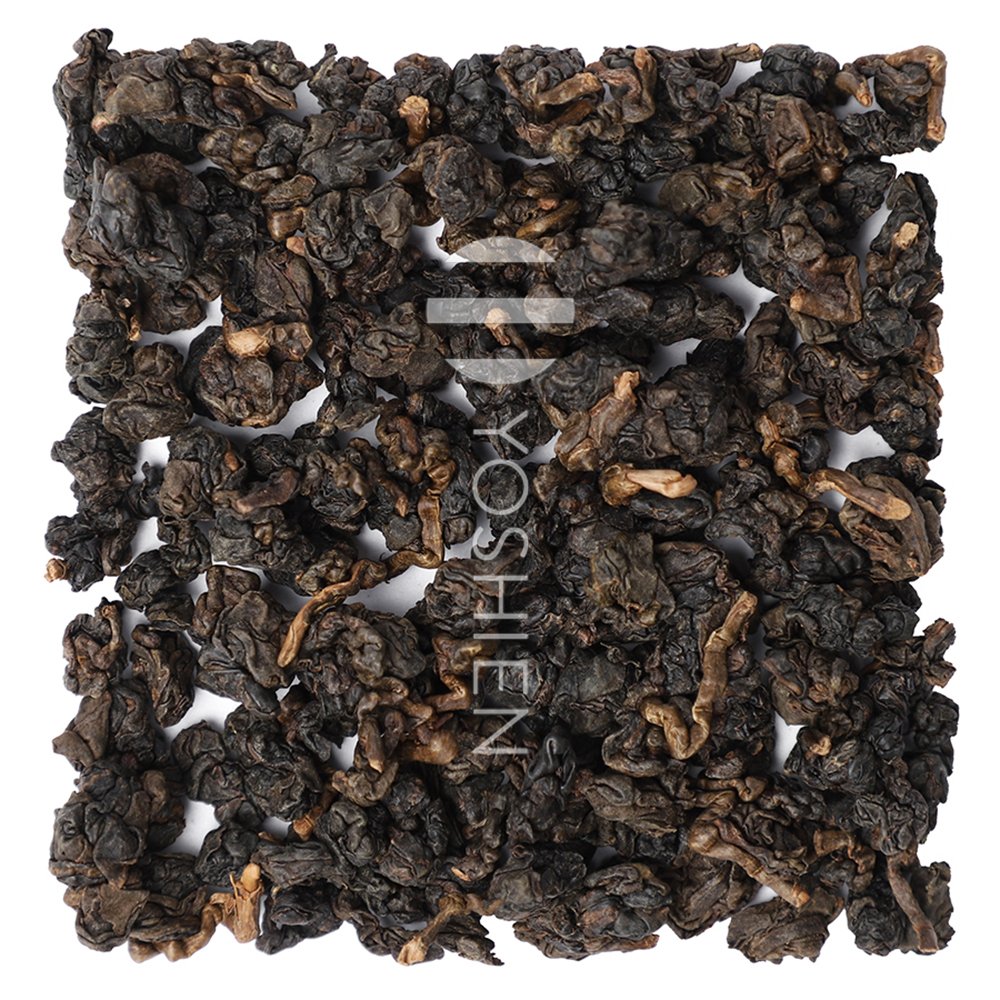
Half pearls 球型茶

Cup

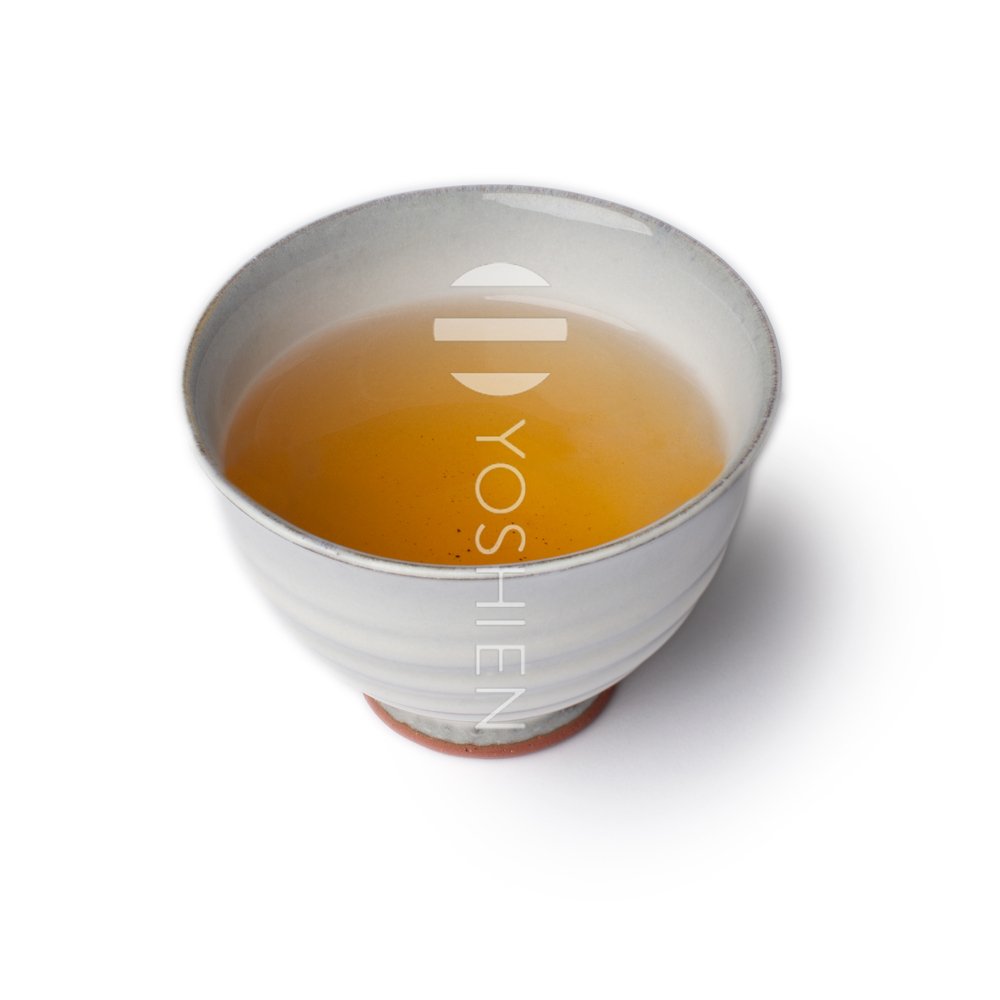
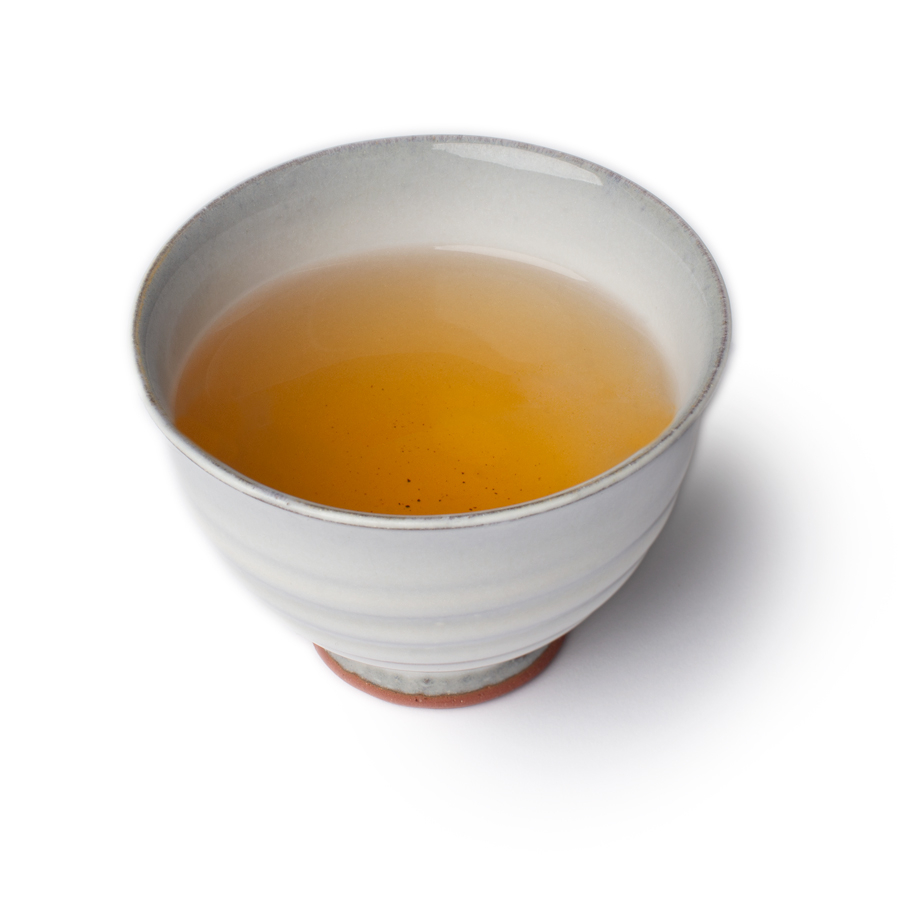
Light amber

High Mountain Nong Xiang Oolong Tea Taiwan

Awards

In 2016, the tea farmer won first prize at the regional “1st Cross-Strait Zhang Tianfu & Wu Zhenduo Cup Premium Oolong Tea Contest” for his GABA Oolong tea.

High Mountain Nong Xiang Oolong Tea Taiwan

Oolong

Oolong ("black dragon" in Chinese) is characterised by an oxidation level that falls between green and black tea, making it a semi-oxidised tea. It can be broadly categorised into lightly oxidised (10-29%), medium oxidised (30-60%), and highly oxidised varieties (up to 70%). Many Oolongs acquire an additional distinctive flavour through a delicate roasting process applied after oxidation. This, along with diverse terroirs and various processing intensities, results in an exceptionally diverse range of Oolong teas. Taiwan and the southern region of China, particularly around Fujian province, are widely regarded as the finest terroirs for Oolong.

Yoshien Labortests

Laboratory Tests

We go to great lengths to identify the finest organic tea farms across the world’s most celebrated terroirs. All our teas are sourced directly from the farmer and, with a few exceptions, are certified organic or come from pesticide-free farms. Each batch of tea for every harvest is tested for pesticides and other pollutants in an independent German lab to ensure they meet our strict quality standards as well as HACCP food safety requirements.

Yoshien

Yoshi En

Premium Organic Teas

Our comprehensive portfolio focuses on organic, single-origin teas sourced directly from renowned farms. We believe in creating partnerships with farmers who share our values and are committed to sustainable, responsible tea cultivation. Thanks to these strong relationships our exciting range is constantly growing and evolving. As an international team of dedicated and passionate tea experts, we are committed to preserving centuries-old tea culture while ensuring it remains relevant and continues to bring joy in the present. About Yoshi En.

Cultivation & Processing

This High Mountain Oolong is cultivated in pristine natural surroundings at 1,400 metres on the steep mountain slopes of La La Mountain in Taiwan. This mountain is renowned as one of the finest terroirs for High Mountain Oolong in Taiwan – and indeed worldwide – located on the border between Fuxing District in Taoyuan and Wulai District in Taipei.

The landscape surrounding the tea gardens is made up of idyllic forests, famous for their ancient giant trees, some between 500 and 3,000 years old. Owing to this unique natural heritage, large parts of La La Mountain have been protected as a nature reserve since 1986. The tea-growing region lies within the influence of the monsoon climate and is distinguished by high annual rainfall combined with intense sunshine. The average annual temperature is around 20°C.

Despite the subtropical climate, the significant temperature variation between day and night creates ideal conditions for tea cultivation. The isolated location, low population density, and limited agricultural activity contribute to exceptionally high air and soil quality. The tea farmer cultivates these High Mountain Oolong teas exclusively according to the highest ecological and sustainable standards and has been officially certified in Taiwan for this commitment. The tea is grown entirely without chemical substances on nutrient-rich humus soils.

These unique natural conditions, combined with the farmer’s precise craftsmanship, give the Oolong its distinctive flavour and aroma.

The tea leaves are hand-picked in mid-May and carefully selected for further processing. The production of the raw tea then follows these stages:

1 Sun withering (approx. 1.5 hours): the freshly picked leaves are withered beneath glass using the warmth of the sun to reduce moisture content and initiate the first, light oxidation phase. The leaves are turned one to three times to slow and carefully control oxidation.
2 Indoor withering (approx. 7–9 hours): after sun withering, the leaves are moved indoors for further withering. Initially spread out evenly, they are later gathered into thicker layers. To encourage evaporation and fermentation, the leaves are gently tossed twice and more vigorously agitated twice. Small tears, particularly along the leaf edges, allow cell sap to escape. Enzymes and polyphenols within the leaves react with oxygen, gradually advancing oxidation and initiating fermentation.
3 “Big Waves Stirring” (approx. 8–15 minutes): the leaves are vigorously agitated, partly by machine and partly by hand, deliberately breaking down the plant cells more intensively and accelerating oxidation.
4 Fermentation (approx. 3–4 hours): the leaves are piled into layers around 5cm thick to retain warmth and encourage the fermentation process.
5 "Kill-green" stage (approx. 8 minutes at 78°C): the leaves are heated in the oven to halt oxidation and fermentation completely, preserving the desired flavour profile.
6 Rolling in a ball-rolling machine (approx. 2 minutes): the leaves are rolled using a rotating ball mechanism that further breaks down the leaf structure, releasing cell sap across the leaf surface and contributing to the tea’s distinctive aroma.
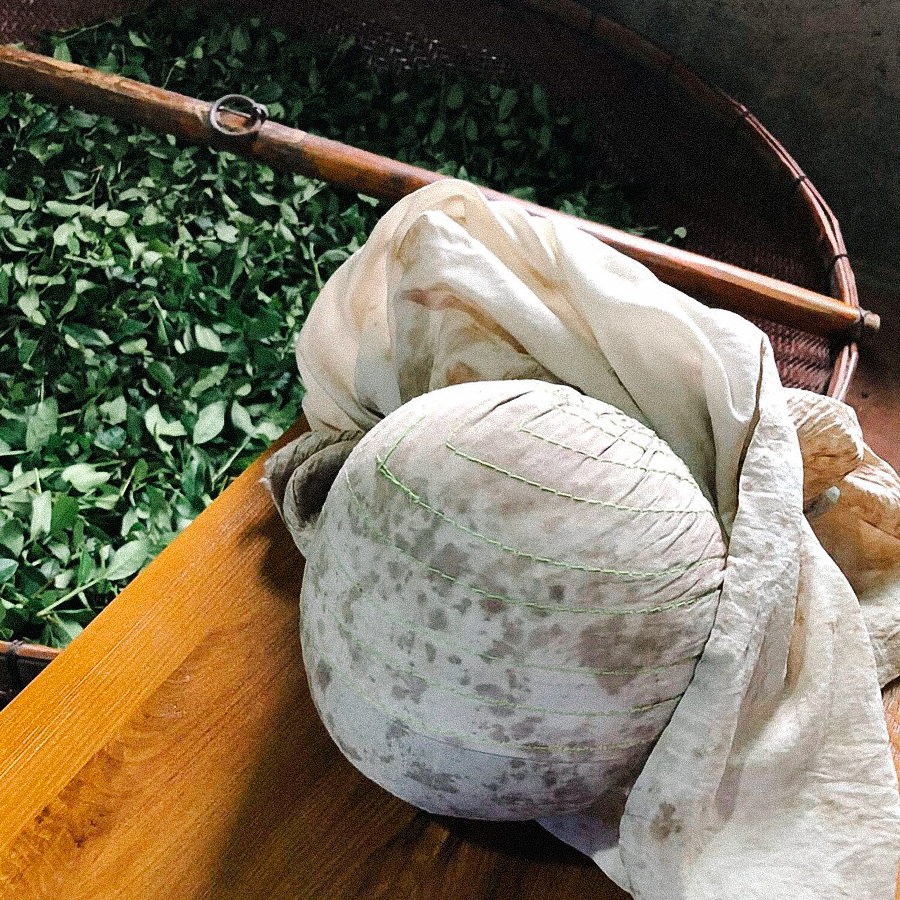
7 Ball cloth rolling: the leaves are pressed, rolled, shaped into pearls, and dried inside a cloth sack secured within a clamp fitted with a rotating base plate.
8 Drying (approx. 10 hours): the tea is dried in the oven at temperatures below 80°C until the moisture content falls below 3%. The drying and ball cloth rolling stages are repeated several times over this period.
9 Roasting: finally, the tea is roasted at temperatures between 85°C and 120°C, depending on the desired roast level.

Oolong tea is briefly fermented and carefully monitored during production. The partial fermentation produces Oolong's particular aroma and taste.

Single Origin

This tea comes exclusively from the above-mentioned tea farm on La La Mountain, sourced directly from the tea farmer.


100% pure
wildcrafted

Preparation

Brewing Guide

Steep 2 heaped tsp per 200-300ml (85°C) water for 3 minutes.

The tea farmer's recommendation for 6 infusions:

(Prior to use, preheat the teapot and teacup with hot water.)

1 85-95°C, 50 Sec.
3 85-95°C, 55 Sec.
2 85-95°C, 40 Sec.
4.-6. 85-95°C, 15-20 Sec.

Packaging & Storage

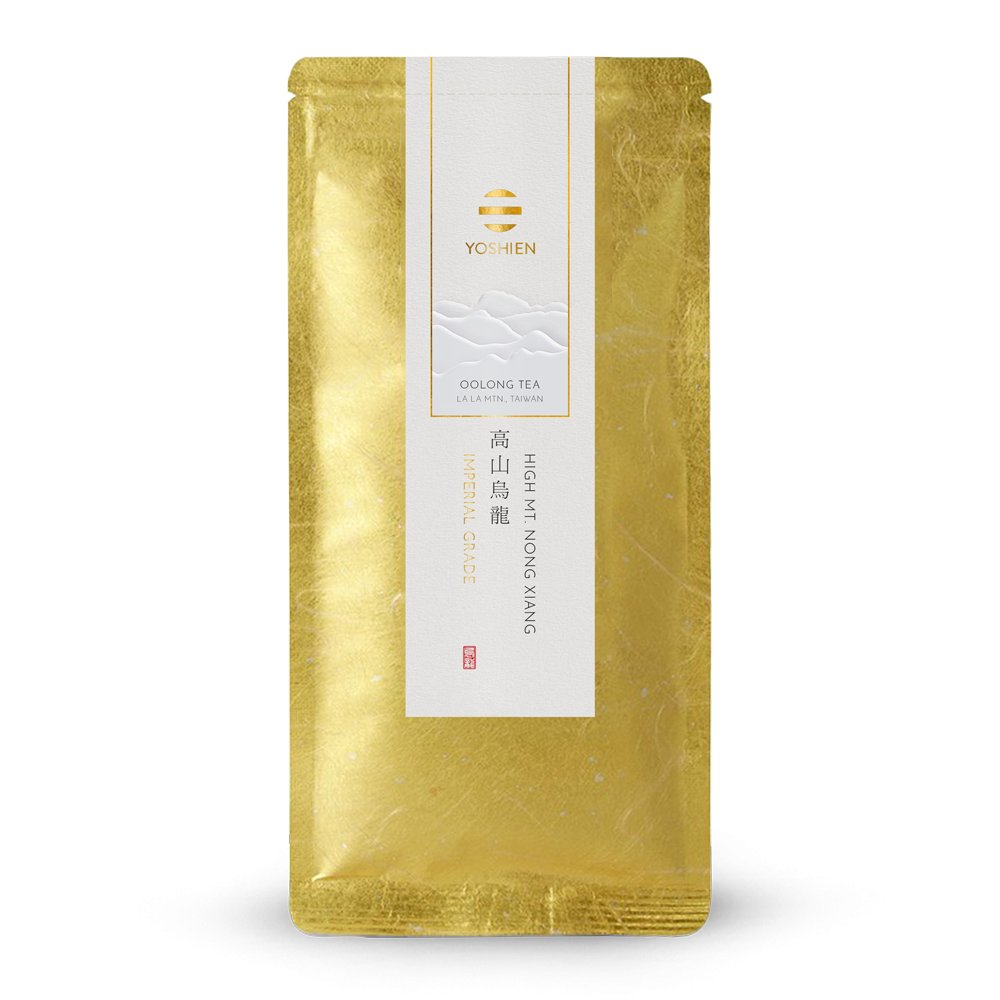
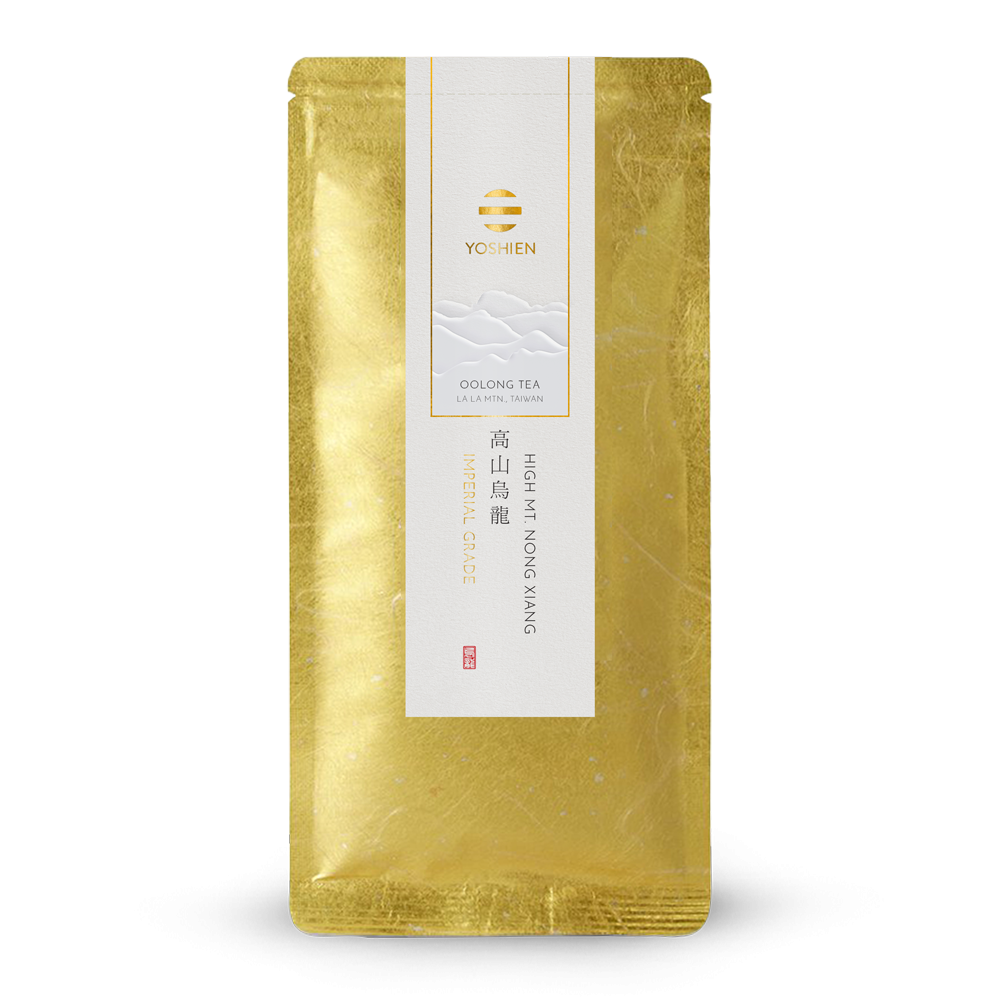
Packaged in a high-quality, airtight, flavour-protecting pouch with zipper and stand-up base. When closing the pouch, press out as much air as possible before snapping shut. Alternatively, and especially for longer-term storage, we recommend our stylish and airtight tea caddies.

Recommended Teapot

Oolong tea is traditionally brewed in a Gaiwan (in small quantities) or a large glass teapot with an integrated sieve so that the leaves are able to freely infuse. For an especially aromatic infusion, we recommend a clay Yixing teapot.

Awards

In 2016, the tea farmer was awarded first place in the regional “1st Cross-Strait Zhang Tianfu & Wu Zhenduo Cup Premium Oolong Tea Contest” for his GABA Oolong tea.

Test results

We find it very important that our teas are pure and produced in a way that respects the environment. For this reason, each one of our teas is tested for pesticide residues by an independent laboratory, the results of which can be found here. Some of our teas are also tested for specific nutritional compounds, in which case the test results are also published here.
Test results

Our recommendations

Loading...
The image could not be loaded.