




RED ROOIBOS TEA
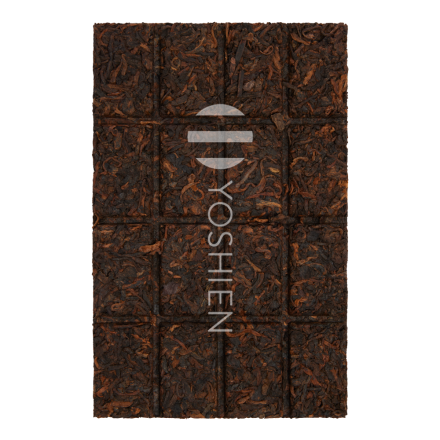
The rooibos shrub (Aspalathus linearis) thrives in the hot, arid mountain regions of South Africa, where its fine, needle-like leaves have long been enjoyed as a flavourful and naturally caffeine-free tea. Although rooibos contains very few tannins, it is rich in minerals. During the fermentation process, the delicate leaves develop their distinctively mild yet full-bodied flavour and their beautiful characteristic reddish-brown hue.
YARROW
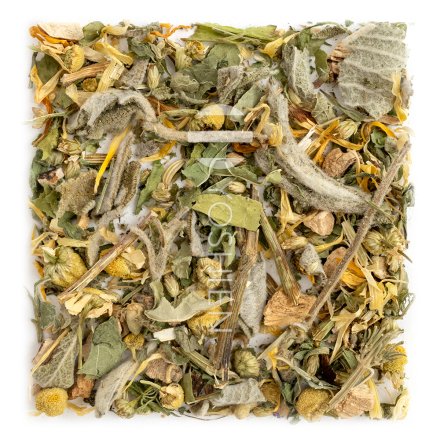
Yarrow grows across Europe and northern Asia, extending as far north as the Arctic Circle. The resilient perennial endures throughout the year, remaining above the earth's surface even during winter. Its rich heritage in herbalism stretches back to Greek mythology, where yarrow is mentioned as a plant used by Achilles. It is from this legend that it derives its Latin name, Achillea millefolium.
LADY'S MANTLE
Lady's mantle (Alchemilla) belongs to the rose family (Rosaceae). Its species are widespread across Europe, Asia and Africa, thriving particularly at higher altitudes, with around 300 species in Europe alone. Its botanical name, Alchemilla, alludes to alchemy and the plant's perceived magical properties, a belief inspired by the droplets of water that form on its leaves and have been used in home remedies since ancient times.
MULBERRY
Known for its sugar-like sweetness, the white mulberry (Morus alba) is the most consumed type of mulberry, particularly in its dried form. The leaves of the white mulberry have long played a vital role in the silk industry as the primary food source for silkworms, and for over 4,000 years they have been used in traditional Chinese medicine. The mulberry plant family (Moraceae) also includes figs, jackfruit and breadfruit.
ST JOHN'S WORT
St John’s wort (Hypericum perforatum) is recognisable for its distinctive, bright yellow flowers, which produce a red sap when crushed. It has a rich history of use dating back to ancient Greece, where early physicians such as Hippocrates and Dioscorides recommended it for wounds, burns, and nervous disorders. For centuries it was believed to protect against evil spirits, earning it the evocative medieval name fuga daemonum (“flight of demons”). Hildegard von Bingen, the famed 12th-century herbalist, praised the herb as “the arnica of the nerves".
HORSETAIL
Field horsetail (Equisetum arvense) once stood as a towering tree, coexisting alongside giant ferns and mosses within vast forests 400 million years ago. Similarly to ferns and mosses, the horsetail lacks flowers, reproducing instead through spores. During spring, it emerges as a pale stem-like plant which wilts away shortly after it appears. The vibrant green summer shoots which then sprout were once favoured for cleaning pewter, a connection which inspired the name "pewterwort."
BEDSTRAW
Bedstraw (Galium verum), also known as lady's bedstraw or yellow bedstraw, is a common plant found in many parts of the world. The genus name Galium comes from the Greek word gala, meaning "milk", due to its historical use in curdling milk for cheese-making. Its roots and blossoms have been used to create vibrant red and yellow textile dyes, while its dried stems were once commonly used to stuff mattresses. In Scottish Gaelic mythology, the warrior Cú Chulainn was said to have drank it as a tea to calm his battle-induced frenzy.
CINNAMON BARK
The cinnamon tree (Cinnamomum zeylanicum) is a laurel plant native to Southeast Asia and is known for its many applications. The Egyptians used it for embalming as early as 2000 BC, and it has also been used in China and India for millennia to treat a wide variety of ailments. The cinnamon tree has to grow for several years before the trunk is cut. The young shoots are cut and peeled after two years, before it curls into the distinctive cinnamon stick shape.
LIQUORICE ROOT
Liquorice root (Glycyrrhiza glabra) has a long history of use dating back over 2,000 years. Ancient civilizations like the Egyptians, Assyrians, Greeks and Chinese valued it for both its sweet flavour and its soothing properties, often using it in herbal remedies and tonics. Licorice root is high in a compound called glycyrrhizin, which is believed to be fifty times sweeter than sugar and gives the root its sweet taste.
MARIGOLD PETAL
Marigold (Calendula officinalis) belongs to the daisy family, Asteraceae, and is particularly widespread in Europe. With its bright yellow and orange flowers, it is especially eye-catching and commonly found in many gardens. The petals are the most often used part of the plant, traditionally dried for use as a tea or as an extract for external application.
PEPPERMINT LEAF
Peppermint (Mentha piperita) has been burned in rituals and enjoyed as a tea for centuries across many cultures. In antiquity, students wore braided mint wreaths during important examinations to help clear the mind. Traditionally, peppermint is consumed as a tea or inhaled in the form of steam baths.