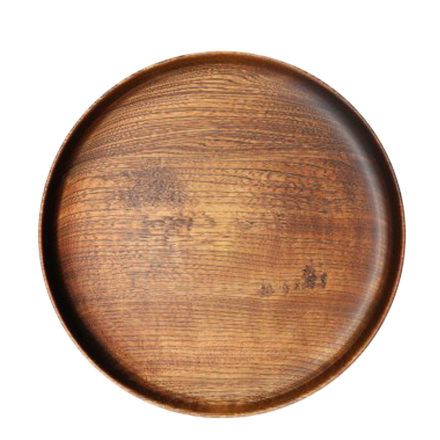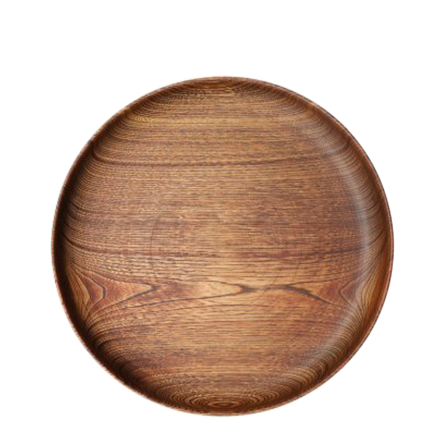



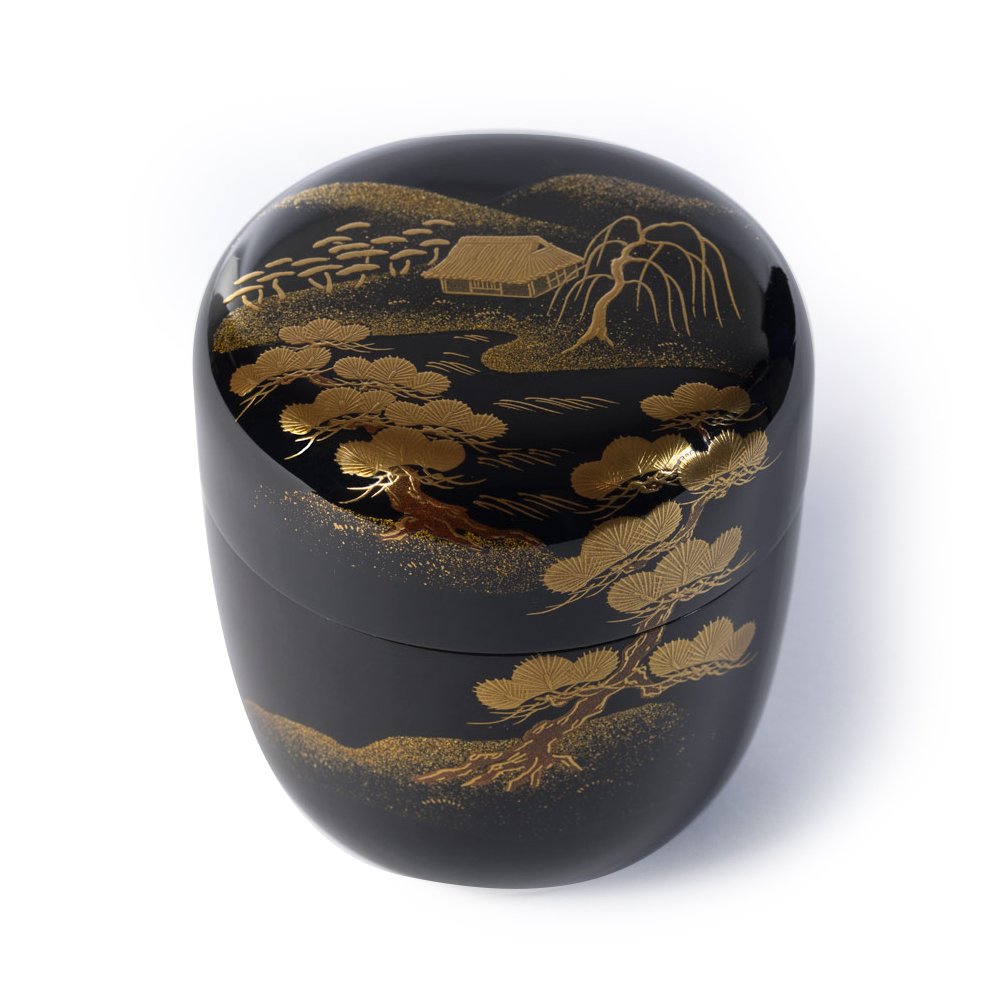
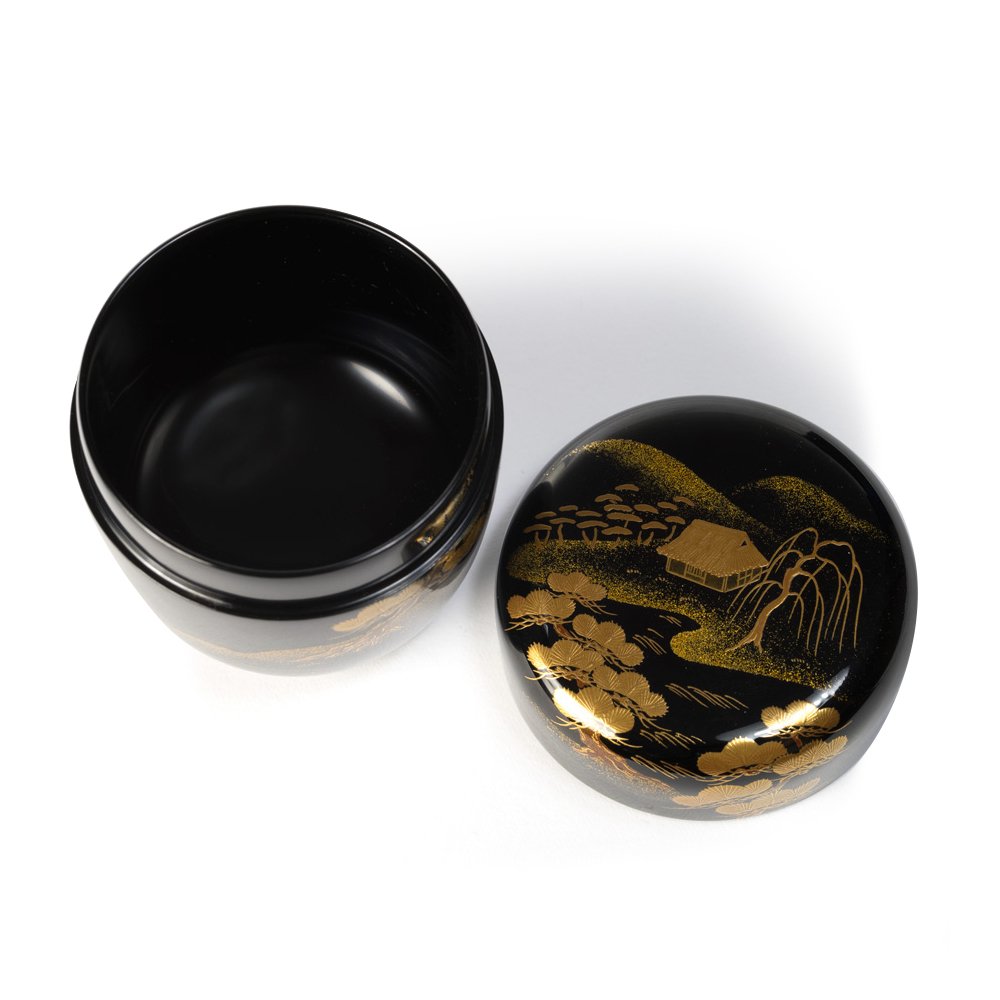
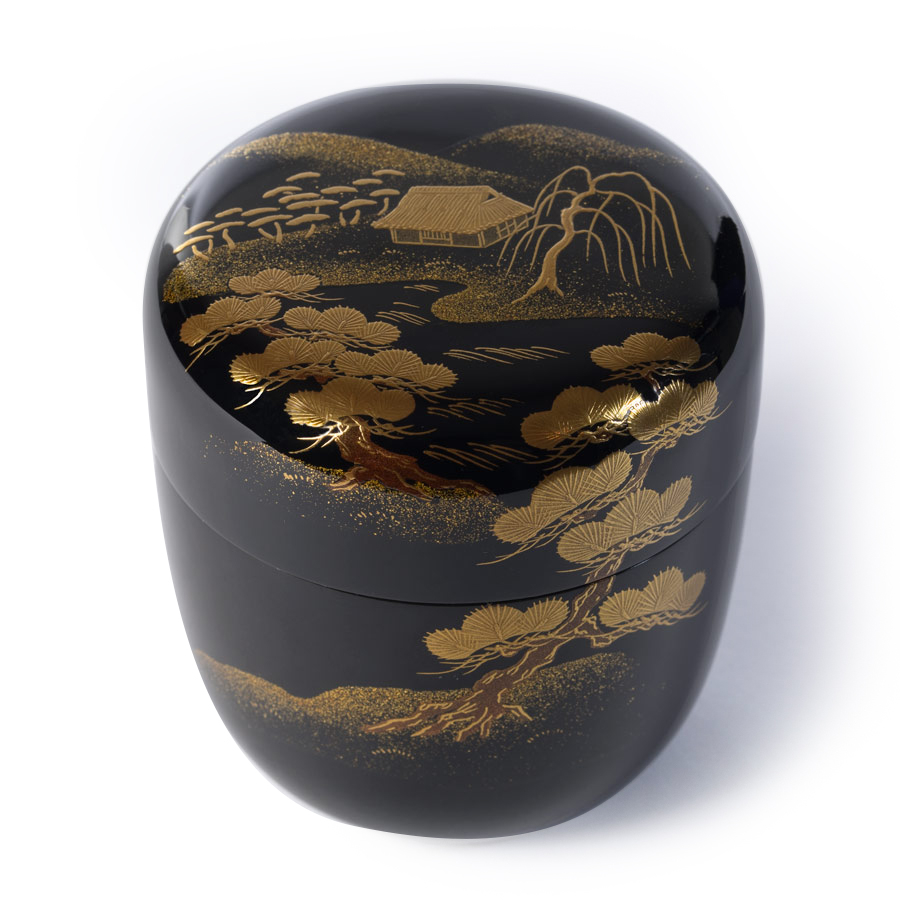
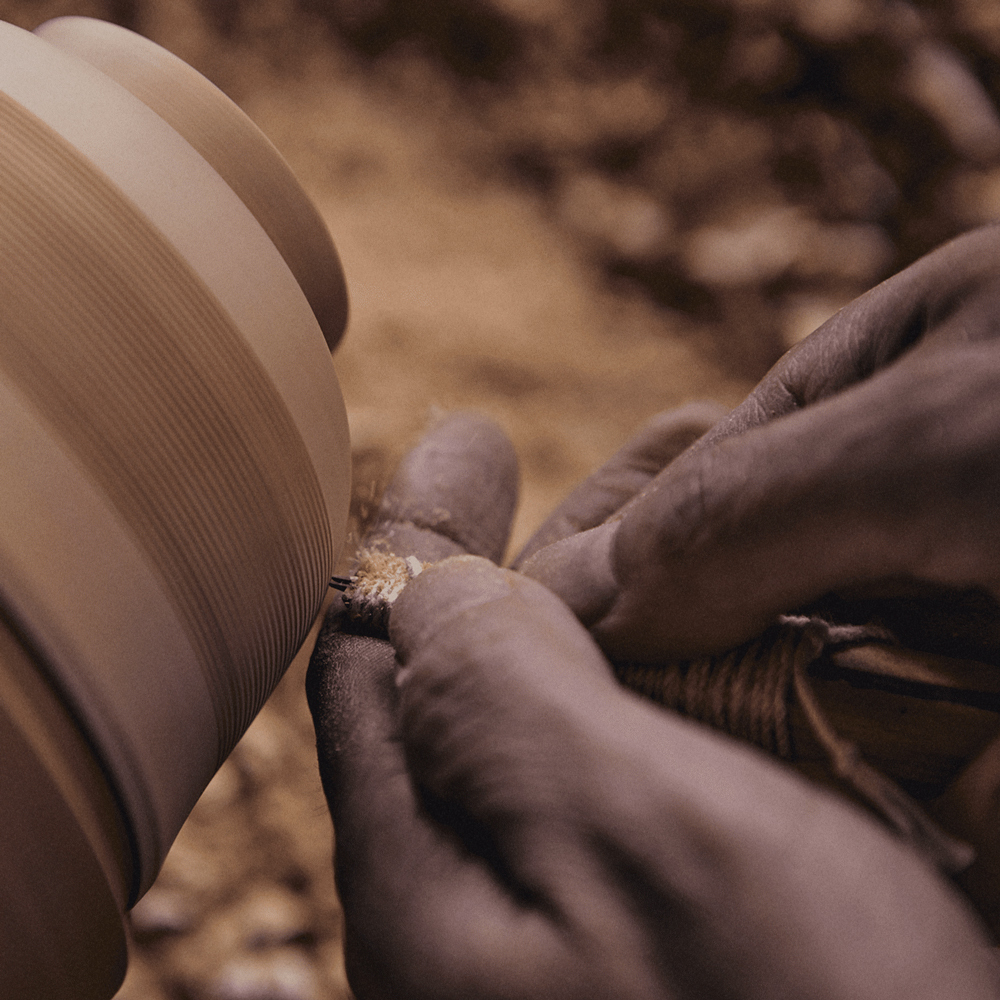
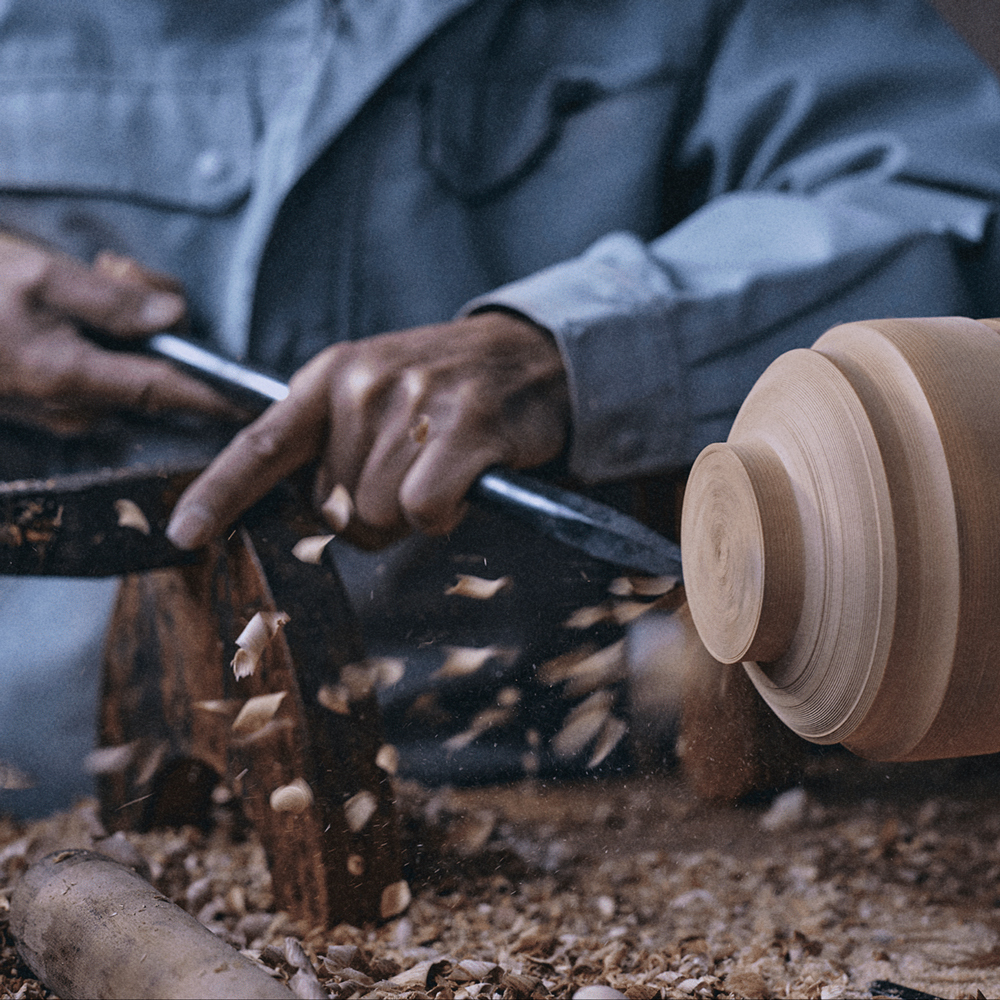

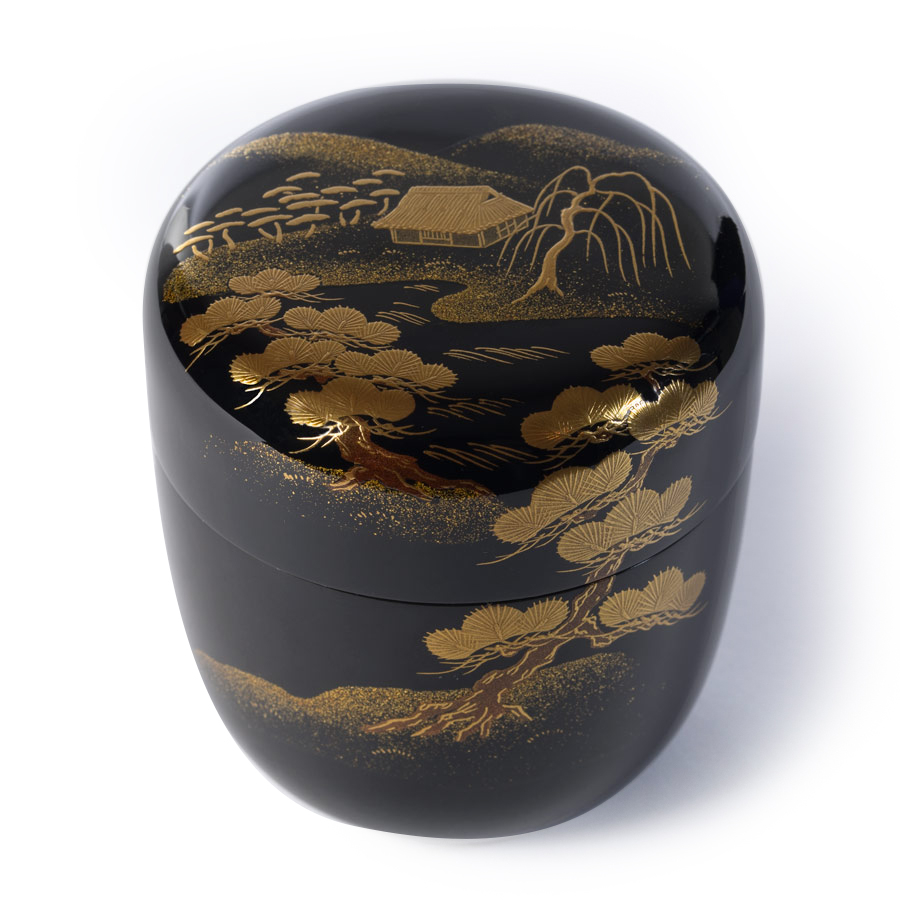
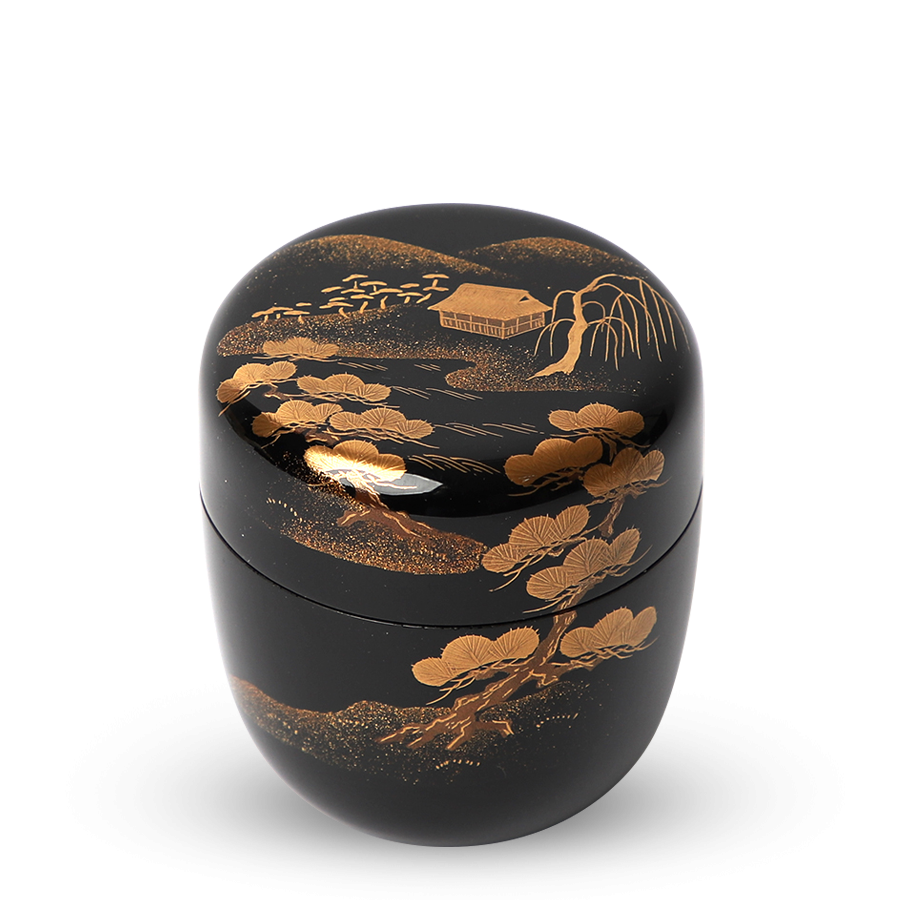
Traditional Japanese lacquer, or urushi, is the concentrated sap of the Chinese lacquer tree (Toxicodendron vernicifluum); this has been used in Japan for thousands of years to coat items ranging from crockery and furniture to buildings. After it dries, lacquer is resistant to both heat and water and therefore provides protection and durability for the materials underneath, which is usually wood, but can also often be bamboo, paper or leather. Lacquerware can be called both urushi and shikki (漆器 literally "urushi vessel"). With the development of acrylic resin in the last century, objects treated with synthetically produced lacquers such as food-grade polyurethane are nowadays also referred to as urushi/shikki. Pure, natural urushi is transparent in its appearance, while the black and red lacquers specifically associated with shikki are achieved by adding mineral pigments, onto which traditional decorative details such as maki-e (蒔絵) "scatter paintings" or raden (螺鈿) "shell inlays" are applied.
DISCOVER NOW: GC1® MATCHA PREMIUM STICKS | ULTRA-HIGH CATECHIN & L-THEANINE