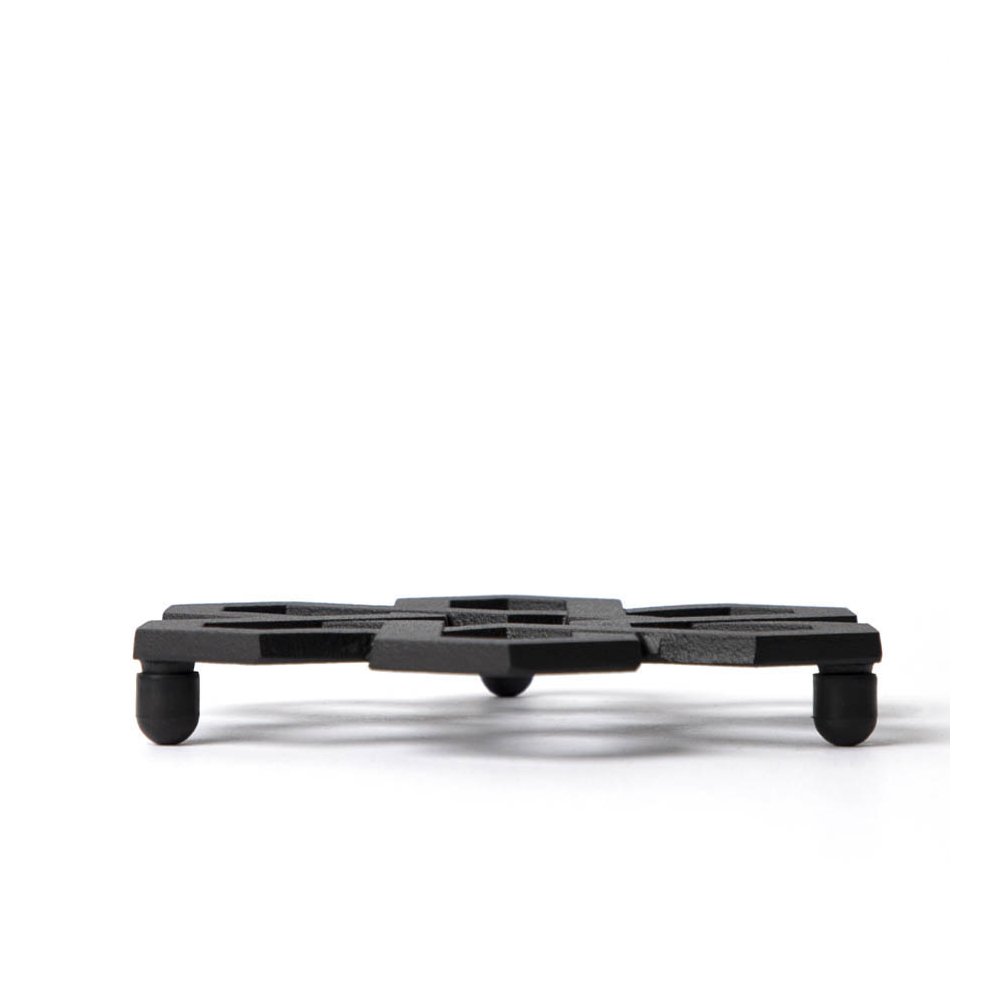
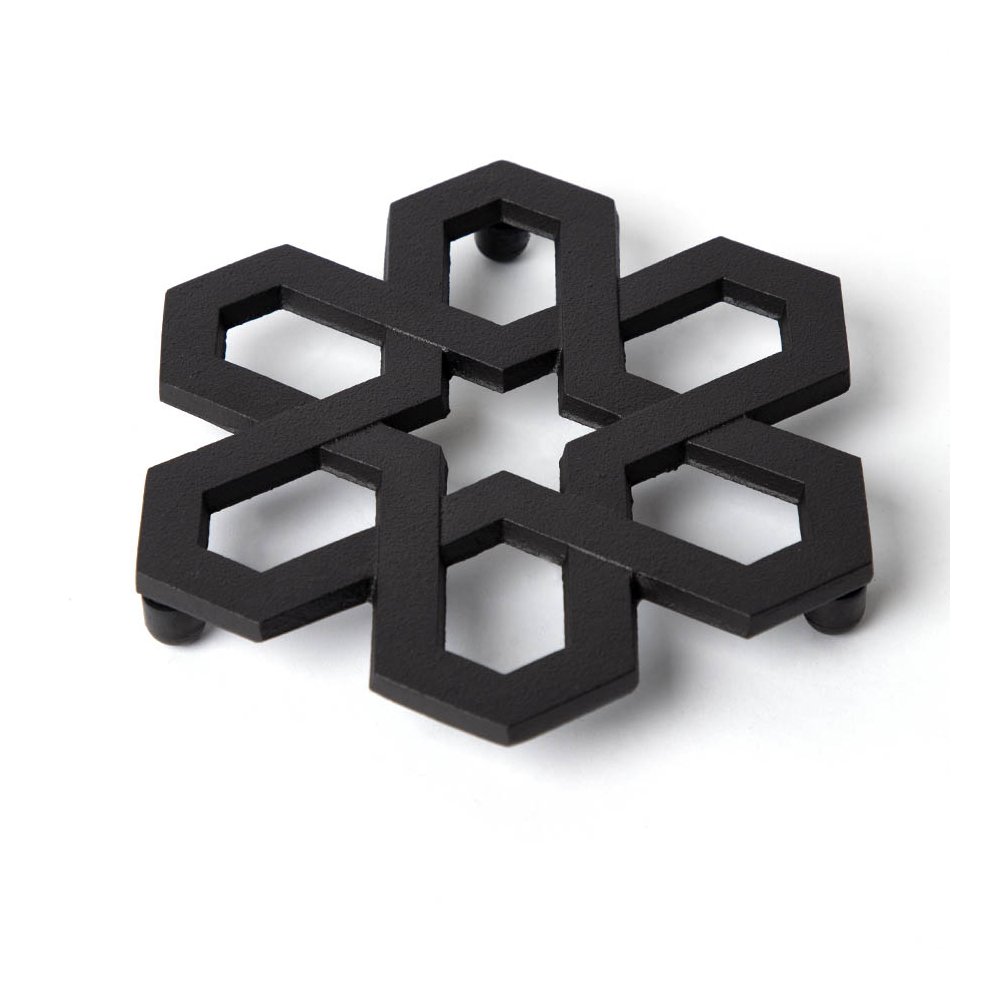
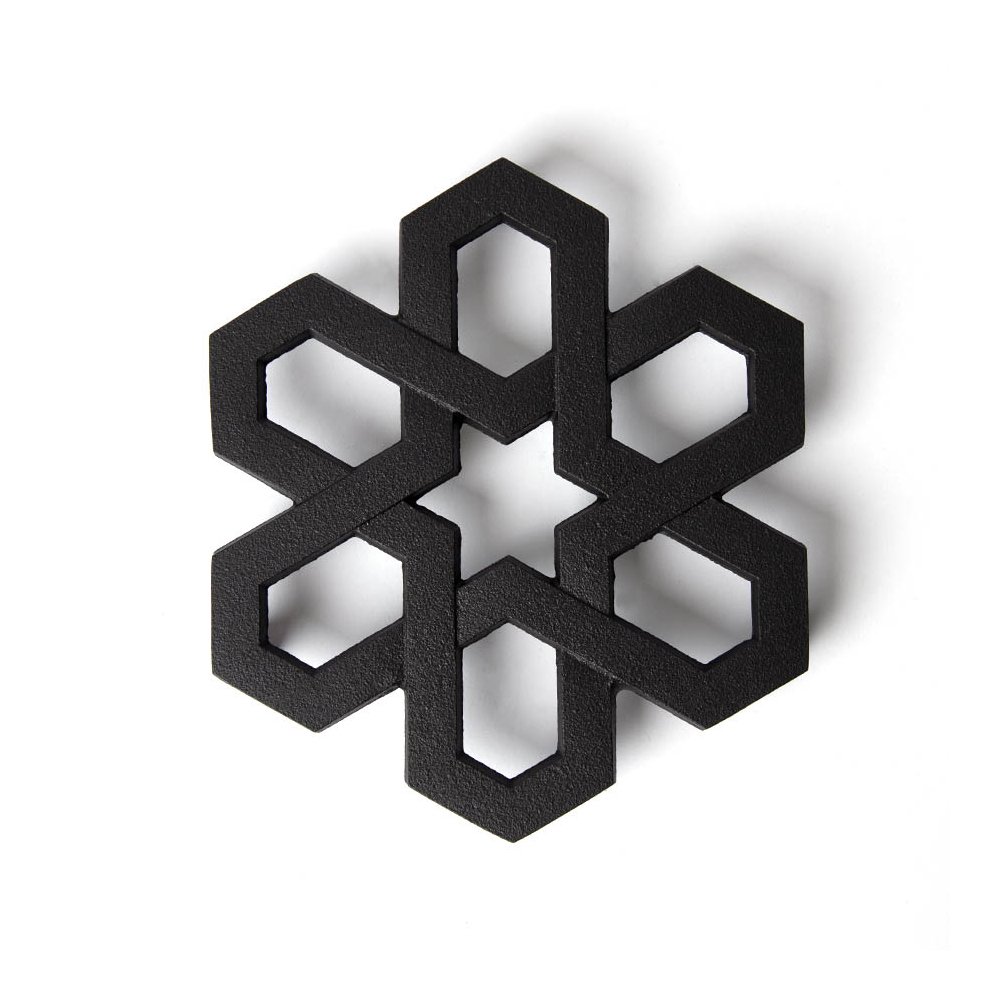
Wash with hot water when necessary – but do not soak – and dry thoroughly to prevent rust. If rust develops, brush off gently, wash and dry.
NEW "Yin & Yang" teaware collection – find inner balance with every sip




Oigen
| Product | Nanbu Tekki trivet |
|---|---|
| Origin | Oshu, Iwate, Japan |
| Maker | Oigen |
| Dimensions | L15.8xW13.8xH2.0cm |
| Weight | 390g |
| Material | Cast iron, rubber feet |

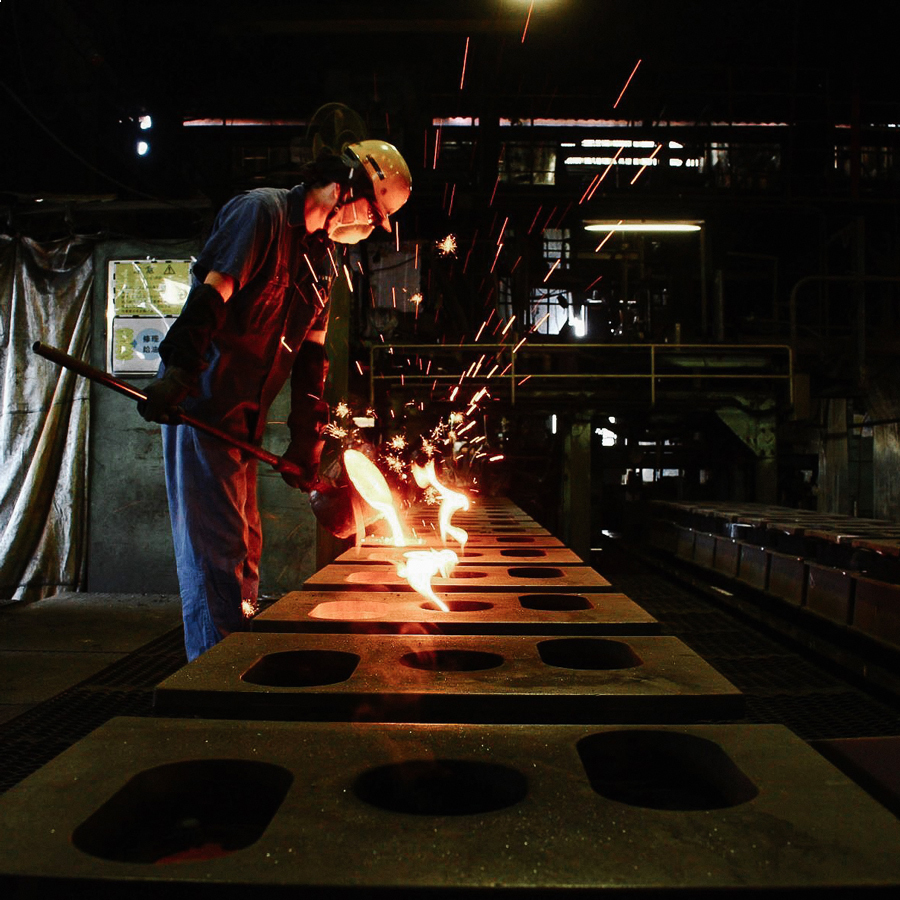
The origins of Nanbu Tekki or “Nanbu ironware” go back to the mid-17th century, when the Nanbu samurai clan were in need of Buddhist altars, bells and chagama tea pots to furnish their newly built castle in Morioka, Iwate prefecture, and so invited skilled metal casters from across the country to lend them a hand. Although the name Nanbu is written in the kanji as “southern region” the clan ruled in the north of Japan, where materials needed for ironwork were naturally abundant. Highly durable, Nanbu Tekki wares are often deemed the best metalwork in Japan and make beloved heirlooms – particularly cast iron kettles or tetsubin, which are also highly sought after by collectors around the world. In 1975 Nanbu Tekki was designated the first certified Traditional Craft of Japan, and exclusively refers to cast iron products made in the cities of Morioka and Oshu.